

Responsible Sourcing & Supply Chain Management
Our Vendor Code of Conduct
Our Vendor Code of Conduct (Code) is the cornerstone of our responsible sourcing and supply chain strategy and describes the expectations we have of our vendors to conduct business responsibly. The Code, first published in 2017, encompasses areas of ethical business practices, compliance with applicable laws and regulations including labor and human rights, creating inclusive workforce practices and addressing the environmental impact of a vendor’s business, managing business continuity, resiliency and emergency preparedness in the provision of goods and services to us, and effective management systems and governance procedures. All vendors who wish to work with us are expected to adhere to the Code and are encouraged to communicate and enforce its provisions throughout their own organization and supply chain. The Code, which is available in multiple languages, is annually communicated to our suppliers globally.
Due Diligence
We require vendors who wish to bid for the provision of goods and services to respond to specific due diligence questions on environmental stewardship and human rights, including modern slavery.
We assess our vendors for various environmental and social risks, including related governance practices, embedding risk screening criteria into our vendor management platform with the aim of identifying vendors with higher inherent risks. This enables us to conduct deeper assessments of vendor controls to identify and mitigate such risks, which may include environmental risks or modern slavery and human trafficking concerns. Additionally, we screen all vendors against an extensive set of media, government and regulatory sources to identify potentially adverse information, both during the on-boarding process and during the life of vendor contracts.
Modern Slavery
We take our responsibility to protect, preserve and promote human rights seriously. We are committed to assessing risks and acting to prevent modern slavery and human trafficking from taking place within our business and supply chain.
We publish a Statement on Modern Slavery and Human Trafficking annually which sets out the actions we have taken to assess and address the risks of modern slavery practices in our business and our supply chain.
Small Vendor Program
At Goldman Sachs, we work hard to partner with competitive small businesses to source the goods and services needed to support our operations and achieve our business objectives.
Our Small Vendor Program aims to break down barriers to market access for small businesses of all backgrounds, enabling them to compete equally for business opportunities. This drives competitiveness and innovation in our supply chain, stimulates positive socio-economic impact and reflects the communities where we live and work and the clients we serve around the world. Our vendor engagement efforts have been previously recognized by WEConnect International. We progressed from a Silver-level Champion in 2022 to Gold in 2023, achieving Platinum-level Champion status in 2024.
Recently, we approached the development and operation of our new Birmingham, UK office, with a distinct strategy that reflects both global policies and local opportunities, while fostering significant community and economic engagement. The Birmingham office is a cornerstone of the firm's UK presence outside of London and its overall development placed a strong emphasis on sourcing goods and services locally. Additionally, the Small Vendor Program has delivered positive impacts within the firm’s operations. The following case studies illustrate a few examples of impressive small businesses making an impact across our UK and global operations:
vPPR Architects

vPPR Architects, the lead concept architect for the new Goldman Sachs office in Birmingham, UK and a 10,000 Small Businesses (10KSB) graduate company, was founded in 2009 by Tatiana von Preussen, Catherine Pease, and Jessica Reynolds. The firm designs projects to be robust and long-lasting, with a focus on retrofitting wherever possible and embracing circular economy principles.
For the Goldman Sachs office, vPPR incorporated themes of nature into each floor, ranging from sky to field, and connected the project team with other small businesses, fostering a collaborative network of suppliers.
Belu Water
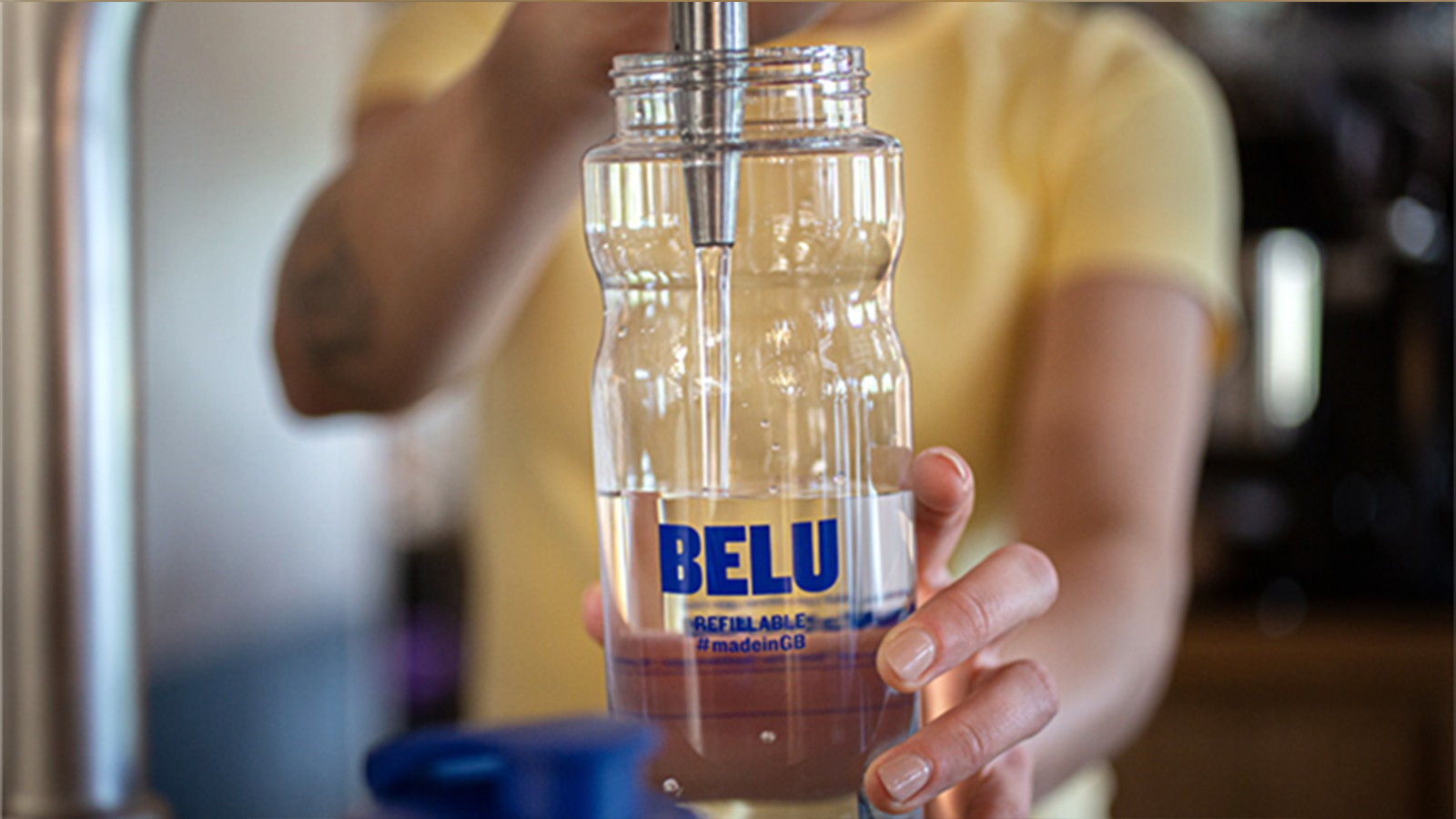
10KSB graduate, Belu, is a drinks business which started supplying British mineral water to Goldman Sachs in 2017. Their mission is to provide the market with a sustainable water offering, donating all profits to WaterAid to transform lives worldwide with clean water. Initially supplying bottled water to the UK's hotel, restaurant, and catering industries, their participation in the 10KSB program enabled them to develop a strategy for offering water filtration services to clients and expanding into the corporate sector.
Belu has now replicated this model across other corporate offices, including serving more than 750 employees in our new Birmingham office, which further reduces the environmental impact of single-use water bottles, while helping transform more lives with WaterAid. Our Plumtree Court office was the corporate test case for their water filtration offering: partnering with Brita Vivreau, they supply over 60 water taps across the London office, offering filtered, chilled, hot, still and sparking water to our ~7,000 employees.
SRD Legal Group
Suzie Scanlon Rabinowitz graduated from the 10KSB program at LaGuardia Community College. During the 10KSB program, Suzie was challenged to think about how she could have a greater impact in the evolving world of legal support. She revised her business model and founded SRD Legal to offer a new way of providing legal support to large organizations offering hourly and flexible legal support.
SRD has been providing legal services to Goldman Sachs since 2016. The partnership continues to drive creative solutions across our firm and exponential growth for SRD. This transformative growth has enabled SRD to pay it forward into local communities, helping to support student scholarships at LaGuardia Community College, making contributions to the American Heart Association, NJ LEEP and other not-for-profit organizations, and creating jobs in vulnerable communities by engaging veterans and military spouse attorneys and professionals, who now represent 30% of the team at SRD. Working with Goldman Sachs opened the door for SRD Legal to subsequently contract with several other financial services companies.
Subscribe to Briefings
Our weekly newsletter delivers the latest insights on economic forces shaping markets—from Goldman Sachs leaders, economists, and investors around the world.
You can unsubscribe at any time. For information about how your personal data will be used, visit Privacy Information and Resources.