

Exchanges
Goldman Sachs Chairman and CEO David Solomon on AI: Implementation, Accountability, and Jobs

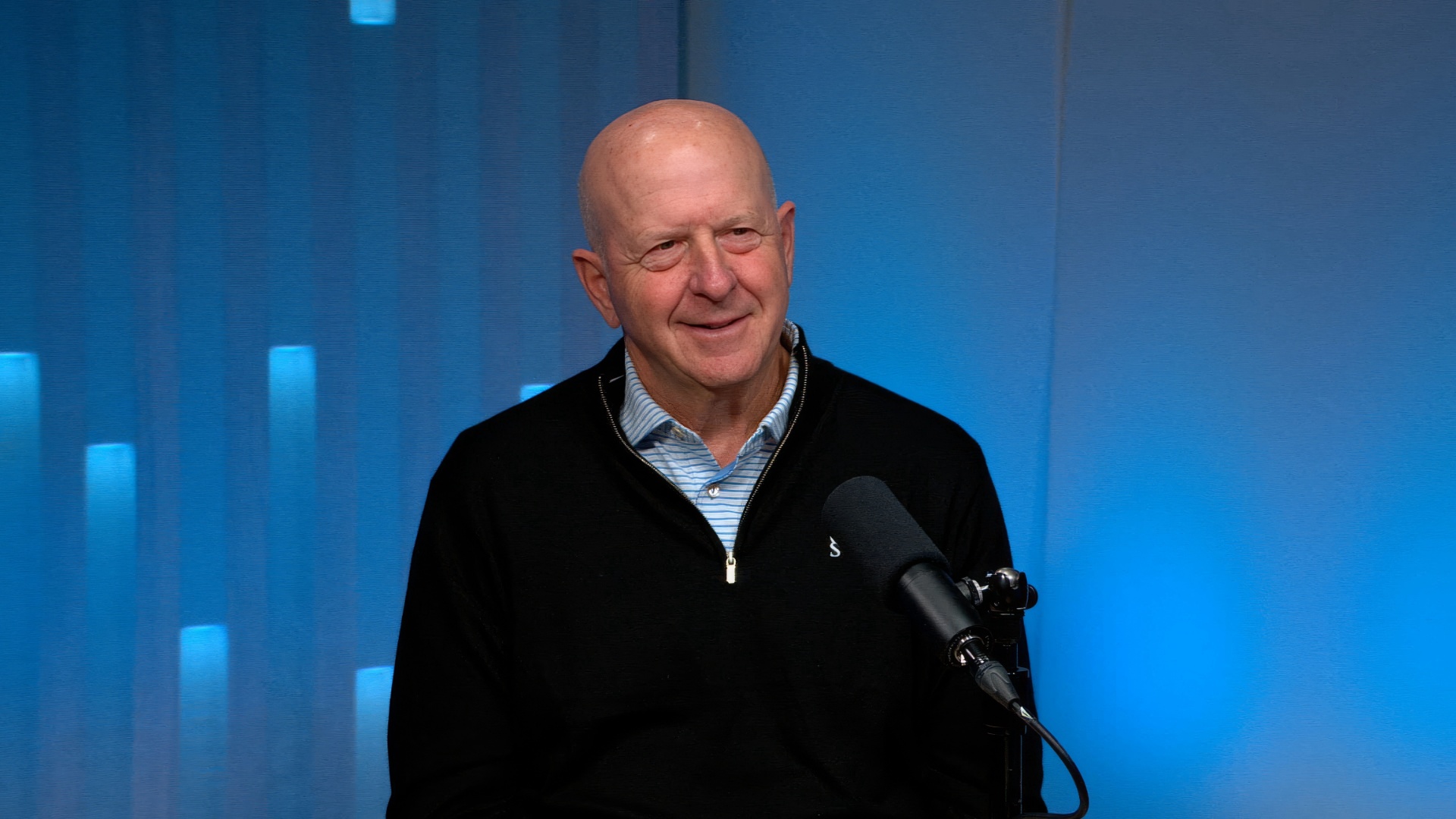
With the right “rules of the road,” advancing AI doesn’t have to be a choice between innovation and safety, says David Solomon, chairman and CEO of Goldman Sachs. He also explains why he’s optimistic about AI’s impact on the job market in this episode of the Exchanges podcast.
Subscribe: Spotify / Apple Podcasts / YouTube
Key takeaways:
- The third layer of AI control: In addition to governments and tech providers, responsibility for AI also lies with the companies deploying it.
- Learning from the past: Previous scientific and technological innovations can provide a model for implementing AI—as can the risk and control processes of financial firms.
- Advice for young knowledge workers: Solomon advises young professionals to adapt to AI and treat it as a key tool to enhance their work.
Transcript:
Allison Nathan: How do we get the societal benefits of AI while guarding against its risks?
In a recent op-ed, today's guest argues that winning in the AI era is not a choice between innovation and safety. I'm Allison Nathan, and this is Goldman Sachs Exchanges.
Joining me is David Solomon, Chairman and CEO of Goldman Sachs. We'll talk about how AI can be advanced with discipline, what AI means for jobs, how businesses are using it, and who should set the rules.
We'll also discuss the firm's new commitment to help small businesses adopt AI. David, thanks for joining us.
David Solomon: Thank you. Thanks for having me.
Allison Nathan: It's great to have you here in the studio. You and I usually have a conversation at the start of the year to talk about what lies ahead, but we're sitting down today again to focus on the topic that seems to be on everyone's mind: AI.
So, in your op-ed that was published last Friday, you argued that the AI debate is too focused on a choice between moving fast without guardrails or heavy-handed restrictions that could slow progress. So, what's that debate missing?
David Solomon: Well, I think the debate is missing nuance. Most things that are complex and important aren't so binary.
And so, the narrative that's developed that if for some reason we don't let the innovation be unleashed and run at whatever speed with no guardrails, no protections, no risk and controls, we somehow inhibit our competitive position, so therefore, the choice is to regulate, slow down, and stop and weaken our competitive position.
I just don't think it's a binary choice. I think it's a much more nuanced discussion. I think we absolutely can spur great innovation with this technology, but we have to have rules of the road. There have to be guardrails. There has to ultimately be a structure of accountability around the deployment of this technology into society in a way where we can really hold people accountable for the end result and what happens, and I think we can do that.
I don't think it's different with this technology versus others, but it requires a more thoughtful, nuanced discussion than some of this binary, let it run or let's regulate or control it, stop it, slow it down.
Allison Nathan: You say the responsibility for control first sits with governments, second with the companies that are building these AI models, and third with the businesses using them, and it's really that third area that is getting less attention.
Why are companies deploying AI as important as the other two layers of responsibility?
David Solomon: What I tried to do in the op-ed is I was trying to create a simple framework to enhance the conversation. And so, I think very simply, and this is a simple summary of what's in the op-ed, government needs to play a role and set some rules of the road.
The people that are developing these models and the infrastructure that allow the technology to exist and ultimately be deployed in the economy have to take responsibility for what they're building and that it works and that it doesn't do harm. And then the companies that take those products and embed them in their enterprises and their service have to be responsible for the way they're deployed and the impact that they have.
And the third is not getting as much attention, but it's equally important. Goldman Sachs has been using AI-type models for trading platforms for almost 20 years, but there's human accountability attached to every one of those platforms. I could never imagine someone at Goldman Sachs saying to me, "The trading platform went off and did something awful on its own. We couldn't stop it." We wouldn't deploy it if we didn't feel that we had the control to manage it appropriately, and that there was a human being that was ultimately accountable for anything that goes wrong. That's just one example of what needs to happen, but the enterprises have to be responsible for what they deploy into their businesses.
Allison Nathan: The financial services sector uses risk management principles and tools that could help developers and deployers. Tell us more about that. What approach do you think makes the most sense here?
David Solomon: There's been some talk of replicating certain practices that we've seen develop over time with financial services regulation, but these are different things.
I do think, though, there's a lot that can be learned from the experience that large financial institutions have had, particularly around risk management. Financial institutions, particularly the large financial institutions, have developed great risk and control practices, great audit practices, great testing practices, over a long period of time.
Given some of the experiences 20 years ago in the financial crisis, these institutions have learned how to really build up the right infrastructure to test, control, and earn trust. And ultimately, that needs to happen here. And there are businesses that are going to deploy this technology into their enterprise that have great experience in doing those kinds of things, and there are others that need to learn that it's a new muscle group.
They haven't to have risk and control processes of the same level that are going to be necessary for this technology, and they're going to have to figure that out.
Allison Nathan: So, if we kind of put this all together, David, what does winning in the AI era look like from a safety and innovation perspective?
David Solomon: AI is a tremendous technology that I think is going to have enormous societal benefits. But like with anything else that's new and is creating change, there are going to be risk issues, there are going to be speed bumps, and it's our responsibility as a society to figure out how to implement that and put the proper controls into place.
And if we do that, we'll reap the benefits. And while at times things will go wrong or there'll be friction, we will generally control them. And by the way, that's true with almost any technology that accelerates growth, productivity, economic activity. And so, we can do that successfully. Winning, if you want to use that expression, is that we get the benefits of what this technology can do in terms of solving problems in science and wellness and health, drug discovery, disease.
There are all sorts of things that you can think about where we can reap enormous benefits. Winning is that we get those benefits, but we have built a system where there's trust and there's a belief that we can manage the risks associated with the technologies it's deployed, and I think we can accomplish that. I'm optimistic we can accomplish that.
Allison Nathan: Generally optimistic about the potential for the technology and what it can achieve. Also optimistic in terms of the implications for jobs, which has obviously been very much in focus. You've described two camps among business leaders, those expecting a job apocalypse and those expecting a great leap forward. Where do you lean, and what needs to happen for it to play out?
David Solomon: I'm more in the second camp than the first camp with some caveats. Whenever you create new technology, new technology disrupts and automates, and this technology is going to disrupt and automate, and there's just no question that we're going to see that. The question is at what pace? And the question also that doesn't get enough attention is, because of this technology, what new businesses spring up?
What new jobs are created? So, remember, we have a very, very dynamic economy in the US. We create and destroy on average 30 million jobs every year. We generally create a million more than we destroy on average. A lot of those jobs come from small businesses. By the way, there's a great opportunity for small businesses to use this technology to accelerate their ability to grow, bring the cost down in the context of infrastructure they need to be successful.
And so, broadly speaking, while there'll be disruption, I think there'll also be counterbalances to that. Now, here's a question that I think we've got to watch. If the pace of this change is happening quickly, the bridge between the benefits and the jobs that are created and jobs that are being automated, could be quicker.
We might need some policy actions to soften that disruption. And I also think you have to realize that a lot of what this technology does is it makes smart people more productive. So, when people talk about white-collar jobs, just because the technology makes them more productive, it doesn't mean the job goes away.
It means that the smart people can do more productive things while getting the benefit of the technology in their workflows. So, there's going to be a lot of automation, a lot of workflow change, changes in the things that people do. But by the way, you can look back and notice that this has been going on for decades and decades, and this is the next phase of that evolution.
I think about when I started, how I spent my time as a young analyst, and what the productivity of our young analysts are today. We don't have less of them. They just do different things, and they're much more productive than they were 40 years ago. And so that's a good lens. There are lots of jobs that have gone away because of technology.
And as we do that, we create new jobs in our economy. I'm confident and optimistic that that will happen over the next decade or two. I think one of the things we have to watch carefully is in the short term, is there a little bit more disruption? And does that require some policy actions or some steps to smooth that out?
Allison Nathan: So, what's your message or advice for analysts who might be worried that their job is going to disappear?
David Solomon: I understand that people, when there's change, people are fearful. But my advice is, one, embrace the technology, okay? Because the technology, if you're in a knowledge-type job, the technology is going to be an important tool.
So embrace it, learn how to use it, learn how to make yourself more productive in that context. But the world is always changing. The most successful people adapt. And be prepared to adapt and figure out how your productivity can be enhanced in whatever job you're in. And that's something everybody should be doing all the time.
Allison Nathan: If we bring this conversation to what we're doing here at Goldman Sachs, where is AI changing the work people do, including through AI agents, which have been incredibly in focus this year? And what surprised you most as we have adapted and integrated AI into our workflows so far?
David Solomon: We're really focused, in the most simplistic way, we're focused on automation of processes, and we're focused on enhancing client experience.
And so there are lots of ways we can get at that. We have always been very good at giving our very productive people who face clients technology tools and having them figure out how those technology tools enhance the way they serve clients. And we're on that journey now with this technology. And I think the early signs of the benefits that the client experience is going to get are really quite encouraging.
And by the way, they also allow, technology allows, an individual to see more clients or have a bigger footprint. I think about what my client footprint was 40 years ago based on the tools that were available versus what it would be for somebody that was in a client role today. And that's always enhanced and creates productivity, and that's a super exciting thing.
I think the more complicated thing for all enterprises is how you redo operating processes and automate them in ways where you create real productivity gains and efficiency. And then when you get that productivity and efficiency, what do you do with that? Are you just getting margin or operating leverage, or are you also creating capacity to invest in growth in your business in some place where you'd like more capacity to invest in growth?
We see lots of opportunities to invest in growth in our business, and we're trying to use efficiencies from automating processes to give ourselves more capability to drive investment and growth.
Allison Nathan: On that point, Goldman Sachs, of course, advises and finances companies building and using AI. Where is the firm having the biggest impact in this AI investment cycle that everyone is so focused on?
David Solomon: Well, the firm's an advisor, it's a financier. It also has extraordinary technology capabilities. I think we're deploying all those things to help governments and enterprises really think about how they can use this technology most effectively. And so certainly we're giving a lot of advice to companies, to boards, around how they can think about deploying this and what the benefits can be and how they should think about quantifying the economic benefit of the spend.
But in addition, there's an enormous amount of capital formations that's necessary to build the infrastructure to drive this technology. And through our Capital Solutions Group and our very unique ability to act as an advisor, to have huge sourcing capability, but also have an asset management arm attached to the firm, we're in a very unique position or in the middle of a lot of the financing activity and playing a very significant role.
Allison Nathan: Let's switch gears to conclude and talk about smaller businesses, their role in the AI economy, and of course, the announcement that the firm made last week. Goldman has committed $500 million to launch the Small Business AI Institute with some of the leading AI labs. Why are small businesses so important to the AI economy here?
David Solomon: Small businesses are important to our economy here, period. Small businesses by count are 99% of all the companies in the United States, but small businesses drive between 60% and 65% of the job creation in the United States every year. So small businesses are a vitally important part of our economic ecosystem, a huge part of this service economy.
And so giving these businesses tools that allow entrepreneurs of small businesses to accelerate their growth, pursue their passions more aggressively. That's one of the things about entrepreneurs, they're picking businesses where they have passion. There's an expense to building a business, building a platform, setting it up.
That expense is going down with this technology, so that gives more entrepreneurs the opportunity to start businesses. It's a really positive thing, but they need help. They need coaching. They need understanding. They need people that have more experience with these tools and the deployment of technology into an enterprise, even if it's a small enterprise.
And so the AI Institute, we made a $500 million commitment to really do a couple of things. One, it's a continuation of our broad 10,000 Small Business platform, where at this point over the last, I think, 17 years, we've had 20,000 companies, small businesses, go through the program, this business education program.
But now we're going to make to those businesses and new businesses AI training available so they can really test how AI can be used in their businesses, how they can enhance their customer experience, how they can create efficiency in their businesses.
And we've committed $500 million to do that. We're also making more capital available for small businesses in the program.
Allison Nathan: Let me just ask a last question, David, which is obviously there's been a lot of concern and volatility in the market in the last couple weeks around this AI theme. Are you concerned at all about its durability and sustainability?
David Solomon: With a long-term view, I'm not concerned about its durability and sustainability. I think this is going to be a very important technology that is going to be deployed in an enormous application layer in businesses and enterprise and government in a whole variety of ways. But it's going to take 10, 20, 30 years for us to really appreciate the impact of all this.
In the meantime, there's more demand for compute right now than there is compute, and there is an expectation of a very significant buildout. Whether or not the buildout is going to be as significant as some people are saying, whether we're going to spend $5 trillion on the buildout or $10 trillion on the buildout or more, I don't think anybody really knows.
It will be a journey. It won't be a straight line. There'll be accelerations and pullbacks. And so, I think one of the things that's going on in the market that's creating a little bit of volatility is people really trying to understand what's the right way for this to develop, what will be the pace of the development, where are the best opportunities, a lot of capital flows. Certainly as the cost of capital goes up, it changes people's views. And you have two dynamics there. One, a lot of capital creates competition for capital, cost goes up. Two, interest rates have gone up quite a bit this summer for other reasons. And those things kind of push at some of these business models.
And so, this is going to be a journey, but I'm quite confident if you can look out in the medium or the longer term that the benefits from this are going to be terrific. But we'll probably have a recalibration here in the markets at some point in time as people reevaluate how much demand for compute will there be.
What will be the line of growth of that demand? What kind of infrastructure do we really need? How is new technology coming in that makes the chips faster, cheaper, so it changes our perspective on how much data center capacity is needed? Those are all reasonable questions and things that I think we'll learn a lot more about in the coming years.
Allison Nathan: Thanks so much for joining us, David, for your insights on this very important topic, and I look forward to our conversation early next year.
David Solomon: Thanks so much. It's great to see you, Allison. Thank you.
Allison Nathan: And thank you for listening to this episode of Goldman Sachs Exchanges, which was recorded on Monday, October 26th. If you enjoyed the show, we hope you'll subscribe to Apple Podcasts, Spotify, or wherever you get your podcasts, and leave us a rating and comment. I'm Allison Nathan.
The opinions and views expressed herein are as of the date of publication, subject to change without notice, and may not necessarily reflect the institutional views of Goldman Sachs or its affiliates. The material provided is intended for informational purposes only, and does not constitute investment advice, a recommendation from any Goldman Sachs entity to take any particular action, or an offer or solicitation to purchase or sell any securities or financial products. This material may contain forward-looking statements. Past performance is not indicative of future results. Neither Goldman Sachs nor any of its affiliates make any representations or warranties, express or implied, as to the accuracy or completeness of the statements or information contained herein and disclaim any liability whatsoever for reliance on such information for any purpose. Each name of a third-party organization mentioned is the property of the company to which it relates, is used here strictly for informational and identification purposes only and is not used to imply any ownership or license rights between any such company and Goldman Sachs.
A transcript is provided for convenience and may differ from the original video or audio content. Goldman Sachs is not responsible for any errors in the transcript. This material should not be copied, distributed, published, or reproduced in whole or in part or disclosed by any recipient to any other person without the express written consent of Goldman Sachs.
Subscribe to Briefings
Our weekly newsletter delivers the latest insights on economic forces shaping markets—from Goldman Sachs leaders, economists, and investors around the world.
You can unsubscribe at any time. For information about how your personal data will be used, visit Privacy Information and Resources.