

Exchanges
How Will Less Fed Transparency Affect Markets and the Economy?
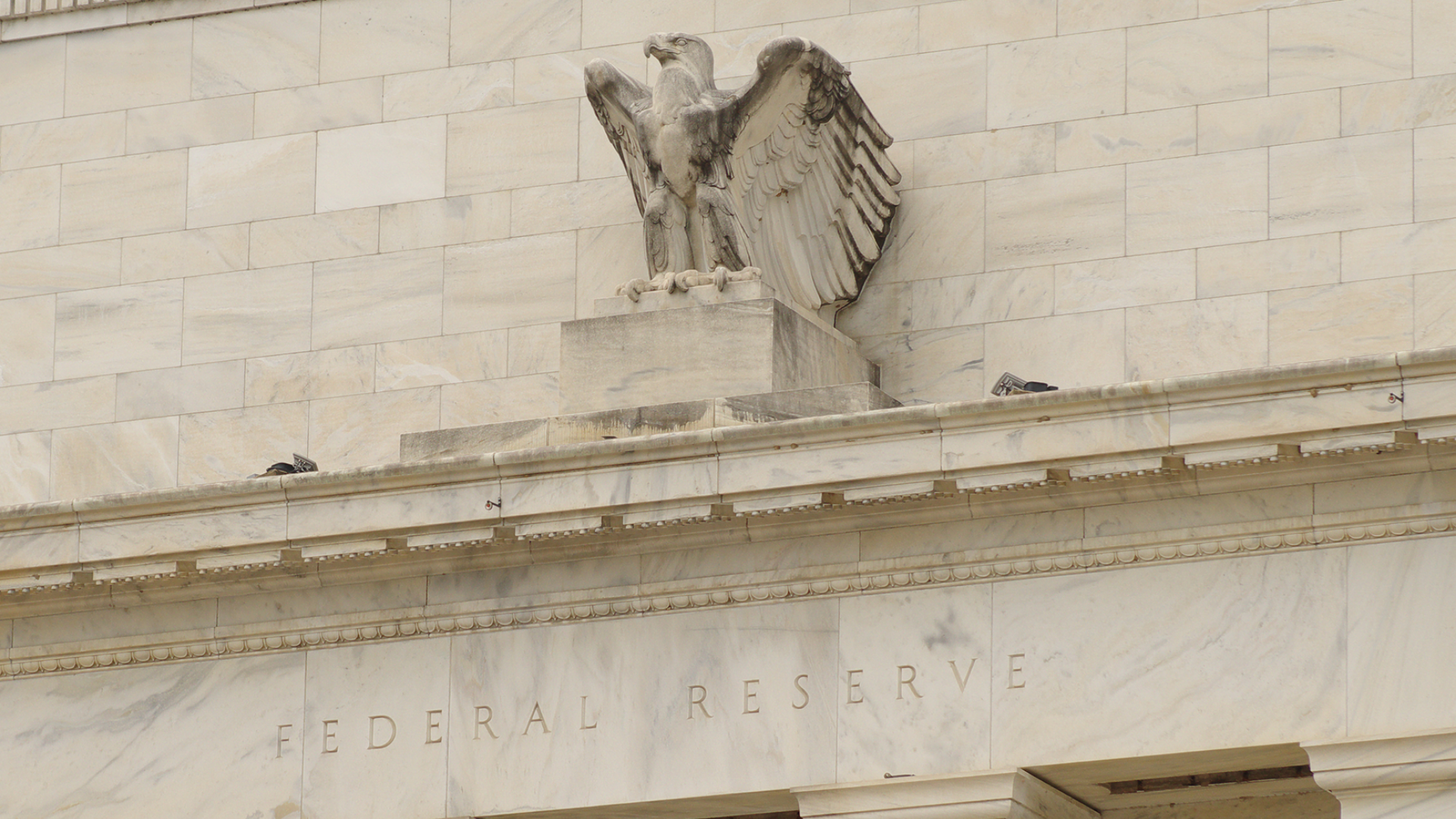
Federal Reserve Chairman Kevin Warsh has steered the central bank into an era of less transparency. Former Fed governors Donald Kohn and Stephen Miran, as well as Goldman Sachs Chief Economist and Head of Goldman Sachs Research Jan Hatzius, discuss on the Goldman Sachs Exchanges podcast the merits of Fed communication and how it affects financial markets. The episode is based on the latest Top of Mind report.
Key takeaways:
- Kohn says there is a “golden mean” in which financial markets have some information from the Fed, such as a narrative that helps investors process incoming data, without central bank officials providing too much specific information about their policy plans.
- Reducing forward guidance would improve the signal that financial markets provide, and the additional volatility is worth the trade-off, Miran says. He argues that too much guidance from Fed officials can increase volatility in the longer run.
- Hatzius says markets will always price what they think the Fed will do—not what they think the Fed should do—even if the central bank provides less information about how it adjusts policy in reaction to economic data.
Transcript:
Allison Nathan: New Federal Reserve Chairman Kevin Warsh is steering the Fed into a less transparent era, with shorter post-meeting statements, less forward guidance, and a more limited role for projections. This marks a meaningful break from the transparency revolution that's defined central banking over the last quarter century.
So, what might a less transparent Fed mean for markets and the economy? I'm Allison Nathan and this is Goldman Sachs Exchanges.
[MUSIC INTRO]
Each month, I speak with investors, policymakers, and academics about the most pressing market-moving issues for our Top of Mind report from Goldman Sachs Research. For our latest edition, I spoke with former Fed governors Donald Kohn and Stephen Miran, as well as Jan Hatzius, Goldman Sachs' chief economist and head of Goldman Sachs Research.
I started by asking Jan if the shift toward a less transparent Fed is a positive or negative development.
Jan Hatzius: I do think that the transparency revolution in central banking over the last 40 years or so has been a good thing. If you provide significant information about your reaction function as a central bank, you say, "If we get this kind of data, then this is what we will want to do about it." Then financial markets can anticipate what is going to happen from a policy perspective.
Your meeting is not until four weeks later or six weeks later, but you get surprising information, it gets incorporated in financial conditions. And then you basically have to decide whether to ratify that.
But if markets have good information about what your reaction function is, what your objectives are, what you think the tools achieve, then you'll see faster monetary policy transmission in a way that you can always not ratify. That's always an option. And I think that's a great framework. And I think it's worked extremely well over the last several decades. So, I think unwinding transparency about the reaction function, in my opinion, would be bad.
There's a separate question about forward guidance about the path of the policy rate. And I think there the answer is more nuanced. Economists sometimes refer to so-called Odyssean forward guidance. Odysseus tied himself to the mast. And you basically commit yourself. You say, "Here's what we're going to want to do even if the data at some point down the road tell us that maybe we should do something else." That doesn't make any sense under normal circumstances. It can make sense when you have the effective lower bound for short-term interest rates. But even then, it's a debate.
Then there's so-called Delphic forward guidance. The Oracle of Delphi, the policy output is conditional on the economic data that comes in. That's more defensible, I think, even in normal times. The counter argument is market participants are going to think that what is actually supposed to be Delphic is Odyssean.
But I actually like the way the Fed does this with the dot plot. The dot plot is not, in my opinion, strong forward guidance, not even strong Delphic forward guidance. It's just the views of the different FOMC participants that are implied by their economic expectations. And I do think most sophisticated observers understand the conditional nature of the dots. And they view it mostly as information about where you would be if the economy evolves in the way that the Fed expects, which is also incorporated in the summary of economic projections. And they understand that if you get a move away from that, that the policy would also change. So, I view this more as additional information about the reaction function.
Allison Nathan: Don Kohn agrees that it's important for the Fed to provide clarity on its reaction function. But he sympathizes with some of Warsh's views about forward guidance and the dot plot.
Donald Kohn: One thing that I've pointed to over a number of years now is the focus on the median forecast in the SEP, the economic projections of the FOMC participants. That is a very weak indication of where the committee is when just one person shifting can shift that median. And I've seen that happen every once in a while. One or two people shifting and then the market reacts. So, it's crazy to focus on that median.
I think more serious is the forward guidance issue. So, here I have a little sympathy with Chairman Warsh. His concern is the forward guidance. What are we going to do next is both constraining the committee and constraining the market reaction to incoming information. And I think a good example where it constrained the committee with adverse consequences was coming out of COVID.
So, the forward guidance was we're going to hold rates at zero until we're at full employment almost no matter what the inflation rate is. And I think just looking at the structure of that forward guidance, in what world is it okay to have at the highest a real rate of minus 2% at full employment? So, I think that forward guidance was not well-conceived. And I think it did constrain the committee, which is not to say that some guidance isn't helpful and at the zero lower bound may be necessary.
When you get away from the zero lower bound, I think there's less need for guidance. And you can always adjust policy. So, I think forward guidance becomes much less helpful when you get away from the zero lower bound. And I would be a reluctant user.
Having said that, I think the problem right now with Chairman Warsh not giving forward guidance, that's fine. Shouldn't be a problem in these circumstances. But he refuses to talk about how the committee sees the economy evolving. And I think that’s not helpful.
I think explaining how the committee is thinking about the economy, what it's worried about, is part of helping the markets be stabilizing rather than destabilizing. And it's part of accountability. He's got a communications task force. I hope that one of the messages they give him is you need a narrative. You need a story. You need to be able to say what's going on, in part, because if you're not saying what's going on, how do you know when things aren't happening the way you thought they were going to happen? So, you're holding yourself accountable.
Alan Greenspan, whom Chairman Warsh says he wants to imitate in many respects, always had a story. And then when things weren't evolving the way he and the committee thought they would evolve, he could see the data weren't lining up and questioned, so, what's wrong? What's going on here? So, I think the story, the narrative is really, really important.
Allison Nathan: But Steve Miran is more supportive of Warsh's push for a less transparent Fed. So, Steve, do you view less transparency as a positive or a negative development?
Stephen Miran: I view it as a positive development. In my view, forward guidance has dampened volatility in the short run, but the flip side of that is that it has increased it in the long run. By telling the market exactly what the Fed is going to be doing over the next several meetings or several quarters, the Fed reduced the sensitivity of financial markets to data that was coming in, because the data wouldn't really matter that much, because the Fed told you what they were going to do. But at the same time, it resulted in two elements of greater volatility over the long run. One is that it increases the likelihood that the Fed would be behind the curve, because it makes it too slow to adapt to changing conditions.
And so, one thing that you saw at the end of the post-COVID experience was that the Fed was still buying mortgages when home prices were up 20%. Why was the Fed buying mortgages when home prices were up 20%? I don't think there's a really good economic reason for doing so. I think a lot of it has to do with the fact that they said they would. They gave calendar-based guidance for their activities. And that resulted in them injecting credit into the housing sector very long after it was appropriate to do so. And the result of that inflation in the housing sector, I think, was pretty plain. So, that was a very clear mistake that in my mind was a result of forward guidance.
Another element of that is that I think it makes the market less good at pricing risks because the market will listen to the Fed as an indication of what's going to occur. And so, if you take a look at Silicon Valley Bank, in my mind, there's no question about it that they were terrible risk managers. Part of the reason they were terrible risk managers is because they listened to the Fed. The Fed said rates are going to be zero pretty much indefinitely. And therefore, we can extend duration in our portfolios and take much more interest rate risk. When the government tells you something is going to happen, a lot of people tend to believe that.
So, I think that forward guidance, really, although it appears to dampen volatility in the short run by making the market less sensitive to any given data release, I think in the long run, you really manifest these really bad outcomes more frequently directly as a result.
Allison Nathan: But Steve, isn't there an important distinction between forward guidance in the sense of committing to a predetermined policy path as you just spoke about, and the Fed being transparent about its reaction function?
Stephen Miran: So, in theory, there's a very big difference. In practice, I think the difference gets a little bit muddy because the data very often require interpretation. For example, I can tell you the price of a barrel of oil because that exists. It's concrete. But inflation is the change to the general price level. The general price level doesn't exist. It gets constructed by statisticians. And in constructing the general price level, there are 10,000 methodological choices that get made along the way. And to many of these questions, there's no objectively correct answer.
So, the truth is that the meaning of the inflation data changed a lot as a result of the way that these things get constructed. And sometimes they're the type of thing that monetary policy should respond to because they'd be persistent inflation that's a result of a supply/demand imbalance that monetary policy can address. And sometimes they're not the type of thing that monetary policy should respond to, either because they're a one-off, that you don't expect to be repeated. Or because they're a measurement error that you should just ignore.
So, if you give too much transparency in the reaction function, then you run into situations in which you get a curveball from the data. And then you appear to be violating your reaction function or moving the goalposts.
But look, I think you're right that there is a distinction between forward guidance in terms of telling people what you're going to do, and forward guidance in terms of telling people what you care about. I think that is an important distinction. And I do feel more strongly about the first than the second.
So, for example, when you think about the dots, do I think the dots need reform? Absolutely. My view is the policy dot absolutely needs to go. Because as I said before, I think forward guidance increases the likelihood of large risk events. I think the policy dot contributes to that.
Markets and private sector agents should not be taking the Fed's indication of where policy is going when creating their own expectations for the future. The economic dots don't have as many downsides as the policy dots. So, my view is the policy dot needs to go.
But the other dots, I think that they're okay. But I think in general, you can narrow the presentation of guidance without necessarily getting rid of it altogether.
Allison Nathan: Warsh has also argued that less transparency would allow markets to provide the Fed with more, quote, "direct and unfiltered," end quote, information about the economy. I asked Jan whether he agrees.
Jan Hatzius: I disagree with that because markets price what they think the Fed will do, not what they think the Fed should do. And that's not going to change. If you obscure the Fed's reaction function, you're just going to have worse guesses on what the Fed will do, which would probably mean more volatility in rates markets and arguably broader financial conditions. And importantly, volatility that serves no good economic purpose. That's a really important distinction.
Volatility per se isn't bad. If the outlook changes, then you would expect volatility. You get massively stronger data. Yeah, of course, that should be a hawkish shock. But if you just have less clarity about the reaction function, then market pricing is going to jump around more for not necessarily very good reasons. It also could mean that the moves that do occur just occur later. So, it takes a longer time before monetary policy is transmitted effectively to the real economy.
Allison Nathan: Don, for his part, sees a middle ground.
Donald Kohn: I do think the Fed being very specific about what it's going to do could damp down the market's reactions. So, if you say, "Well, I'm anticipating two interest rate decreases this year," but then the market gets some information that might suggest the rate should go up, they might not build that in. So, I think there's a golden mean here in which you give them some information. And this is perhaps what I'm thinking about with stories, narratives about what are you looking at, without saying specifically what you're going to do. And that will help the market process the new data coming in and free the market up to say, "Given what I know about the developing economic situation, given what I know about what you guys are looking at, here's what I think the path of rates needs to be for you to get to your price stability or your maximum employment objective."
Allison Nathan: Don, if we presume that the outcome of less guidance is more short-term market volatility, is that a good thing or a bad thing? I mean, in other words, is that going to improve the signal or confuse the signal coming from markets?
Donald Kohn: I think it could improve the signal. So, if it is damped and we take off the damper but give markets enough information to react intelligently to whatever is happening, then a little volatility is fine. It's not awful unless you're creating a lot of uncertainty about where the economy is going, what your policy is aimed at. That's going to damp investment. And so, I think creating uncertainty for the sake of uncertainty is not a productive thing to do. That's another way of saying not telling the story is what creates volatility. So, I do think there's something to be said for backing off from the specific guidance, but you need to help the markets figure out what the right path of rates is to accomplish your objectives.
Allison Nathan: And Steve Miran seems most convinced that reducing transparency would improve the market signal and says higher volatility is an unavoidable, but ultimately acceptable cost.
Stephen Miran: If you're given forward guidance, there's very little volatility and there's no signal in the front end. It just reflects the forward guidance. If you're not getting forward guidance, there's volatility and there's signal. And just because there's volatility doesn't mean that there's no signal, right?
Market behavior is always going to come with volatility. Markets will always be volatile. But if you hope to get any signal from markets whatsoever, you have to accept that volatility. The first best world of market signal without volatility doesn't exist. So, you can't let perfection be your standard. There is no possible world in which you can get a strong market signal without volatility. So, you've got to accept volatility along with the market signal.
Allison Nathan: With so much at stake, I've then asked just how durable a less transparent Fed regime could be. Here's what Jan had to say.
Jan Hatzius: I think it's an open question. The Chairman can, of course, make a lot of changes in terms of the regime. He controls what he says at the press conference, for example. That's something that nobody can take away from him. And if he wants to provide less information, then he can provide less information. So, in that sense, it could be durable. But we'll see what the consequences are.
The other question is, to what extent can a reduction in trade communications broadly defined as, say, the number of speeches, how likely is that going to be durable? That is not going likely to be durable, because I think the Reserve Bank presidents, you're not going to be able to shut them down. And they have strong incentives to continue to talk because that is their main role. And the boards of directors of the regional Federal Reserve Banks have a pretty strong incentive to have their presidents talk a lot.
Increasingly, as a Reserve Bank, you are what your president brings to the table in terms of the monetary policy debate. So, the cacophony could get worse if you have less centralized communication but a continued high level of talk from the Reserve Bank presidents.
Allison Nathan: But Don views Warsh's current level of quietness as unsustainable.
Donald Kohn: I don't think the degree of quietness just from Chairman Warsh is sustainable. And I'm guessing that he knows that the July press conference was not a good look for a Fed chair. So, you go through a press conference. Short-term rates go down and long-term rates go up. So, long-term rates are building in inflation or uncertainty premiums, risk premiums, term premiums. I'm sure that's not what he would have wanted going into the press conference.
This is a very smart man. I worked very closely with him for nearly four years. Our offices were next to each other at the Fed. We worked hand-in-hand through the financial crisis. So, I'm confident that Chairman Warsh recognizes that there's a void he needs to move in the direction of filling. I'm also confident that the Communications Task Force will help move him in that direction.
Allison Nathan: And while Steve believes that a sharp rise in volatility could force Warsh to rethink his strategy, he says we're far from that point today.
Steve, even if Chairman Warsh wants to have a quieter Fed, we all know that at some point volatility can get quite disruptive. So, is there a threshold at which that volatility is just unsustainable?
Stephen Miran: Absolutely. So, let me put it this way. A number of tools that were introduced in the GFC era, forward guidance, QE, the formal inflation target. These are extraordinary tools for use at the zero lower bound when you are afraid of deflation risk that you can't head off. In that environment, it is appropriate, in my view, to use those tools.
Would I have opposed these tools in 2009/2010? No, I would not have. By the time you get to 2014/2015, are they needed anymore? Absolutely not. They all should have been repealed at that point completely. You use these tools when you need them. You take antibiotics when you're sick. If you take antibiotics when you're not sick, you just create super bugs. And that's what we saw, I think, with the example before where they didn't stop buying MBS.
And so, these tools, if you have an economic environment that suits them, are useful. But they become less useful outside of that economic environment. And their preciousness shouldn't be squandered.
So, if the increase in volatility is so much that it brings you back to the zero lower bound and you can offset it with a lower Fed funds rate. Then sure, forward guidance might be appropriate. But we're very, very far from that type of outcome.
Allison Nathan: So, with all of this in mind, we'll be closely watching how Fed communication evolves from here. Let's leave it there for now. My thanks to Don Kohn, Steve Miran, and Jan Hatzius.
And thank you for listening to this episode of Goldman Sachs Exchanges, which was recorded in August 2026. I'm Allison Nathan.
The opinions and views expressed herein are as of the date of publication, subject to change without notice, and may not necessarily reflect the institutional views of Goldman Sachs or its affiliates. The material provided is intended for informational purposes only, and does not constitute investment advice, a recommendation from any Goldman Sachs entity to take any particular action, or an offer or solicitation to purchase or sell any securities or financial products. This material may contain forward-looking statements. Past performance is not indicative of future results. Neither Goldman Sachs nor any of its affiliates make any representations or warranties, express or implied, as to the accuracy or completeness of the statements or information contained herein and disclaim any liability whatsoever for reliance on such information for any purpose. Each name of a third-party organization mentioned is the property of the company to which it relates, is used here strictly for informational and identification purposes only and is not used to imply any ownership or license rights between any such company and Goldman Sachs.
A transcript is provided for convenience and may differ from the original video or audio content. Goldman Sachs is not responsible for any errors in the transcript. This material should not be copied, distributed, published, or reproduced in whole or in part or disclosed by any recipient to any other person without the express written consent of Goldman Sachs.
Disclosures applicable to research with respect to issuers, if any, mentioned herein are available through your Goldman Sachs representative or at http://www.gs.com/research/hedge.html.
The opinions and views expressed herein do not reflect the institutional views of the employers of the speakers herein. The material provided does not constitute investment advice or a recommendation from any speaker herein or their employer to take any particular action and neither the speakers herein, nor their employers, make any representations or warranties, expressed or implied, as to the accuracy or completeness of the statements or information contained herein and disclaim any liability whatsoever for reliance on such information for any purpose.
Subscribe to Briefings
Our weekly newsletter delivers the latest insights on economic forces shaping markets—from Goldman Sachs leaders, economists, and investors around the world.
You can unsubscribe at any time. For information about how your personal data will be used, visit Privacy Information and Resources.