
Exchanges
Inside the Revival of Venture Capital Liquidity with an Industry Pioneer
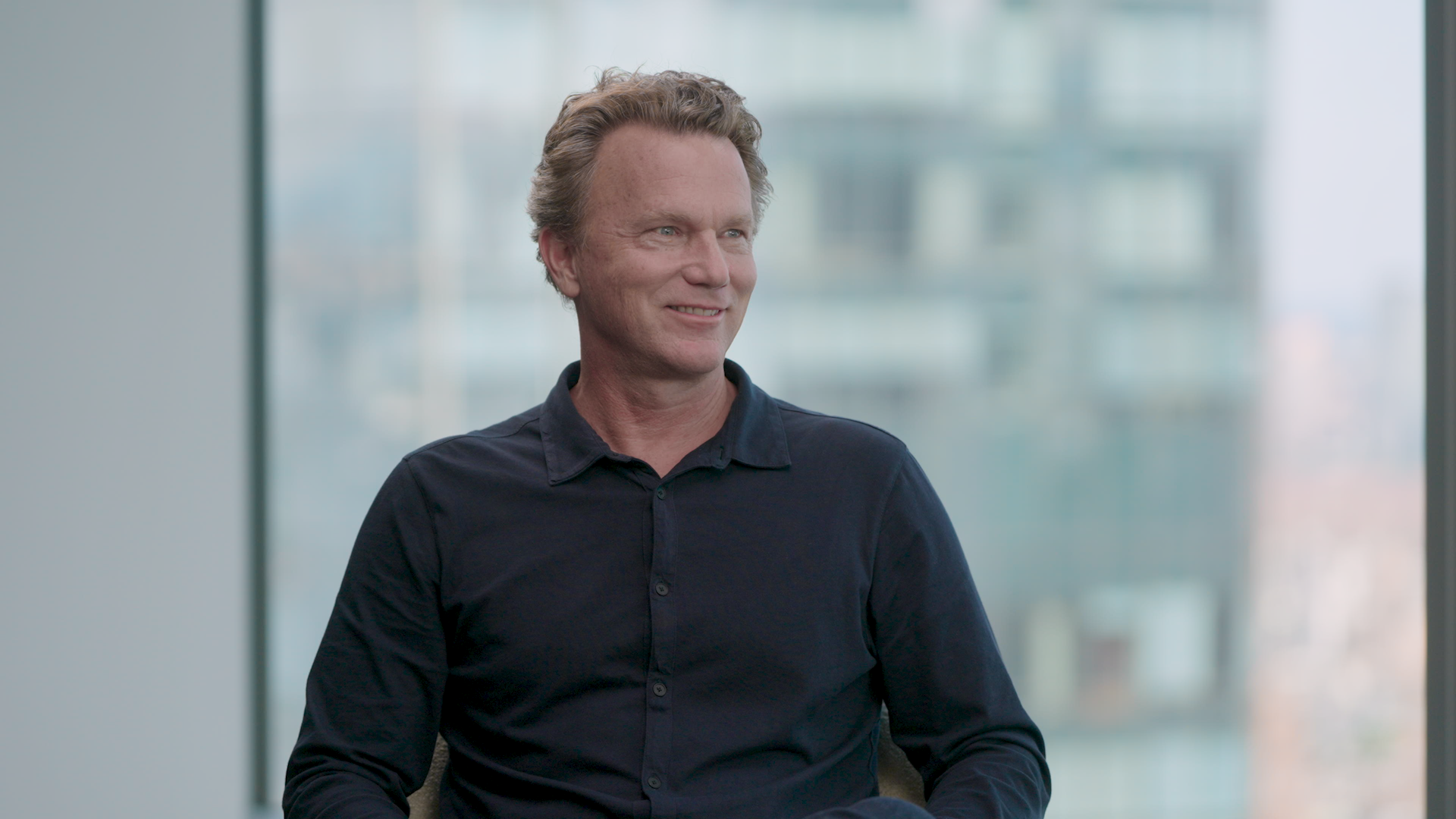
As liquidity in venture capital declines, the secondary market is increasingly important for investors and companies, says Hans Swildens, partner in Goldman Sachs Asset & Wealth Management, on Goldman Sachs Exchanges: Great Investors. Swildens explains why companies are staying private longer and how artificial intelligence is creating opportunities as well as headwinds for portfolios. In this conversation with Michael Brandmeyer, global head and chief investment officer of the External Investing Group within Goldman Sachs Asset Management, Swildens also discusses the strategic rationale behind agreeing to sell his firm, Industry Ventures, to Goldman Sachs in January 2026.
Transcript:
Hans Swildens: One thing that's interesting in our market that's starting to happen is that even participants in the secondary market are starting to get liquidity through secondaries, which historically had never happened.
There's so much capital sitting in the system that it's not enough liquidity to give back all the capital into the market.
And so, we think that the venture growth market, on the secondary side of the market can be larger than the primary.
I think this is one of the most exciting times I've ever seen for investing. And I think we're just beginning in it.
Michael Brandmeyer: Welcome to Goldman Sachs Exchanges: Great Investors. I'm Michael Brandmeyer.
Venture capital has a liquidity problem. Companies are staying private longer, exits have slowed, and limited partners are asking a simple question: When do I actually get paid? My guest, Hans Swildens, built Industry Ventures around that question, growing it into a leading venture secondary specialist with roughly $7 billion in assets under supervision before agreeing to combine with Goldman Sachs Asset Management in January of 2026. Today, how severe is the venture liquidity crunch? What's real in AI? And why he finally said yes to being acquired.
Hans, welcome to Great Investors.
Hans Swildens: Thank you for having me.
Michael Brandmeyer: For our listeners that may not be focused on secondaries all the time, if I'm an early entrepreneur, if I'm an early VC investor or even a later stage investor, what are the reasons that people are selling to secondary players like you?
Hans Swildens: Well, the reasons have been changing over time. So, when we first started you know, 26 years ago most of it was distressed sellers, sellers that no longer wanted the investments anymore like a corporate venture capital fund decided to terminate their investments and then sell the portfolio, or a hedge fund decided to stop making private investments and just concentrate on the liquid securities and sell their private portfolio.
A lot of it was distressed sellers just exiting things they didn't need or want anymore. And then that evolved over time to include sellers that had made a big gain. And I would say a vast majority of what we've been purchasing over the last 10 years has been giving gains to investors.
We also have been buying portfolios at losses to the original cost as well, but I would say that that's tilted over the last 10 years so that you see sellers using the market for portfolio rebalancing or profit-taking or risk management. If a single position in their portfolio outweighs everything else, that they can trim it. More traditional portfolio management reasons to sell securities.
Michael Brandmeyer: Let's go down one level to what's actually happening in existing venture capital portfolios, because if you talk to investors, be the entrepreneurs or limited partners or venture capitalists, there's just a huge illiquidity problem out there. So what's going on? Is it a problem of marks? Is it a plumbing? What are the big issues that you're seeing that are holding us back from a liquidity standpoint?
Hans Swildens: I think it's everything. There's a cross current of AI growth and non-growth due to AI in the private market. So that's one issue I think. The NAV marks, some of them are undervalued, some of them are overvalued, and that's becoming more extreme of whether or not something's very overvalued or very undervalued because of the way NAV is held in the funds.
I think there's also kind of concentration in the market now around certain names, and so you're seeing a lot of crowding in like the top 25 private names in the market. When you go beyond the top 25 private names and there's 30,000 private companies, the market gets pretty illiquid.
And then in terms of M&A and IPO activity which has been challenged over the last five years, we're starting to see that accelerate. But there's so many illiquid companies and so much NAV is illiquid. I think McKinsey came out and said they thought it was over $1 trillion in prior funds, and then other people came out and said it's over $3 trillion in prior funds.
So there's so much capital sitting in the system that even a few IPOs or let's say it normalizes to 50 or so IPOs per year that's not enough liquidity to give back all the capital into the market. So you're seeing a lot of structuring around secondaries in the primary financing events with tenders in the companies.
Seeing a lot of restructuring of funds with CVs. You're seeing a lot of LPs, you know, exiting different funds at different times to get cash to fund other funds they're funding. And so that, that's just generating more trading activity.
Michael Brandmeyer: So given all this illiquidity, what are you seeing with buyer and seller expectations, and does it depend on when the companies were funded?
Hans Swildens: It's really interesting. I mean, there's a cohort of older companies that haven't seen acceleration. They've seen deacceleration with the AI technologies being adopted because budget's shifting away from what they were doing or maybe a lot of the AI coding technologies can kind of replace what they built.
And then you're seeing the exact opposite in some older companies where they've rebuilt their tech stack to be AI first and resold that into their current customer base and seeing dramatic acceleration and adoption of their new AI technologies within their customer base, and so you're seeing hypergrowth.
So, it's I'd say it's very interesting from an investment perspective because some older businesses that haven't been able to energize themselves and rearchitect their tech systems are falling behind when others are actually taking advantage of this new wave and cross-selling and upselling all the new AI that technologies have been developing to their customer base.
And so that's happening. It's hard for investors to see that. And then in terms of the bar, just taking a company public today, you have to be so large. So growth has to be a certain rate. A lot of the people participating in the IPO market want to see profitability and growth metrics combined.
That's just caused more pressure in terms of the companies to stay private longer. You've also had the businesses themselves and the founders decide to stay private longer in the secondary market, and the way that liquidity can be had now is enabling them to do so. And so in a weird way, our secondary market has enabled some of these companies to stay private longer because if they want to get liquidity to their employees or to their shareholders, they can do through the secondary market. And therefore, there's not a need to go to the public markets.
Michael Brandmeyer: So let's orient our listeners to what is a venture secondary really mean? People talk about directs, people talk about buying portfolios, but orient us to the types of opportunities that you see in the secondary market today.
Hans Swildens: Yeah, I think that's a great question. There are so many different secondary transaction types today that you can kind of bucket them into three buckets.
The first bucket are direct secondary transactions, so these are single stock positions in companies or multiple stock positions in multiple companies, but they're the actual stock certificates and ownership interests in the companies that are being traded, so that's the direct secondary market, much like the Nasdaq, right?
You can buy a single stock, or you can buy multiple stocks at once. And then there's the LP part of the market, which is buying limited partnership interests in the venture funds. And so the venture funds hold the same stocks that are being sold on the direct secondary market, but they're held in a fund in a commingled structure.
Sometimes there's one company left, sometimes there's 50 companies left in the fund interest. But the fund interest is basically you're transacting with a limited partner that's in a fund, and then you're buying that, their ownership interest in the fund that in turn owns the company.
And then the third part of the market is what I like to call special situations, which are things like continuation funds. That's a fund at the end of its life or midlife that is doing a continuation vehicle or a portfolio continuation from the vehicle itself. And basically resetting the time period. You can even reset the portfolio construction of what's being purchased in a CV or a continuation fund.
Michael Brandmeyer: One of the things I find remarkable about the venture industry today is as it becomes more successful, in an interesting way, it actually becomes less liquid. I mean, today, the average company that's venture-backed that goes public takes 14 years. I mean, that's an eternity. And so you think about the venture market without the secondary market, it's almost hard to imagine right now.
Hans Swildens: Yeah, I think that this has become very structural where if a limited partner or a direct shareholder or a fund manager wants to get some sort of liquidity before a normal exit of an IPO or M&A event they're looking for liquidity on the secondary market.
The adoption of this from not only the smaller funds that are holding these securities at large gains, but also from the larger funds that have been in them for a long time and deployed lots of capital into them is we think is going to continue in different formats and what's largely being driven by the hold period being 14 years long.
I think there's also an issue with the last five years, we've seen the amount of distributions coming out of the venture funds get over halved. So traditionally we have 20% or so per year of distributions, and we've gotten down to 5% to 10% a year on average over the last five years.
So you have even more of a constraint in terms of the capital just compounding on itself and being illiquid.
Michael Brandmeyer: Let's talk about your approach to pricing risk within the secondary market. I mean, this is one of the things I find really fascinating because I'm a lifelong investor and secondary investor, but I'm typically pricing cash flows.
Let's start with the AI part of venture portfolios, which is growing very, very quickly right now. There's a lot of businesses that are getting funded. There is a lot of fundamental growth. There's also a lot of growth that feels like it might be a little bit secular. So, talk a little bit about how you go about pricing some of these very exciting companies which have gotten very big very quickly. How are you going about pricing these assets?
Hans Swildens: I'd say the pricing exercise has been very similar to what we've been doing for two decades. In terms of venture itself compared to other asset classes has a higher component of underwriting in qualitative assessment. And so you're dealing with how large you think a market's going to be, how durable you think the product is going to be, what their competitive moat is, and how can that be extended or defended over time.
It's something that has existed in technology since it started, so that's not new. I would say the thing that might be new in this phase is that we haven't seen the rapid adoption, the rapid growth, and the rapid cash flow generation and then while they're in the private market, they get disrupted. The technology shifts and changes or if something else is invented by a competitor that they might stall out and then start going negative growth while they're still private.
And so it happened episodically before it wasn’t something that would happen to the whole market. You’re buying private securities, they're growing, you're seeing multiple expansion, you're seeing you know extreme valuation expansion.
But then, while they're still private, you're seeing potentially contraction due to competitive threats and things. That’s new because the pace of all these new technologies has compressed the time period of success. And so it'll be interesting to see if a lot of these businesses don't go public if they're going to have really durable growth and moats over time or if they’re going to get disrupted.
Michael Brandmeyer: So is that related to the analysis we talked about 30,000 companies being funded over the last maybe decade, decade and a half. Well, maybe 1000 or 2000 of them are AI funded in the last few years. That still leaves 25,000 plus that were funded effectively pre-AI. So, I guess extend that thinking into how you're analyzing the companies that were founded before AI was front of mind for everybody, including venture investors.
Hans Swildens: I think there's a great investment opportunity in a small cohort of those companies where they still have amazing founders, great management teams, good technical talent, where they've been able to pivot if they're in a vertical if it's a vertically oriented SaaS business or if it's a vertically oriented services technology company. And then incorporating and building out all the new AI technologies in that vertical. They have a chance of becoming extremely fast-growing and extremely profitable, more efficient with their people in terms of just their cost structure can be less.
And so I think that there's a great investment opportunity there. I think it's difficult for someone who's not in the market to assess because it's hard to see and it's hard to believe that maybe a name that people might say negative things about because they're an old business could reinvent themselves and become a great kind of hot new business, but with an old brand.
But that is happening in our market, and we're starting to see some acquisitions over the last quarter. I think we saw three of that type of business for very high exit multiples because they generated new technologies and were able to, with their expertise and their knowledge of that sector and the workflows and everything, to create an application that would automate a lot of that with AI.
But I would say a majority of the businesses are going to be more buyout exits, where you'll see lower growth, but higher profitability over time. And I think the tech buyout funds if they execute well, will be able to go into sectors and kind of aggregate up multiple companies in a sector and then operate them for cash flow rather than revenue growth.
Michael Brandmeyer: And it's really interesting. Things are moving really quickly. Innovation is happening at a breakneck speed right now. And it also strikes me that being a risk allocator in this environment has a lot of opportunities, but also strikes me as something that's really hard.
Hans Swildens: That's right. And so I think one of the things that I've appreciated over time is just portfolio construction matters and looking at your positions and risk levels in the positions, and then sizing them correctly to build like a real institutional portfolio model around risk-return, also exit timing and then your multiple by investment as well as an aggregated portfolio matters in this environment, we think more than it did before because of all the different crosscurrents and innovation going on in our market.
If you can size things correctly with the risk, return hold period multiple, and an IRR assumptions, and you can get those somewhat right, then on an aggregated basis, you diversify a lot of the loss rates. Because this market has more loss rates than almost any other equity market in terms of just losing capital and transactions.
Michael Brandmeyer: Let's go back to the origin story. It's in the late 1990s. This is even before you've helped create the market for venture secondaries. You're an entrepreneur. Tell us about what you were doing, what you were creating.
Hans Swildens: I moved to Silicon Valley end of 1995. I started my career in the Valley sleeping on the floor of the office, doing a startup software company with my brother. I didn't have much technical experience. And so I had to learn on the job with my brother sitting next to me selling software to engineers, which was a great experience because it taught me so many different things about software development, and about engineering, and about technology.
Michael Brandmeyer: And so you didn't end up being a software engineer. You ended up being effectively an asset management entrepreneur, but I'm sure those experiences were really helpful for you as you founded an investing business and started backing the types of entrepreneurs like you and your brother were before that.
Hans Swildens: Yeah, I was fortunate that I had two different startups with my brother, so I was able to learn all the things we did wrong first and try to fix them in the second one, but those experiences translated really well into technology investing, understanding companies at the company level, and connecting with the entrepreneurs and the management teams at their level because that's where I came from. And that's helped me because because I could understand the risks and understand the people side of the business a little bit better than most.
Michael Brandmeyer: Yeah. So after your second exit you decided to take a different path. You embarked on what became venture secondaries. As an investment strategy, talk to us about how that came about. I mean, the market didn't really exist at that moment in time.
Hans Swildens: Yeah. I think the first two companies I had with my brother, too, it was very similar where we started the companies before there was a real market. That is a blessing and a curse, and so when we started investing, originally I was doing angel investing, and when the NASDAQ collapsed and the whole dot com bubble blew up, that whole capital market event caused us to relook at the venture business and see how we could make money in a very dislocated, distressed environment, and that's when we started calling and talking to other investors in the asset class and seeing if we could provide liquidity and buy them out of their positions.
Michael Brandmeyer: So, Hans, this is back in the time when we got to know each other, when I was looking after our secondaries platform and you were focused on venture, and I was really intrigued by this idea. But at the time, we really didn't have the expertise or the network that you had, and it was very clear to me right away that you had a different approach to this market.
How big did you think this could become back then?
Hans Swildens: I think we all had doubts of whether it was going to be, like, an episodic opportunity to create liquidity for kind of the dot-com collapse, or it would be a structural feature of the market that over time would grow.
I personally thought that it was going to become something more structural over time just because the secondary market and every other market is sometimes bigger than the primary market. Most of the time it is. And so, I always had a kind of inner feeling that this market could be a lot bigger than people thought.
But I'd say the first kind of five to ten years between 2000 and 2009 there were a lot of doubts in the venture business about a ten-year period of people saying, "Hey, is that just a small market opportunity that's going to go away, or is this something that structurally might develop over time into a big part of the market?" So luckily, I stuck it out and saw the market grow and compound over a long period of time and become a really massive market.
Michael Brandmeyer: Yeah, I'd say it worked out just fine. How big do you think the venture secondary market could become over time?
Hans Swildens: Yeah, that's one of the things that's been really interesting being part of XIG, is this looking at the buyout market and looking at the venture growth market. I think that our division has a different kind of more on the ground perspective here.
The venture and growth part of the market is becoming large. It's becoming almost the same size as the buyout market. It's getting to the point where our NAV in our market is similar.
And so, we think that the venture growth market on the secondary side of the market can be larger than the primary side of the market, and we're still at a place in time today where our estimates of the venture secondary market are around a $170 billion so this year when the primary market might be, this year might even do a trillion of invested capital.
And so if you look at that historically, if you average things out, the primary market's somewhere between $300 billion and $500 billion over the last five to 10 years. And so we still have a nice kind of multiple in our market to grow. In all the other asset classes, the secondary market is larger than the primary market.
And so it's exciting. One thing that's interesting in our market that's starting to happen is that even participants in the secondary market are starting to get liquidity through secondaries, which historically had never happened, right? Because the secondary market didn't really exist as an option, and then it became an option, you had a situation where there was the primary market transaction and then a secondary market transaction, but you didn't have a secondary market transaction that in turn also did a secondary market transaction, and we're starting to see that happening too.
So, that's the multiplier effect of why the market can be bigger than the primary market. And we're seeing that now all over the market.
Michael Brandmeyer: Hans, one of the things we're seeing right now is a lot more transparency in the private markets, and so in some of these secondaries where there are employee tenders or in primary rounds, people understand the valuations, and you see more and more trades happening in the secondary market at some of these valuations. Is that leading to more volume? What is the impact on the private markets?
Hans Swildens: Yeah. Historically there weren't that many transactions, right? So, it was hard to determine what the right price would be if you were a seller or if you were a buyer. And I think today with more volume and more transparency, that's just making both buyers and sellers more comfortable to transact.
And so I do think that is driving more volume in the market.
Michael Brandmeyer: So, I want to pivot and talk about a personal decision you made in the last year. Obviously, things have changed from the days when you had a sleeping bag under your desk and you were building companies, maybe thinking a little bit more about your rent payment and how you're going to take your girlfriend out to a nice dinner. You decided to sell Industry Ventures to Goldman Sachs a year ago. What changed over that period of time?
What led to that transaction?
Hans Swildens: Well, I think success changed. You know, the definition of success changes through your life. The first phase of this business, like the others, were just get it successful, right? I've always looked at businesses as like their own kind of being and their own person.
So, you know, it's out of the gate, you've got to get it self-sustaining, right? It's like having your kids go off and graduate from college and get their own job and stop paying their allowance. So that was our first phase. And then I think the second phase was go execute and build out the business really well, and get it to have a nice growth rate, nice profitability, nice returns to all the LPs, nice repeatability with the investors re-upping, nice repeatability with different counterparties, with GPs, entrepreneurs, and what not, and then grow and scale it in a repeatable way, which is what we did.
And then it got to a point where we had the third phase of success, which is, our market's growing, our market's institutionalizing. Should we be more institutional? Should we scale this more? If we're going to scale this more, is there a one plus one is three out there in terms of another firm like ours that's bigger, that's already built everything that we've wanted to go build in our plans?
And I think luckily we found this working relationship with Goldman to be so great that over time we just sort of folded in our division. I mean, we've been working together for 20 years. You built a large part of this division from scratch and a secondary fund as well, and so there's a lot of history here.
I think that that mattered. And then Goldman itself had owned part of our management company, and you saw us operate and hit our plans over a period of seven years and because we had quarterly meetings over that period, and so there just became trust during that period as well.
And so, we saw this as, as a third phase of making sure that we're successful for our investors, we're successful for our team members. The business itself can be continuing to compete at an extremely high, high rate in terms of its competitiveness and kind of take this business to a next level, which I think we're doing now internally here as part of Goldman.
Michael Brandmeyer: Yeah, I totally agree. And for me, it's been so much fun to bring this together. First of all, getting to know what is an absolutely terrific team of people at Industry Ventures. We've just been so impressed. Obviously, you and I have known each other for 25 years, but it's great to get to know the broader cross-section of people at Industry Ventures.
And if you look at the venture secondary market, as you're saying, there's a lot more opportunity than there is capital right now. And I think that's a good backdrop for something where we can take the Goldman sourcing engine and add it to yours, which is hard to replicate with all the people that you have inside Silicon Valley with the network that you have. And so I think it's really exciting what can happen here.
Let's just roll into the future here. It's 2030. What do you think this all looks like?
Hans Swildens: I think it's going to look different every five years. Our market's evolved and changed, and so has all the other capital markets.
Our market is kind of the driving force of AI in the world today. There are so many different opportunities, but the one area that's kind of really fascinating that's going to, we think, create a lot of opportunity is, the digital AI market and the physical AI market is going to collide.
And so we're going to see a lot of things in our real life, right, be AI-enabled and live and work together with artificial intelligence in hardware formats in our daily lives. And so, there's a huge opportunity there for entrepreneurs and we're seeing a lot of innovation at the early stages there.
I think you've also got healthcare is going to get transformed. It already is starting to be transformed. And then financial services and the whole re-industrialization of the United States. You're seeing the military complex being transformed right now in terms of what is being used in the battlefield.
Ans then you've got space, right? So there's a bunch of opportunities now with going to the moon or interplanetary travel or everything from mining to moon base. And so, the satellite systems around the planet are obviously going to change in the next five years in a dramatic way.
Michael Brandmeyer: Yeah. No shortage of excitement and change and innovation, and I can tell you I'm just so excited about working on this opportunity together in the next 5, 10, 15 years because one of the things we know for sure is there's going to be a lot of change, there's going to be a lot of innovation.
And so therefore, there's going to be a lot to do. Now, Hans, we like to finish these sessions with a lightning round. So I'm going to jump into that now. What is your greatest strength as an investor?
Hans Swildens: I think it's just the fact that I've worked in all different parts of our market, and I've been a player coach, and I've played every position on the field of being a founder, being an operator, being a LP, being a direct investor, being a secondary investor, being a buyout co-investor, being able to see all different sides of the coin, understanding through a life cycle of a company and a fund how liquidity works and where it might come from. And then looking at the company from a company perspective understanding how it's being operated. There's not many people I've met that have all those sets of experiences combined into one person, and so I think that's been my superpower.
Michael Brandmeyer: I can remember even 15 or 20 years ago talking about your reputation here within Goldman as one of the most sober and realistic pricers of risk in the venture market. So, I would definitely agree with that. Was it easier to build software companies or a fund management business?
Hans Swildens: Definitely software companies. Software companies had really quick product market fit feedback, real quick customer feedback, and then if customers liked it, and they could deploy it through their business or use it personally. You just had kind of rapid success or failure, and you could work with that easier.
I think in the investment business as you know, especially with the time period to exit in our market proving out your track record, proving out you can make money, proving out you can make money at a certain IRR rate which is more important now than ever compared to other asset classes, and just proving you can invest correctly for the right risk-return for the investor base I think is really hard. It's just the duration on it's difficult. And then in terms of doing that repeatedly over cycles is very difficult cause you have drawdowns. We've had multiple drawdowns over the last 20 years and compounding capital through drawdowns is difficult.
Michael Brandmeyer: What's the best piece of advice you've ever gotten?
Hans Swildens: I had a good piece of advice a long time ago from a friend. He said, 'cause I asked him, "In your career, what was one of the most important things that you learned?"
And he said, "Just keep doing... If you're really good at something, keep doing it for extremely long period of time. You want to be working on the same, in the same sector, on the same set of problems over a long, long period of time. And if you're really good at it and you have a talent for it, what you'll find 20, 30 years later is that you'll become an expert in that area, and everyone you've worked with during that period of time, plus the people they know, will come to you for a solution or advice or in our case, investing opportunities.”
And that's been, and that's proved to be true.
Michael Brandmeyer: And finally, what are you excited about in the world right now?
Hans Swildens: I think this is one of the most exciting times I've ever seen for investing. It's like all the innovation across every category in the world. It's a worldwide innovation event. It's a platform shift and I think we're just beginning in it across all sectors. And so, I couldn't think of a more exciting time that I've ever seen in the technology markets in my life.
Michael Brandmeyer: I agree. Hans, thanks for being with us today.
Hans Swildens: Thank you.
Michael Brandmeyer: Thank you for listening to this episode of Goldman Sachs Exchanges: Great Investors, which was recorded on Tuesday, September 8th, 2026. I'm Michael Brandmeyer. If you enjoyed this show, we hope you'll follow us on Apple Podcasts, Spotify, YouTube, or wherever you listen to podcasts, and leave us a rating and a comment.
The opinions and views expressed herein are as of the date of publication, subject to change without notice, and may not necessarily reflect the institutional views of Goldman Sachs or its affiliates. The material provided is intended for informational purposes only, and does not constitute investment advice, a recommendation from any Goldman Sachs entity to take any particular action, or an offer or solicitation to purchase or sell any securities or financial products. This material may contain forward-looking statements. Past performance is not indicative of future results. Neither Goldman Sachs nor any of its affiliates make any representations or warranties, express or implied, as to the accuracy or completeness of the statements or information contained herein and disclaim any liability whatsoever for reliance on such information for any purpose. Each name of a third-party organization mentioned is the property of the company to which it relates, is used here strictly for informational and identification purposes only and is not used to imply any ownership or license rights between any such company and Goldman Sachs.
A transcript is provided for convenience and may differ from the original video or audio content. Goldman Sachs is not responsible for any errors in the transcript. This material should not be copied, distributed, published, or reproduced in whole or in part or disclosed by any recipient to any other person without the express written consent of Goldman Sachs.
Date of recording: September 8, 2026
© 2026 Goldman Sachs. All rights reserved.
Subscribe to Briefings
Our weekly newsletter delivers the latest insights on economic forces shaping markets—from Goldman Sachs leaders, economists, and investors around the world.
You can unsubscribe at any time. For information about how your personal data will be used, visit Privacy Information and Resources.