

Exchanges
Why Markets May Be Pricing in Too Many Fed Rate Hikes
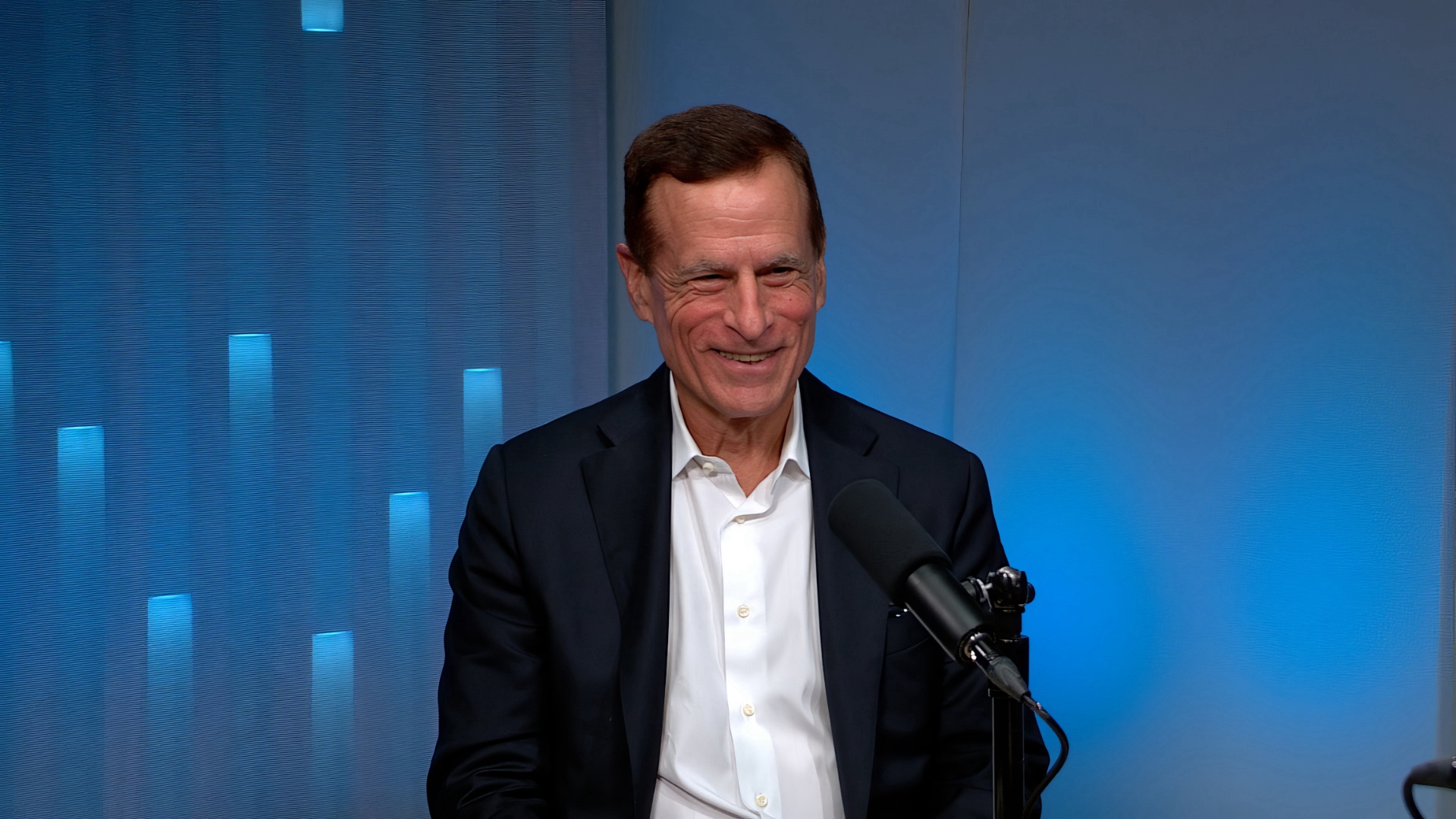
Markets may be pricing in more tightening by the Federal Reserve than is warranted due to a divergence playing out in the economy, according to Goldman Sachs Vice Chairman and former Dallas Fed President Rob Kaplan. In the Goldman Sachs Exchanges podcast, Kaplan notes that while artificial intelligence (AI) infrastructure and defense spending are continuing to boom, interest-rate sensitive parts of the economy, such as housing and autos, are already straining under higher rates. Taken together, these crosscurrents are creating a more muted response from the Fed.
Key takeaways:
- The Fed may still hike, but not much: Kaplan expects the Fed to raise rates one more time to bring rates to roughly 4%–4.25%, then pause to reassess. The markets, however, are pricing in more hikes, which Kaplan attributes to a risk premium from investors that may be related to uncertainties over oil prices and how Fed Chairman Warsh would adjust policy in reaction to economic data.
- The neutral rate still matters: Kaplan says this policy rate, while not the “be all,” is still relevant. Kaplan thinks another rate hike would probably push Fed policy above the neutral rate and be “slightly restrictive” for the economy.
- A shock without a playbook: Kaplan describes an economy with a "low fire, low hire" labor market where tariffs, immigration-driven labor constraints, and an oil shock are coinciding with a historic capex boom—a supply-side setup with no textbook precedent. That shock is forcing the Fed to focus on containing the "bleed" of inflation into other goods, he says.
Transcript:
Allison Nathan: The Fed has just raised interest rates for the first time in three years. So, was one increase enough to bring inflation down, or should investors expect more rate hikes ahead? I'm Allison Nathan, and this is Goldman Sachs Exchanges.
Today, we're unpacking what this shift means for companies, for interest rates, and for confidence in the Fed with Goldman Sachs vice chairman and former Dallas Fed president, Robert Kaplan. Rob, welcome back to Exchanges.
Rob Kaplan: Good to be here.
Allison Nathan: A treat to have you actually in the studio this time around.
Rob Kaplan: Good to be with you.
Allison Nathan: So, as I just said, we have seen the first hike from the Fed in a number of years under new chairman Kevin Warsh. Start off, what was your first reaction to that? Did you think that was the right move?
Rob Kaplan: I did think it was the right move. Remember the Fed did three cuts in the fall of 2025. I would not have done the third cut. They were worried about the labor market.
We then get into 2026, we've got tax incentives, we've got an AI infrastructure boom, and then you've got the war with an oil spike. I think the Fed tried to be patient, tried to see if oil prices were going to settle back down. They haven't. And so, I think they were right to do nothing in July, but I did believe that September was the time to act, and they did the right thing to raise rates in September.
Allison Nathan: But let me just ask you a follow-up because did they do the right thing because of inflation concerns or because the market was so convinced it was going to hike that it didn't really have a choice and is there a difference between those two?
Rob Kaplan: Yeah, they had a choice. When you're sitting inside the Fed, I always think I have a choice. And if I think the market is way off, I can go out and communicate and give feedback to the market.
But the problem was month-over-month, year-over-year inflation we know is problematic, i.e. it's in the mid threes, but part of that is oil prices a year ago were in the 60s. They're now close to $100, so that's not a shock.
The thing that was problematic is the month-over-month numbers. I think they were hoping that those would cool and start to approach, say, 0.2 a month, so a annualized 2.5%, let's say. And unfortunately, they ran hotter than that. So even month-over-month, we're still running closer to three. And I think once they saw that, I believe that it was the right thing to do to start taking action.
Now, the issue is how many times do they need to move? And I think the dot plot, interestingly, was pretty muted, showed a pretty muted response, meaning they're going to raise in September. I think the median was one more increase, and then some thought they needed to do a little bit more than that, but I think the median showed they don't take any action in 2027.
I would call that a fairly muted response. And the reason it's muted is the AI infrastructure part of the economy, and AI adoption part of the economy is booming. There's no question about that. Defense spending, for obvious reasons, is very strong. However, when you look at autos, housing-related, companies that sell to low, moderate-income consumers, business isn't terrible, but it's pretty sluggish or weak.
So, the interest-sensitive parts of the market that are affected by the Fed funds rate are already, in my opinion, not overheated. And so, these crosscurrents sort of created a more muted response from the Fed.
Allison Nathan: Right. So, if you think about the fact that nine of the ten officials are expecting at least one more hike, is that realistic, or are you saying they need to actually hike more? Cause the market thinks they're going to market thinks they're going to hike more.
Rob Kaplan: The market is anticipating that they're going to hike more and if I were on the committee, my mindset would be, let's move in September. I would probably be inclined, unless there's a reason to act in October, I'd be inclined to skip October. We'll see if they do. And then look again about moving again in December. Then I want to take a fresh look and see whether or not we need to do more.
The reason two moves resonates with me, that gets you to four, four and a quarter. They're at three and three quarters to four right now. I know Kevin Warsh said he doesn't use the neutral rate, doesn't look at it, but and I agree with him. It's not the be-all, end-all, but it's also, in my opinion, not irrelevant. I think the neutral rate for me is probably plus or minus one, one and a quarter real plus the inflation rate. I think the nominal neutral rate is around four, four and a quarter.
So then the question once, if they raise it again in December, we're then at four, four and a quarter. I'm probably in the neighborhood of neutral. Maybe I need to do one more to be slightly restrictive, but I don't know that I need to do a lot more than that.
And the reason, again, I don't know is interest-sensitive parts of the economy are not overheating. And so, I'm sensitive to the fact that the one tool I have, the Fed funds rate is potent, but it's not going to slow down the AI infrastructure build. It's not going to slow down defense spending. And I'm also aware that we've got this oil shock that maybe gets resolved. I don't know that it will, but if it got resolved, that would also cause me to rethink, and I'm aware of that and mindful of it.
Allison Nathan: Right. So, just to be perfectly clear, you think the market is pricing in too many hikes at this point?
Rob Kaplan: I think the market is yes, expecting more hikes than at the moment, at the moment I think is likely. It's putting in effect, a risk premium maybe for a few factors. So, what could those factors be? One, maybe they say, "I don't understand yet the reaction function of Kevin Warsh and therefore of the Fed, and so I want to build in some cushion."
They may also be building in the fact that maybe we can't find a way to resolve the war in Iran, and oil prices stay elevated for much longer than everybody thinks, in which case the curve may be more likely to be higher, and the probability that the oil price bleeds into 30 or 40 items increases. And I think the market's pricing in some risk premium that that could happen.
Allison Nathan: Understood. When you think about that decision, what does it tell us about whether the Fed is making decisions without political pressure? We've talked about this in the past. There were some question marks about the Fed's independence with Chairman Warsh coming in. How confident should markets be in the Fed at this point in its independence and the process around.
Rob Kaplan: I'm extremely confident that the folks around the FOMC table are doing their level best without political considerations or political influence. They're doing their level best to make their best decision. And so, they're not being swayed by political factors. I think that's true of the participants on the committee.
I think people also want to believe that about Chair Warsh, and I think Chair Warsh wants to demonstrate that.
I think the raising rates in September was a positive move forward for him in that regard. It shows he's willing to raise rates, but I think the market is still scrutinizing him a bit. But I can tell you around that table, politics or political pressure is not entering into their decision-making.
Allison Nathan: Got it. Let's talk about the real economy. We obviously have seen this big move up in Treasury yields across the curve, really. The 10-year Treasury is now above 5%. What are the implications in terms of borrowing costs for companies? You talked about the resilience and strength of the AI.
Rob Kaplan: Yeah.
Allison Nathan: But that will impact it.
Rob Kaplan: Well, let's talk about the curve. Let's talk about long duration bonds—10 years and longer, even five years and longer. But certainly 10 years or longer are more affected by the national deficit. I think there's a concern there was a hope that if we grew at four to 5.5% nominal this year, which is what we're growing.
We're growing two and a fraction real, and inflation's running, you pick the number, 2.5%, 3%. We're running at close to 5% nominal. I think the thought was earlier in the year, if growth was that high, we're going to bend the curve of the deficit. According to the Congressional Budget Office, they've now revised up their estimates, and it looks like the deficit's going to be higher, not lower than it was last year.
So then the question is, why? I think that was a little jarring and makes people think maybe government spending either on defense or the war in Iran or other things is much higher than we realize, and it's probably causing the market to be a little bit more discouraged that we've got a grip.
And then the second thing is there hasn't been any fiscal plan announced. There have been bond buybacks announced, but I think the market reaction is that isn't going to solve the problem. It might buy you some time or mitigate it on the margin, but there hasn't been a fiscal plan, and so that's affecting the back end of the curve.
Oil prices being higher has affected the whole curve. And the irony of the situation is the most booming parts of the economy, in particular the AI boom is being done with debt and in some cases equity along the yield curve, and that's already priced in I think more rate increases maybe even than the Fed's going to do.
So that's why you notice the Fed increase rates didn't really have much of an effect on the curve because the curve had already adjusted. So what the Fed is doing really isn't going to slow down the AI build. The people that I talk to that are being affected are people that borrow at the Fed funds rate and that can be small business, it may be some individuals, it'll be some interest rate-sensitive sectors.
And I talk to housing companies who are struggling to sell to customers because of high mortgage rates, but they finance their inventory based on short-term debt. So, they're getting squeezed. And so again, a lot of the interest rate-sensitive parts of the economy will get somewhat squeezed by this.
Allison Nathan: But corporate CEOs are not so concerned about the rate hikes.
Rob Kaplan: They are much more focused on being able to issue equity or on the treasury curve, and I would say credit spreads and the treasury curve have been reasonably well behaved and have already adjusted up, maybe even more than in anticipation of what the Fed is going to do.
Allison Nathan: Interesting. We've talked, and you just mentioned a few minutes ago, about transparency around the Fed's process and reaction function, and that has been a big topic in recent months. What are you seeing in that regard at this point, and how concerned are you, or is that really not a concern of yours?
Rob Kaplan: About the Fed's reaction function?
Allison Nathan: About transparency around it, that the markets feel less knowledgeable about how the Fed is going respond to data.
Rob Kaplan: My advice to listeners would be the following: if you listen to the speeches of Fed presidents and the governors, I think those are very true to exactly what they're saying in the room around the table.
Obviously, the chair is being more careful about talking frequently, and he's moderating, he's refining his message. But I actually think if you read Fed speeches from the FOMC participants, you got a pretty good feel on the debate around the table. And so I think there's pretty, actually, I still think there's pretty good transparency.
There's a little bit of question, again, trying to interpret Kevin Warsh. The one other thing that I didn't mention that's related to all this is, and you may have heard me say this before, they're very aware at the Fed the share of GDP going to profit for companies is going up.
AI is accelerating that, okay? The share going to labor is more muted. And so that's the other reason why you've got more resiliency among companies, in that the prospects for their margins and corporate profits to improve is increasing. The prospects for low moderate-income workers, if you don't own financial assets, yeah, they're getting gains in labor, but they're struggling to make ends meet. And so that's a little also in the back of the minds of people around the table.
Allison Nathan: So, but how much is that a problem for the Fed versus a problem for the administration and the fiscal side?
Rob Kaplan: It is a issue for the Fed to be aware of because that's a somewhat different dynamic. They're used to at the Fed for the last number of decades, with a few exceptions, you look, is the labor market overheating? Are number of hours worked expanding or decreasing? What happened to real wages? And normally, if the unemployment rate were going down and you saw those other variables improving, you would be worried maybe we're overheating and we need to cool it off by raising the Fed funds rate.
I think you've got a low fire, low hire labor market. You've got a different dynamic here where the labor market is not guiding the Fed right now.
I think this is a infrastructure boom with a supply shock, tariffs, constrained labor, and oil. That's a different kind of setup. And that's why they're wrestling with how to understand it and how to correctly respond to it.
Allison Nathan: One more question for you related to that, which is there's been a lot of focus on supply shocks being more difficult for the Fed to address and navigate. What are the implications for Fed policymakers here?
Rob Kaplan: So let's talk about what a supply shock is, and I'll give you my own, my own two cents on it. If you have a supply shock and it lasts for two months, then I think the knee-jerk reaction if you're at the Fed is, "Let's just wait and do nothing, and we'll look through it."
If you have a supply shock, on the other hand, that goes on for six, seven, eight months and maybe it could go on for a lot longer, what happens is it begins to bleed into 30 or 40 items, and then a year or two later you forget how the inflation even started. So that's why those who say supply shock, what can a Fed funds rate increase do about it?
Well, one thing it can do is prevent the bleed or slow the bleed to 30 or 40 other items. And Warsh even commented on that, and he was right to do it in the press conference. We can't stop the oil shock, but we can slow down maybe the transmission to other items. And I do think they've realized at this point they need to be focused on doing that.
Allison Nathan: And it's not just the duration of supply shocks, right? It is the frequency of them, because we obviously had the big COVID supply shock. We have this energy shock now.
Rob Kaplan: And I hate to say tariffs is a supply shock, lack of labor force growth, immigration curtailment is another supply shock. We've got a few supply shocks in the face of a historic CapEx boom, and so that's a set of factors that…I'm not sure there's a textbook you read on how to understand how to deal with that.
Allison Nathan: Right. Last question for you, Rob. We have another Fed meeting coming up, as we were discussing, in about, let's say, five weeks time.
I mean, what will you be watching to give you more confidence in your view that they won't move in October? And what would convince you that they will?
Rob Kaplan: So, as always, they'll look at the data. But the other thing they need to be doing, which is we do naturally here and I do in my job at Goldman, they need to be out talking to businesses. And I will tell you, businesses are telling me again that if it's interest rate sensitive, it's okay, not great, but they need to be out there and understanding what's going on.
They'll also get a PCE, a price indicator on, I believe, September 30th, and they'll get a CPI in mid-October. They'll watch both of those. My own view is I would prefer to do this gradually because of the mixed factors I talked about and wait till December. But if those readings or my sense from talking to contacts is inflation is firming, accelerating, or the CPI or the PCE are worse than I expected, that's what might tip them to say, "You know what? We better act in October."
Allison Nathan: Thanks very much, Rob. Always a pleasure talking to you.
Rob Kaplan: Thanks Allison.
Allison Nathan: This episode of Goldman Sachs Exchanges was recorded on Tuesday, September 22nd, 2026. If you enjoyed the show, we hope you'll subscribe to Apple Podcasts, Spotify, or wherever you get your podcasts, and leave us a rating and comment. I'm Allison Nathan. Thanks for listening.
The opinions and views expressed herein are as of the date of publication, subject to change without notice, and may not necessarily reflect the institutional views of Goldman Sachs or its affiliates. The material provided is intended for informational purposes only, and does not constitute investment advice, a recommendation from any Goldman Sachs entity to take any particular action, or an offer or solicitation to purchase or sell any securities or financial products. This material may contain forward-looking statements. Past performance is not indicative of future results. Neither Goldman Sachs nor any of its affiliates make any representations or warranties, express or implied, as to the accuracy or completeness of the statements or information contained herein and disclaim any liability whatsoever for reliance on such information for any purpose. Each name of a third-party organization mentioned is the property of the company to which it relates, is used here strictly for informational and identification purposes only and is not used to imply any ownership or license rights between any such company and Goldman Sachs.
A transcript is provided for convenience and may differ from the original video or audio content. Goldman Sachs is not responsible for any errors in the transcript. This material should not be copied, distributed, published, or reproduced in whole or in part or disclosed by any recipient to any other person without the express written consent of Goldman Sachs.
Subscribe to Briefings
Our weekly newsletter delivers the latest insights on economic forces shaping markets—from Goldman Sachs leaders, economists, and investors around the world.
You can unsubscribe at any time. For information about how your personal data will be used, visit Privacy Information and Resources.