
Talks at GS
Citadel’s Pablo Salame on Risk-Taking, Leadership, and the Pursuit of Great Ideas
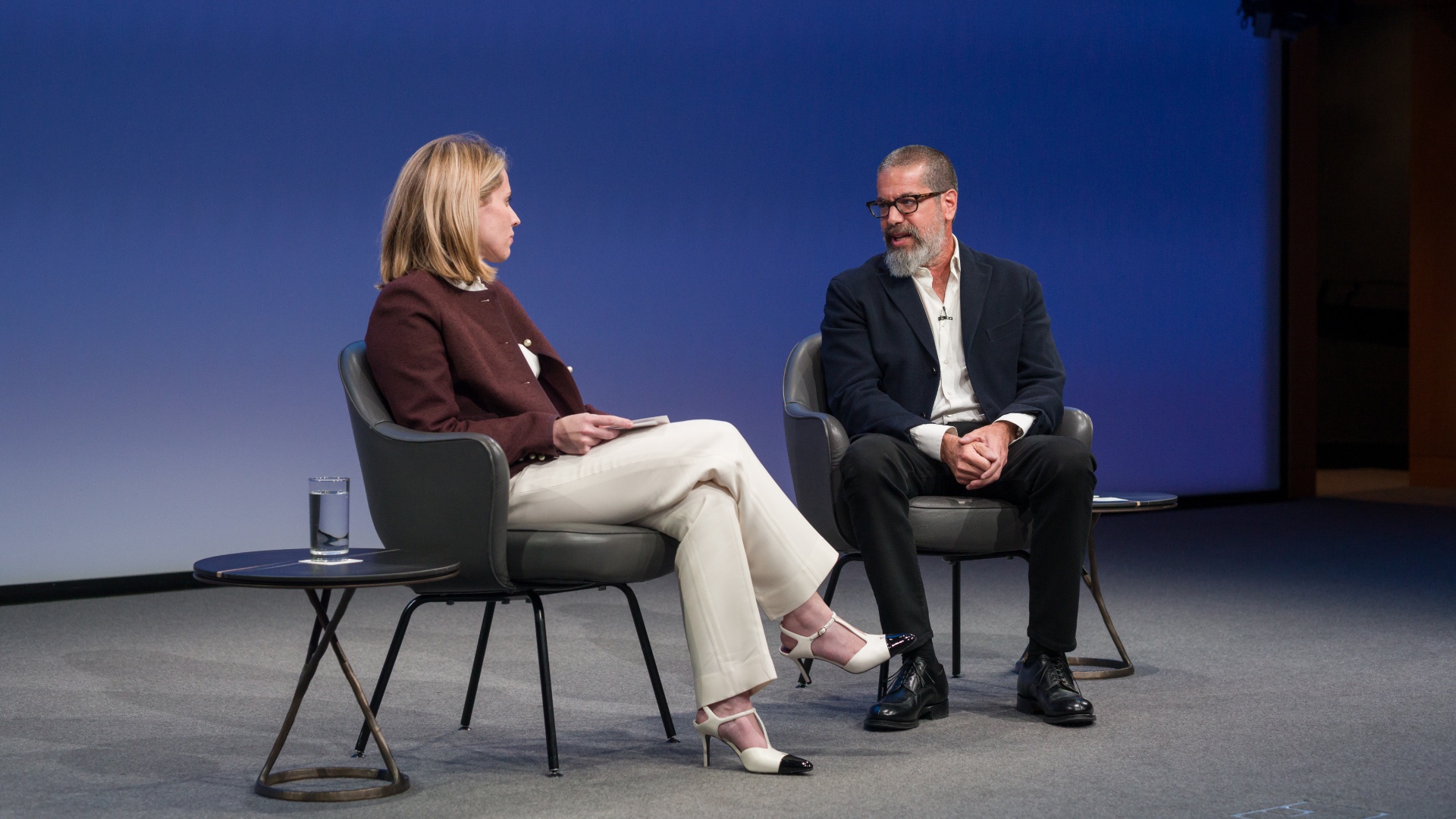
The best investors are often wrong. What sets them apart is how they learn, adapt, and respond to risk, says Citadel co-CIO Pablo Salame. In this episode of Talks at GS, Salame joins Alexandra Wilson-Elizondo, global head and co-CIO of multi-asset solutions at Goldman Sachs Asset & Wealth Management, to discuss lessons in leadership, his transition from the sell side to the buy side, and why taking risks—and making mistakes—is essential to success.
“There’s no way to grow without being wrong,” Salame says. “It’s about how you’re wrong and how do you recover and how adaptable you are.”
Transcript:
Pablo Salame: There's no way you can grow without being wrong. And it's very hard to be right in a big way, without also being wrong in some big ways.
[MUSIC INTRO]
Alexandra Wilson-Elizondo: Good afternoon, everybody, and welcome to Talks at GS. For those of you that I haven't had the pleasure of meeting, I'm Alexandra Wilson-Elizondo, and I run the multi-asset solutions business in Asset and Wealth Management. And it's my real pleasure today to share the stage with my friend Pablo Salame. Welcome, Pablo.
Pablo Salame: Thank you.
Alexandra Wilson-Elizondo: Pablo is the co-CIO at Citadel. He has been with the firm for seven years. He originally joined as the head of credit and converts. But prior to that, he was one of us. He spent 22 years at Goldman Sachs holding roles such as vice chairman of the firm, chair of the partnership committee, and he ran the securities division for 10 years.
But today, what I really wanted to do, because some of the people in the audience, Pablo, worked for you. Some of them you've mentored and were peers of, but many have only just heard the stories. So, I'd like to bring those stories to life.
Recently, you said to me, and you don't know how important it was at the time for me, but you said, "Really good bosses are partners. They find situations where they see that your value and your skill set can be. They put you in that situation. You do well. And then you flourish."
Ken took a big bet on you. You were on the sell side. You're moving to the buy side. Can you talk about why he's been an incredible partner and what that meant for you? Did he test you? How did he encourage you in that time period?
Pablo Salame: Thank you. First of all, thank you so much for having me here. I sat in that chair a number of times. And it's a real honor and a pleasure to be back sitting here.
Since I was young, I picked my college classes based on the professor. Great topic, poor professor. I would pick, you know, less interesting topic, better professor. And I picked my bosses too.
With time, I learned, you know, for me, a great boss was somebody who would, you know, try to maximize your growth path. Right? And that isn't by leading you by the hand, by providing you the ability to grow. A great boss is somebody who looks at you, and when they do, it's your success, but it's our problem. Right?
My best bosses were, and trust me, you know, when you're trying to grow the business, you get in trouble a lot. Your best bosses just go down and get in the trenches with you. And there's no blaming. There's no -- it is just, you know, trying to figure it out. And then, you know, you'll overhear when you've done something really well, they're telling other people, you know, what a great job you've done.
The real, you know, critical moment, you know, for us, I would say came with COVID. And in COVID we were doing really well. It was like, listen, the Goldman training for this stuff is amazing. You know, the credit portfolio was like, you know, kind of miraculously well set up going into it, which is hard to do for a credit portfolio, but we were.
And, you know, during peak COVID stress, Ken called and asked me for what ideas I had. And I was working on some really good stuff. And we were making, you know, like tens of millions of dollars on, you know, on some trades here and there. There were really, you know, big opportunities.
And he paused. And he said, "You know, I'm kind of looking for something that's like 50x that." There was no reason I would know about it. I've been there for, you know, less than six months. He was teaching me about his attitude and his ambition, and his expectations. And that reframing was immediate.
Those things are not things that you learn from interviews and not things that you learn from-- and he wouldn't have learned that about me if he hadn't made that call. Right? And so, a lot of what great bosses do is you yourself make sure that you provide the circumstances for your people to perform at their potential.
And you as an individual want to work for people that present it to you. You want to surround yourself with people who-- where you are progressing at your potential curve.
Alexandra Wilson-Elizondo: Was there ever a day where you said, "Wow, maybe I made the wrong decision"?
Pablo Salame: There was an adjustment. There was a day around the market making client business. I mean, you deal in conflict constantly, right? You have again, you have undisclosed bid offer, you have a client on the buy side, client on the sell side. And nobody knows what price they're dealing on in an OTC transaction. And then for that, Goldman has like extraordinary good communication and a consensus culture that builds.
You have balance between sales and trading. And it's really like that the thing is constructed to make sure that the business continues, right? And that it builds and it grows. And that there's trust between your clients and the people and all the employees. And that requires active communication and good consensus.
And so, you almost definitionally, if you become a senior person at Goldman Sachs, you are a good consensus builder. And you are a good consensus operator. And you know, at some point, I unwittingly had kind of grown attached to my own consensus building and operating skills.
And when I got to Citadel, the reality is that the task is very different. You know, the markets are there. There is capital to be deployed. There are opportunities or inefficiencies, and you have to deploy it. And it's less about consensus, but much more about how to find the best idea. Best idea investigation, right? How do you create the environment for the best idea for any situation to come up, right? And then execute, right?
So, it's much more about source it, shape it and execute immediately.
Alexandra Wilson-Elizondo: Can we talk a little bit about the other side of the coin? Right now, there's a buzz in the environment. It's a partner year; you ran partnership committee. You said to me, "You have to look for enterprise value accretive individuals." So, not neutral, not negative, but enterprise value accretive. What does that mean? It's not just somebody who runs a great business.
Pablo Salame: Yeah, so I think, you know, by the way, I actually think Goldman does many extraordinary things. One of them is that it breeds enterprise value builders. And in order to do that, really, the principles are there. It has to be more than about me, it has to be team. There has to be a longer-term perspective, right? It requires communication, it requires partnership, you know, internally with the right teams. It requires real balance when there is conflict at any point in time.
When I try to think about why that is the case, it's a number of things. But one of them is that, you know, the firm Goldman has like extraordinarily high standards, right? The standards of excellence are consistent. And they're there. And it's very hard to teach that to someone who's been in an organization and doesn't have that.
I had to adapt to a different business. I didn't have to adapt to different standards. I didn't have to adapt to different ambitions. Goldman is very ambitious about the way it wants to build. You know, what does it want to attain and achieve? And how does it want to do it? Like, how does it value or not value shortcuts?
All of these things are things that, all of you, like, again, you don't even realize you're learning it, but you're learning it every single day by operating in the environment here.
Alexandra Wilson-Elizondo: So, can we go back to the big risk taking? Months ago, you guys executed, a very large trade in the market. Talk to me about those 48 hours. What happens in those 48 hours?
Pablo Salame: Yeah, I mean, it was wild. I was actually supposed to go to Blue Note to see Interpol that night, which I was looking forward to. But it never happened.
So, it was, you know, extraordinarily fast. We were obviously following the situation because they were following markets. You knew that there was, you know, there was something happening.
We actually got in touch with them after the market closed on Wednesday. And just so you understand like the requirements and the difficulty of the situation, we had a signed agreement. Signed. Documents with all positions, like every single public market position, but you know, a few handfuls of exceptions by 9am -10am the next morning.
You know, when I go back and think about it, it was really five of us primarily who were involved in it. And you know, there are a few things, right? One is five peopel like that could not do that if they were not constantly working together. There is so much shorthand around we had to like, this is a complex portfolio, linear, nonlinear, US, international, listed, not listed. Bring it in, like, look at the portfolio and then start cutting it into pieces. Price it, right?
And then the complexity of it was that it wasn't just price, document this global portfolio. Then you had to have built a relationship with all the prime brokers, including Goldman Sachs to say, you know, it was important to do before 9:30am so we could call and say, "Hey, by the way, we're assuming the positions. So, everything's safe, you can, you know, work with us. No action needed. If you're thinking about taking any, you know, remedial actions, no actions need to be taken." And there has to be an environmental trust with all of the prime brokers at that point in time that they trust that, you know, this is indeed-- that going a different way isn't the right way for them.
And again, there's like, you know, decades of risk management practice come to bear for everyone. Your systems, your ability to you know, for a global portfolio of that type, to be able to like slice it and understand it. And that's, you know, that's everyday work that's been happening with your technology teams, with your portfolio construction teams, right, your trading apparatus, your-- like, it's all of that allows you the confidence to be able to price and manage, you know, something of that scale.
Alexandra Wilson-Elizondo: Yeah, we always say that the real work happens on the boring days, right? That's when you're prepping for the vol.
Pablo Salame: Yeah. And also, you know, I think probably the part that I would have thought, you know-- a lot of those things are obvious. The part about where Gerald, Ken, myself, Shawn, our general counsel, Perry, the fact that we constantly communicate about other problems, and that we were able to, like, in shorthand-- you know, we were not physically in the same place, right? It was overnight. In shorthand be able to, you know, pass on duties and, you know, checking confirms and price portfolios. And all of us were-- it requires a ton of prior teamwork. If you don't cleanly communicate with the team, and you don't have 100% trust in, "Hey, this is yours, right? This is mine with a very short period of time," all of that practice, that teamwork practice is really critical.
And you know, and you're not practicing for that per se. But when the opportunity comes, you know, it showed itself up.
Alexandra Wilson-Elizondo: So, let's talk a little bit about teamwork, because I think nobody knows better than I do how much you liked being in the office. You know, it's COVID, people were trading off their kitchen counters, and all of you guys were in. What about being physically present to you, do you see as an advantage? And how do you think about that with an expanding international and global team?
Pablo Salame: So, I think, you know, if I step back, and I think about what we do, right, like, we're an idea factory. Every day, we have different ideas. And they can be fundamental ideas about companies, right? They can be longer dated, shorter dated. They can be product cycles, it can be-- you know, you just think about all the companies we cover and all of the practices that we have. It's an idea factory, right?
And those ideas, then you have to research them. And then you have to figure out how to execute them, right? Once you have the idea, like, how do you access that in the market?
It's a totally creative process, right? Like the business of the firm is generate ideas. Let's just call that. That gets like-- it's not not a formal thing, but let's just say that that accumulates in your alpha library. And then it's constantly testing. Like, you know, the markets change. They become-- you know, every day they become more efficient. And it's a super dynamic process.
It's hard to imagine that your ability to create, which, you know, is better done often, you know, with others, isn't best done in person. Ken said it once, it's like, yeah, well, the thing is that, you know, you can't get on a whiteboard if you're not in the office. And it's true. You know, the firm has whiteboards everywhere, like markers everywhere. And, you know, they're all written up. That's where, you know, a bunch of the experimentation and the idea generation takes place.
Alexandra Wilson-Elizondo: I'd like to talk a little bit about risk takers, and how you think about who you give, you know, P&L budget to. And how do you think about, you know, there's three different phone calls you can get from Pablo, right? There's the good one, the one that you're getting a tap on the shoulder, and the other one where it's like, you're having a really bad run, and something's wrong. How do you differentiate between that? Like, someone could be a great risk taker, and they're just having a bad run. How do you think about that?
Pablo Salame: There are no shortcuts, right? You have to understand how your risk taker, like, what their thesis is for their major risks, right? You have to understand how do they think it's going to work? How do they think it's going to go wrong? Right?
I've had situations where, you know, you get a memo, you get a thesis. I identify the risk, ask them and say, "Like, there's all pivots on this one question. It's a question-- you know, like, can you please bring me back the answer?" The answer is dispositive to the risk-taking side that is provided. And in due time, it proves out to be not the case. That's a pretty severe failure.
It's kind of hard to recover from somebody telling you, this is a very material piece of analysis that is your job to conduct and then for them to not do it. On the other hand, you're in a situation where somebody, you know, says, "Okay, here is the opportunity. Here are the risks. Here's your primary risk. Here are the potential vectors of that primary risk. And you know, they're sized this way. And this is like this pattern that could happen."
When that happens, and they come in and say, "Well, and by the way, this other piece in this related piece is like just wrongly priced given the conditional of what's occurred." That's a totally different story. We don't underwrite the P&L; we underwrite the process. And to underwrite the process, you have to be engaged with the people who are doing the process. You have to understand the stories and their portfolio construction. And you have to talk to them.
And it's in that iteration of the additional knowledge that often, like, you know, some really major insight comes through. I mean, it's not like uncommon. It's actually reasonably common for a mistake to lead to additional insight.
And then the important part is, again, if you're overseeing capital committers, if you're just judging them being wrong and not judging the process, you will never make the money back, right? Or you will never profit from that situation. You will never, you know, sometimes I say, like, we paid the tuition. Now it's time to-- But there's no way of knowing that if you're not involved, right?
It's about how you're wrong and how do you recover and how adaptable you are, how resilient you are at that point in time.
Alexandra Wilson-Elizondo: What information you can get from the trade.
Pablo Salame: You know, what did you learn? And, you know, how do you pivot? How do you react to the new information? Again, capital commitment and I think, you know, people choosing is, I think about it the following way, right? Like, you want to be surrounded with people that are interested in being right in the future. You don't want to surround yourself with people who are interested in being right in the past. It's a big difference in orientation.
If you're interested in being right in the future, really, like everything that has led to the point where you are now doesn't matter. It's all about, you know, where does it go from here? That type of person is almost necessarily adaptable.
Alexandra Wilson-Elizondo: There's a certain level of humility in that person.
Pablo Salame: So, I think it's probably highly correlated with that. But it's not necessarily-- it's not it's not strictly necessary, like to somebody who's committed, you know, to being right in the future. They must still have an ego about being right in the future.
Alexandra Wilson-Elizondo: Fair.
Pablo Salame: But in the moment, they're not attached to their, you know, to their views. And this I picked up from Ken early on. We were in a meeting. We're looking for best idea in that particular problem. It comes up in the room, you know, one of the people in the room said something, Ken said, "Oh, okay, that's it. Like, that is the winning insight. And why were we doing it the other way before?" And somebody told Ken, "Because you suggested it. "And he said, "Oh, what an idiot I am." That was early in my getting to know him. And it was just incredibly refreshing to see that it was just okay, he just totally cared about being right in the future.
The only way you can achieve scale, multiply is get more people under you or with you. Work together. Get the best out of each other, right? Make each other better. You know, it's absolutely not true that, you know, only your bosses and colleagues can make you better. Like, people who work for you can definitely make you a lot, a lot better. And creating an environment where somebody who works for you can tell you when you're wrong and what you know, what you're doing could be improved.
Process is tremendously important. You know, if somebody has an insight, how do you codify it? Or how do you make sure that it is embedded in your working process so you can find the next insight, right? Just, you're dead.
And finally, you have to make sure people understand that your performance in the present is entirely a result of your decisions in the past, right? Who you hired, what you built, what your moat was, what was your competitive advantage. And so, in the moment, you can feel pretty good about something that is just-- you're watching something from three years ago. It's not necessarily a predictor of where you're going to be in the future. And so, you have to consistently have sort of your KPIs for your team have to be of the sort that are predictive of your future performance.
And those are in many ways disconnected from the things that have gotten you to the point where you are today. How do you create an environment where this is the way?
Alexandra Wilson-Elizondo: But how do you think about what stays with you versus what you put into the process? Like, for example, I mean, that was a huge trade. You're taking tons of risk. The five people you listed are the five people who basically run Citadel making that decision. So, how do you decide, okay, this stays with me versus I'm okay syndicating that out to the rest of the team?
Pablo Salame: That's a great question, right? Some individuals who-- and this is the calibration about being-- how much in the weeds do you want to be? Right? And that was an important calibration. One of the things that I think, you know, would shock some of my colleagues here from back in the day, is that what I learned at Citadel was that first of all, I enjoy being in the weeds. And two, in truth, if I went back in time at Goldman, I would have been even more in the weeds than I was at the time, which is what I think I was saying people might find surprising.
On the other hand, right, what you want to do is-- because there's no way for you understand, like, how the business is operating without getting all the way down to the bottom, and doing samples and priorities. But at the same time you want to make sure you generalize and spread because you can't get scale if you don't. One thing I would say is something I'm still striving to get really good at, right? Like I'm working on. Some days I do better than others. I'm still, you know, I'm hoping that in the future, I'll be better than I am today about it.
I talked about a little bit about how hard it was for me to have people, you know, like to let go a little and have people work for me, right? And then I got given, you know, more of a management job. And I picked two leaders. And ended up having trouble with both. And one of them in particular was like a really complicated situation.
Lloyd asked me to come to his office. And he says, "How are you?" And I said, "Oh, you know, it's tough." And he said to me, "Ah, what a shame." I said, "What?" "You know, what a shame it is that this is going to be the challenge that gets you. I had so many bigger failures in store for you." I stood up. And he's talking and I'm like, nope. This is not the one, you know. And I walked out.
There was so much in that story, you know. "I have such greater failures, you know, planned for you" was such good, you know, framing, right? Like, there's no way you can grow without being wrong. And it's very hard to be like, right in a big way without also being wrong in some big ways.
You know, at one point, in my career, I've been at Citadel, you know, it was the summer, like, you know, and I had a pretty good run through the first few months. And, you know, the thought hit me that Ken was going to be like extremely upset because I hadn't screwed up enough. And that meant I wasn't taking enough risk. I wasn't experimenting enough. I was playing it too safe. I have to like pursue different initiatives. And I have to experiment more.
But the seeds for that, you know, experimentation and failure and-- and also, by the way, you know, in some ways, you can't test your own resilience without failure. Resilience, you learn with time, is such a critical component of long-term success. Again, you know, I'll quote Lloyd in what he said to me once. It was after he had recovered from-- he emerged from chemo. He said to me, "Look, it's hard to know when you're resilient. And it isn't until now that I realized that I am resilient," Lloyd says.
I mean, he went through the 2008 crisis like a champ. Nope. He hadn't concluded that he was resilient yet. These opportunities to, you know, to deal-- like to set yourself in a position where you can be surrounded by such extraordinary people like you know, like you are every day in your business. And then just take those opportunities to have access to them. You know? Like one piece of advice I would say is one day Lloyd called me, called me over and explained something to me. And I looked at him funny. And he said, "Ah, you're wondering why I'm explaining this to you, right?" And I said, "Yeah, yeah." "Because I see that you're paying attention. You're going to do something with this. I know. So, go."
And I was like, oh, I am paying attention. And he's paying attention. The bosses I had here. Like, and Ken as a boss, like the one common feature of all great bosses, like I said before, is like, you experiment, you screw up, and then they recognize screwing up is part of the model. And now, you know, you have to go fix, rebuild, learn.
Alexandra Wilson-Elizondo: They call them growing pains for a reason.
Pablo Salame: Absolutely. If you're batting 95%. That can't be the right balance.
Alexandra Wilson-Elizondo: So, on that note, we'll end. Please join me in congratulating Pablo Salame and welcoming him back to Goldman Sachs.
Pablo Salame: Thank you.
This episode was recorded on September 24, 2026.
The opinions and views expressed herein are as of the date of publication, subject to change without notice, and may not necessarily reflect the institutional views of Goldman Sachs or its affiliates. The material provided is intended for informational purposes only, and does not constitute investment advice, a recommendation from any Goldman Sachs entity to take any particular action, or an offer or solicitation to purchase or sell any securities or financial products. This material may contain forward-looking statements. Past performance is not indicative of future results. Neither Goldman Sachs nor any of its affiliates make any representations or warranties, express or implied, as to the accuracy or completeness of the statements or information contained herein and disclaim any liability whatsoever for reliance on such information for any purpose. Each name of a third-party organization mentioned is the property of the company to which it relates, is used here strictly for informational and identification purposes only and is not used to imply any ownership or license rights between any such company and Goldman Sachs.
A transcript is provided for convenience and may differ from the original video or audio content. Goldman Sachs is not responsible for any errors in the transcript. This material should not be copied, distributed, published, or reproduced in whole or in part or disclosed by any recipient to any other person without the express written consent of Goldman Sachs.
Subscribe to Briefings
Our weekly newsletter delivers the latest insights on economic forces shaping markets—from Goldman Sachs leaders, economists, and investors around the world.
You can unsubscribe at any time. For information about how your personal data will be used, visit Privacy Information and Resources.