
Talks at GS
U.S. Soccer's JT Batson on the World Cup and Scaling the Game
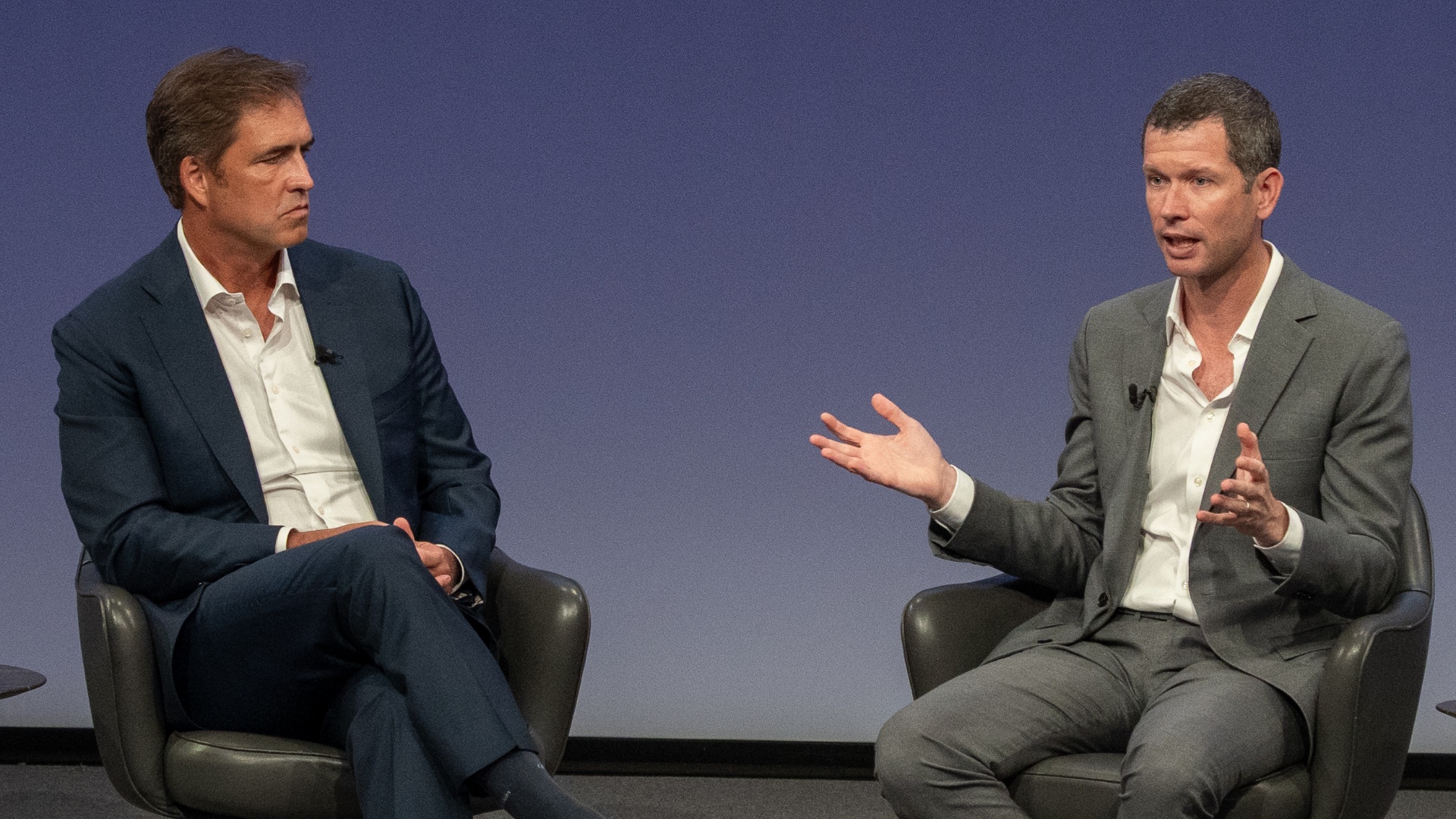
U.S. Soccer has entered a transformative era, driving the growth of the sport across the nation as it capitalizes on hosting the 2026 World Cup and other global sporting tournaments to come. JT Batson, CEO and secretary general of U.S. Soccer, joins Dave Dase, head of Goldman Sachs' global sports business, to discuss the legacy of the World Cup, U.S. Soccer’s strategic plans through the 2028 Los Angeles Olympics and the 2031 Women’s World Cup, and how an invigorated grassroots culture could make the U.S. "one of the world's great soccer countries."
Transcript:
JT Batson: We had to believe that every game we played in, we could go compete, and we ultimately had a chance to go win. And building that culture, not just within our men's national team, building that within the culture of soccer in this country is so important.
[MUSIC INTRO]
Dave Dase: Welcome to Talks at GS. I'm joined today by J.T. Batson, who is the CEO Secretary General of U.S. Soccer.
JT Batson: Thanks for having me.
Dave Dase: Very exciting time. So, on the heels of what was the largest sporting event, maybe share some thoughts on the U.S. World Cup, what the experience was like, what it was like working with Canada and Mexico in terms of from a partnership perspective.
JT Batson: Obviously, the summer was incredible. You know, when we thought about what we wanted to accomplish this summer, we had sort of three core things. One was we wanted to make sure our team was in the best position to be successful. And we can go into that.
The second was we wanted to make sure that every American who wanted to be part of the tournament could feel part of the tournament. And I think you saw with the watch parties, you saw, of course, with the TV ratings, the country certainly fell in love with the tournament and with our team.
And the third was around how do we use the World Cup to accelerate the growth of the sport? How do we use L.A. '28 and hopefully the Women's World Cup in 2031 as sort of a five-year window that catapults the sport forward like '94, '96. For those of you youngins, we had a World Cup here in '94. We had the Olympics here in '96 and the Women's World Cup in '99. And so, that definitely changed what soccer looked like in this country. And we want to make sure that this five-year period does the same thing.
So, in all three fronts, this summer was incredibly successful. Before the World Cup, I was asked, you know, what would be success for the team. And I would always say we want to cause young kids to want to run outside with their U.S. jerseys on. You want people to sort of fall in love with the team. And I think we saw that.
You know, the first time in my life-- so, I'm 43. Our men's national team went into a game where everyone believed. And that is such a sea change in terms of the culture of our men's national team and the culture for what soccer is in the country. And so, we're really excited.
Dave Dase: It also seemed like there was a shift just from a philosophical perspective of past World Cups. Like, let's hang in there and see if we can capitalize and make something happen. This seemed like much more of an attacking mindset. We're going to play our game. Do you anticipate that to be the continued mindset of the team going forward in terms of we belong? Let's play offense and let's really attack.
JT Batson: Absolutely. I mean, of course, every game is different. You want to make sure you have the right game plan. But I think at its core, our goal is to win. You know, I don't think any of us going into the tournament said, "Hey, we're one of the favorites." But we had to believe that every game we played in we could go compete and we ultimately had a chance to go win.
And building that culture, not just within our men's national team, building that within the culture of soccer in this country is so important. I'm sure some of you are fans of our women's national team. Deep in the culture of the women's national team is the belief and the ability to go win.
Emma Hayes, our women's national team coach, has done an amazing job of building on that culture and building on that legacy. And I think the opportunity we have is how do we sort of scale that, not just in the small number of players who are in our men's or women's national team player pool, but across hundreds of thousands of kids who ultimately could, you know, be in that position someday in the future.
Dave Dase: You talked a little bit about this five-year plan through L.A. '28 to 2031. How do you sustain that, right? Because the World Cup has a little bit of that Olympic feel. Like everybody's all in, and it's awesome, it's great, we're going to stay engaged. And then people start to fade a little bit. So, from a consumer/fan engagement perspective, how do you try to sustain that?
JT Batson: We believe that the United States has the ingredients to be one of the world's great soccer countries. And I think, you know, this summer really made a lot more people believe that. And I think the opportunity we have in front of us is how do we put those ingredients together to go build that culture and ultimately the systems that are required for success.
And right now, of course, we want to have the continued fan engagement, but top of mind for us is ultimately to build that system. So, let's take some very practical examples. We need school superintendents and chairs of school boards to agree to put more soccer in schools. We need heads of county commissions and people that run parks programs to put soccer in more parks.
How many of you have experienced going to a park or going to a school - what do they all have in common? They all have basketball hoops. So, that's public subsidy of making basketball super accessible.
As a country, we spend three to five billion dollars a year on high school football. We need governments to lean in. We need our corporate partners to continue to lean in. And I can say the outreach during and post the World Cup there has been incredible from people who go, wow, this summer proved the size of the soccer market in this country. And now we've got to make sure that we take full advantage of that.
Dave Dase: So, World Cup ends, accolades, massive events. You wake up a couple weeks later, right, with the FIFA talking about potentially selling stake in the business to private equity and outside capital. Just thoughts around that. How do you react?
JT Batson: So, most of the soccer world had that week planned to be off. And I think Monday night I started getting WhatsApp messages from reporters in Europe saying, "Hey, have you heard about this?" You know, I'm a believer in the capital markets. I believe that there's a huge opportunity to use capital to grow businesses. And so, when I first heard of things, I'm going, OK, well, let's hear about this.
But it also led us to have a reflection around what is the role of FIFA and how can it be set up to impact the game most positively? You know, FIFA has an incredible opportunity to invest in the growth of soccer in every country all across the world. And so, you think about, you know, soccer is the most global sport. It's played everywhere. The World Cup, more people watch it than anything.
You know, for us, we think all of the conversation can be focused on what is the way for FIFA to make the greatest impact. And we're excited to be key parts of that conversation over the coming weeks and months. And, you know, hopefully some real benefit will come from that.
Dave Dase: Yeah. Well, you can see it right with the expansion of 48 teams. And I had the benefit or the joy of being at that Cape Verde-Spain game in the first round. That was amazing.
JT Batson: That was awesome.
Dave Dase: So, it talks to, right, investment and just from a global perspective. Maybe let's take a step back from from the World Cup and just talk a little bit about U.S. Soccer, what it is. Obviously, it's the men's national team, the women's national team. But there are 27 national teams. Recently, it was a great honor for Goldman Sachs to be affiliated with U.S. Soccer in terms of helping raise capital to fund the Arthur M. Blank National Training Center just outside Atlanta. But maybe talk a little bit about, you know, what U.S. Soccer is and how you think about, right, your mandate in terms of all 27 teams, but also from growing the sport.
JT Batson: Sure. So, U.S. Soccer, you know, we describe ourselves as being in service to soccer. We view our role as supporting those who are bringing soccer to life in communities all across this country. And we believe we have three core ambitions.
So, one, U.S. Soccer success. We want to win World Cups. We want our teams to win on the global stage. Two, we want U.S. Soccer to be everywhere. We want soccer to be the number one played sport in every community. And third, we want U.S. Soccer to be yours. So, all of you who are here today and everyone around the country who loves this sport, we want you to feel connected to our sport and connected to U.S. Soccer.
And we describe those as generational ambitions because we know some of those are not things that are going to happen tomorrow, but we certainly wake up every day thinking about it. So, our national team program, we have 27 national teams. Most of those are youth teams, but also U.S. Soccer is the world leader in disability soccer. We also have beach and futsal.
Think of that as like a pro sports organization. You have, you know, insanely elite athletes, you know, very elite coaches who could go coach anywhere in the world. You run that like a pro sports organization.
We also have how I would describe like a trade association business. So, we're responsible for the growth of the sport at all levels. We have coaching education, referee certification, compliance. When you see things like player transfers, we're the clearinghouse for that for the U.S. So, there's a whole sort of trade association, health of the ecosystem, safeguarding, those sorts of things.
And the third, think of it as sort of a social impact part of our work. We believe soccer is a force for good. We believe that there are incredible opportunities to help communities and to help, you know, individuals and families all across the country. And so, you know, we view our role as doing that.
And so, as we think about who we are, you know, we have to be an incredibly elite high-performance organization. We have to be thoughtful around how we support the health of soccer, whether you want to play for fun for your entire life or whether you want to win a World Cup and everything in between. And then, of course, we think about, you know, how this how this sport can really positively impact communities at any number of levels.
And so, it's a pretty awesome set of things you get to wake up thinking about. And a big part of our transformation over the past four years has been a talent transformation. You know, of course, we've recruited very high-profile coaches in Mauricio and Emma. We've also, you know, grown from a couple hundred people to 600 people. Our headquarters is now in Atlanta.
A lot of that has been an injection of people who grew up in this game, who love it, and who maybe had careers in finance or in consulting or technology or media and who, you know, wanted to make soccer their life's calling.
And the reason why I bring that up is when I graduated from college in '05, there really wasn't an opportunity to work in soccer unless you were a player, which I definitely could not have been or a coach. And I decided that wasn't the career path for me. So, I ended up in Silicon Valley because I went to school out there and had a fun and exciting career in the tech world. But I realize that now if I graduated from college, you actually can have a career in soccer in this country. And the dividends that will pay for, you know, generations to come to where the talent base here is so strong and growing, you know, that's a key part of how we win. And of course, you know, now we've got our new national training center, which you guys were so critical in helping us build to be our home to do that.
Dave Dase: Terrific. You've mentioned Emma and Mauricio a couple of times. How did you get them, right? I mean, they are two of the leading coaches, amazing experience, accomplishments, etcetera. What makes them attracted to U.S. Soccer? And why do they want to be here?
JT Batson: Well, I think it's why people want to work at Goldman. You want to work with other great people. You want to be able to work on really hard, complicated problems that have a huge impact. You want to be a part of something bigger than you are. You think about the legacy that you can lead by virtue of the work you're doing. And your ability to impact not just the team you're coaching, but an ecosystem in a country is pretty compelling.
You know, you put it through that lens, there are very few places in the world where you can work in soccer to have that big of an impact. And then of course, you know, now with the national training center, you know, you can touch and feel the sport.
And I'll share on that, you know, U.S. Soccer had never really had a home before. We had 27 national teams, but never had really owned a blade of grass. We'd always use other people's facilities. And so, having a home where all 27 of our teams can be based, but really where soccer in America can be based is also one heck of a recruiting tool. And it's no surprise that my first very long conversation with Mauricio about the future was done after he'd experienced the national training center looking out over the fields. And you can imagine what the next four years could be like.
And so, you know, the opportunity to, you know, be a part of that was certainly something that he found compelling. And I know so many of our other colleagues do too.
Dave Dase: There's been a lot of press. Norway's certainly coming out of the winter Olympics. That's how they develop athletes. But even the travel sports, it's, you know, a multi-billion-dollar business. And there are some elements that are good to that. There are some elements that are exclusionary, don't have access, right? Kids drop out because it's ridiculous for people, right? Parents who have an opportunity can do it.
JT Batson: For sure.
Dave Dase: But it's virtually impossible, I would think, for so many kids in this country.
JT Batson: Well, let's start there. Your word "ridiculous" is the right word. You know, it is insane what it costs so many families to be able to play youth sports. Obviously, soccer is one of those. And that is a big area of focus for us. And it's not just the money, which, huge problem. It's also the time.
So, one of the, you know, learnings from a lot of the studies we've been doing are, you know, kids are being forced to choose sports well ahead of, you know, when an appropriate time for them to decide, hey, is this what I should focus on relative to other things? Mainly because of time. You're traveling so much to practice. And then even worse, you're traveling to play games all over the place in a way that, you know, is not healthy for kids. And it's certainly not healthy even for our teens.
Dave Dase: Parents.
JT Batson: Certainly not for the parents. I've got really young kids and we're starting to experience that, particularly the sticker shock of what some of the costs are. And so, I think there's a huge opportunity there to change the culture and change the systems in this country around that. And I think U.S. Soccer helping lead the charge on that, obviously for soccer for sure, but more broadly is important.
And to your question around, you know, Mauricio and Emma. Emma has been very public about her belief that we should be thinking about the opportunity to design every aspect of women and girls' soccer in this country through a female lens. And the opportunity to impact whether it's, you know, three, four, five-year-olds who are starting out or 13, 14, 15-year-olds who have ambitions and aspirations of winning a World Cup. And everything in between. You know, part of why someone like Emma wants to be at U.S. Soccer is the ability to have that impact.
Now Mauricio and Emma, of course, know that their first and foremost primary focus is to make sure our teams win, but they also have an incredible background and have a lot of experience and a lot to offer. And so, thinking about how do we train coaches in this country. Thinking about, you know, what should the culture be within, not just our youth national team programs, but also their club environments. And how should we be working as U.S. Soccer with the club teams to make sure that the players where they're spending most of their time, which of course are their clubs, that we have the right working relationships, you have the right systems, you have the right processes, so that we are ultimately producing, you know, the world's great players.
And so, I think, you know, that is a big part of why they want to be here, and of course will be a big part of what they focus on.
As I've gotten to know some of the world's great coaches, and of course Emma and Mauricio are among those, they are incredibly savvy. They're incredibly inquisitive. Of course, their EQ is off the charts. And they also fully embrace that they are there to serve the institution and the mission in a way that has been very sort of inspiring to me, because, you know, similarly, I'm here because I believe in the opportunity we have for what the organization can do for this country, and of course for soccer in this country.
And being able to work with folks who could literally work anywhere in the world, who put the organization and the mission first, is pretty awesome to see. And as you think about the culture that we've been building, it's also why I believe we ultimately can pull it off, is because when you have folks like that who are committed, you know, to those core principles and to the core mission, you know, you've got a whole heck of a lot better chance of being successful.
Dave Dase: How does kind of college soccer fit into the whole development?
JT Batson: Well, I think, you know, college soccer is a uniquely American institution relative to the rest of the world. College soccer plays a very important role in the sort of participation of soccer broadly. So, if you think about the number of people who play soccer across D1, D2, D3, JUCO, I mean, it's huge numbers.
From, you know, a growth of game, growth of soccer in communities across the country, getting more careers, more opportunities for people to be part of the sport, huge, huge, huge impact and very important.
On the men's soccer side, the men's college soccer, D1 soccer has sort of fallen off as the sort of premier pathway for young male soccer players in this country. Still is an opportunity for some. Think about our starting goalkeeper and the World Cup this summer. Played college soccer. A number of our players who were maybe late bloomers, that was an opportunity for them.
But, you know, the current state of college soccer on the men's side is one where there need to be some significant changes for it to open up as a key pathway, which we have been working on. And there is a vote at the NCAA D1 Council to do that to where D1 men's soccer would move to a full year, sort of fall and spring calendar, which would have all sorts of benefits from a soccer standpoint. And the benefit of kids would only play one game a week, which means amazingly, they could go to class.
On the women's side, it is still a more prominent pathway, although there needs to be evolution in terms of the women's college pathway for the U.S. to continue to be at the front end of the world from a player development standpoint. And that's something that is a huge, huge, huge priority for us.
And so, with all the movement and all the noise in college sports, you know, college soccer is very, very strategic to U.S. Soccer. And we want to show up and support them in any way we can.
Dave Dase: Okay. Maybe flip and talk just from a professional league, MLS, the women's league. Don Garber retiring, right? Larry Berg coming in. Massive growth in terms of number of teams, infrastructure, facilities, valuations, quite frankly. And similarly, on the women's side, right, we're really seeing that as well. What's the relationship with those two leagues and, I think increasingly, this kind of tension of, gosh, do the best players in the world, do they need to go, certainly on the men's side, go play, right, in leagues outside the United States?
JT Batson: The NWSL, MLS, and USL are key parts of the U.S. Soccer ecosystem. Don is the longest serving board member of U.S. Soccer. Jessica also on our board. And U.S. Soccer sanctions those leagues as a formal part of the soccer ecosystem. So, we have, you know, a relationship certainly that way, but we also have a very strategic relationship around how do we grow the sport? How do we grow the commercial market? How do we grow the quality of our player pool?
It's no coincidence that the teams that typically do the best in the World Cup on men's side have some of the great pro leagues and some of the great pro clubs. That is the financial engine that fuels the ecosystem there. And so, for the U.S. men's national team and for the U.S. women's national team, we absolutely need MLS and NWSL to be wildly successful.
And so, for those of you who are not MLS or NWSL fans, but you are fans of the U.S. men's or women's national teams, I can assure you, you actually are fans of MLS or NWSL because that's the place where those players are developing. And we have to continue to work even more closely together around how we produce some of the world's great players.
And, you know, obviously the men's and women's landscapes are different globally. And of course, you know, that means our strategies are different. It means you're starting from a very different place on both of those sides. But our futures are infinitely better together than they are everybody doing their own thing. And I know, you know, their leadership agrees with that. Their owners agree with that. And we certainly agree with that.
Dave Dase: Talk just a little bit about leadership. You talked about you grew up in Georgia, active in soccer. I think you were very active at Stanford in terms of the women's team and the men's team. Spent 20 years as a founder, CEO, investor. How did that prepare you or you just think some of that skill set in your leadership and what you're trying to build?
JT Batson: One of the things that I've have to constantly remind myself is that if you see a challenge or a problem or an opportunity in front of you and you apply basic business principles to it, it turns out there's a whole lot from your past in the business world that is super applicable from a soccer standpoint. And whenever I try to go, well, it's soccer, so it must be unique or different, you definitely overcomplicate it.
And of course, you can't copy and paste on everything. Of course, there are good models to apply to things and bad models apply to things. But I mean, that's what you all do every day is think about what's the right model to think about as you're thinking about this problem.
Well, really, for all of sort of American soccer history, there really have been very few if any scaled businesses to work in. The MLS clubs and NSWL clubs, they're now certainly growing from a valuation standpoint, but from a revenue and even the number of people, these aren't big businesses. Other than the MLS league office, you know, there were very few, if any, that were over 100 people.
And so, for us to grow as a soccer nation, we have to be able to meld sort of the folks who grew up in the soccer world and who've grown up in the business world in a way where sort of the best of both of those can catapult us forward.
And so, you know, from my standpoint, I joke that part of my job is to be our recruiter in chief and that so much of my focus is around, you know, talent, talent, talent, talent. And then, of course, we've got to recruit them. And then we, of course, need to help them be successful.
And I'm convinced that, you know, the best days of soccer in America are ahead by virtue of the people we've been able to attract into the sport and into U.S. Soccer.
Dave Dase: Maybe add onto that a little bit because there's a dynamic. You've certainly got your core team that's running, overseeing, building, investing. But from a team perspective, right, you only have, maybe this is more from a coaching perspective, but you only have the players for, right, so many days a year.
JT Batson: Sure.
Dave Dase: Whatever it is. They're all off on their day jobs or night jobs, right, et cetera, making a living, doing all that and then bringing them in. And just, I don't know, some of the challenges associated with that, because I'm sure the coaches would love to have everybody every day and, right, build and develop.
JT Batson: It applies for our coaches, but also applies broadly. You know, when I joined, I thought that we, as an organization, had conflated authority and influence way too much. As U.S. Soccer, we have a whole lot of influence, and there are a few things we have authority over, but for the most part, it's influence.
And so, if we want to be successful, we have to have people believe that we are here to serve them and help them. And that we have to articulate a shared vision for the future and what role we all can play in that. And how do we help people accomplish their goals that, hopefully, are all connected to the goals that we, you know, roughly share?
Whether you're a coach who, of course, are supporting a player who, for the most part, is in their club, or you're someone working on, you know, how to make youth soccer more accessible, how to develop some of the great coaches in this country, a lot of that is through influence.
I will say that, strategically, a big shift that we've had as an organization is to focus on how do we build more one-to-one relationships with everyone who cares about our sport. And so, over the coming years, we'll be very focused around how do we make sure that, whether you're playing, whether you're a fan, whether you're a ref, whether you're a coach, someone who works in our game, how do we make sure that we are giving you wonderful experiences? And how are we doing that in a way that it comes to life in the environment that matters to you? So, whether that's at home, because you're a, you know, two, three, four-year-old, you know, trying to get them rolling in the game. Or whether it's in their club environment. Or it's because you're coming to one of our national team games. We want to be maniacally focused on what those experiences are like and making sure that we have that connectivity.
And that's new for us. We historically have been a couple hops removed from the consumer. And, you know, we believe very strongly that, you know, for us to achieve our goals, you know, we have to be way closer and make sure we're delivering that great experience. The way that you get kids to ultimately play more is when they enjoy it.
Dave Dase: So, as you think about legacy, we're sitting here 10 years from now, what does U.S. Soccer look like?
JT Batson: What's exciting to me is we have an opportunity to rewire our brains for what soccer can be in this country. And for so long, you know, we have had this little bit of a "little engine that could" mentality, which is important. You know? We are the challenger sport in our country. And we are the challenger country in our sport. We're always competing, we're always fighting, we're always having to prove why we belong.
Well, I think this summer proved we do. And that, in a lot of instances, we're ahead of other sports where we historically have thought ourselves as, you know, maybe those are the ones you're chasing after.
And so, I think the huge opportunity we have over the next 10 years is to embrace that we really do have the ingredients here to be one of the great soccer countries in the world. And we can have the great pro leagues in the world here, and we can have national teams who are consistently winning on the world stage. And we can have our sport be the number one played sport in every community.
And I think, you know, that is such an awesome thing to be able to, you know, wake up thinking about every day. And, you know, for us to do that, it takes great partners. And so, you know, we've been so fortunate to have, you know, folks at all levels, at all parts of the country who want to help. And I know, you know, so many of you and your partners are in that band. And we really appreciate it.
Dave Dase: Great. JT, thank you very much for being here today. Congrats on a successful summer and all that lies ahead.
JT Batson: Thank you. Thank you all.
The opinions and views expressed herein are as of the date of publication, subject to change without notice, and may not necessarily reflect the institutional views of Goldman Sachs or its affiliates. The material provided is intended for informational purposes only, and does not constitute investment advice, a recommendation from any Goldman Sachs entity to take any particular action, or an offer or solicitation to purchase or sell any securities or financial products. This material may contain forward-looking statements. Past performance is not indicative of future results. Neither Goldman Sachs nor any of its affiliates make any representations or warranties, express or implied, as to the accuracy or completeness of the statements or information contained herein and disclaim any liability whatsoever for reliance on such information for any purpose. Each name of a third-party organization mentioned is the property of the company to which it relates, is used here strictly for informational and identification purposes only and is not used to imply any ownership or license rights between any such company and Goldman Sachs.
A transcript is provided for convenience and may differ from the original video or audio content. Goldman Sachs is not responsible for any errors in the transcript. This material should not be copied, distributed, published, or reproduced in whole or in part or disclosed by any recipient to any other person without the express written consent of Goldman Sachs.
Subscribe to Briefings
Our weekly newsletter delivers the latest insights on economic forces shaping markets—from Goldman Sachs leaders, economists, and investors around the world.
You can unsubscribe at any time. For information about how your personal data will be used, visit Privacy Information and Resources.