

The Markets
How Higher Rates and AI Issuance Are Affecting Credit Markets
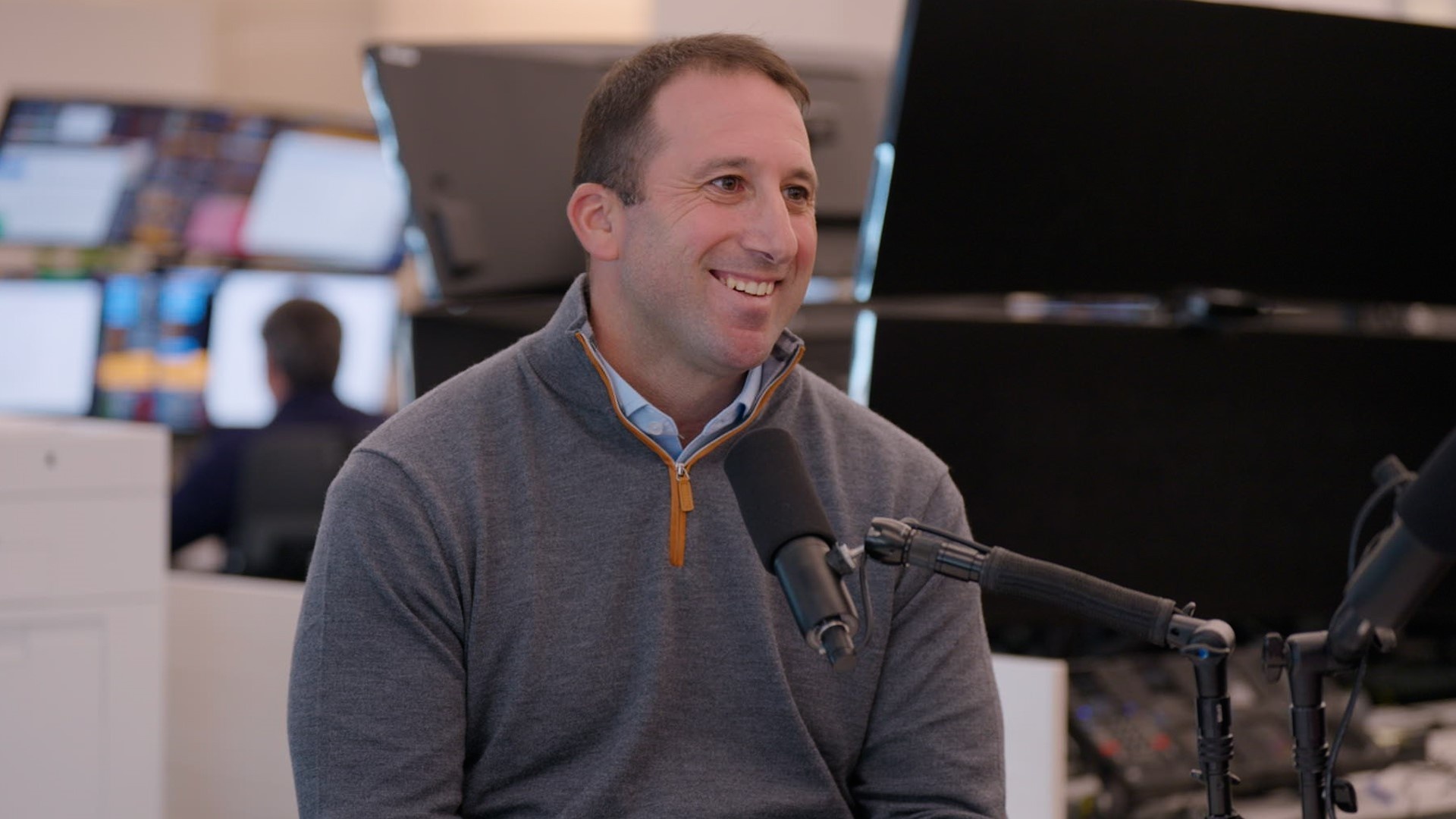
Credit markets have stayed resilient even as interest rates rise and investors scrutinize the outlook for artificial intelligence (AI), says Alex Finston, co-head of US and Asia Credit Trading in Goldman Sachs FICC and Equities. On The Markets podcast, Finston points out that historically, as long as the increase in rates is steady, investors have often seen rising bond yields as an opportunity. He also shares his take on higher-quality AI credit, whether investors should be hedging their portfolios, and municipal bonds.
Transcript:
Chris Hussey: This is The Markets. I'm Chris Hussey, and today is Thursday, October 15th, and I'm here in the Goldman Sachs trading floor with Alex Finston, who is co-head of US and Asia credit trading within FICC and equities. Alex, thanks so much for joining us on The Markets.
Alex Finston: Yeah, my pleasure.
Chris Hussey: Okay, Alex, let's start with the data because it's been a big week of data with CPI out yesterday and an interesting reaction from the bond market. CPI came in hot, bond market first rates went up, then rates came down. They've come back down again today. What's going on with CPI and why the bond reaction?
Alex Finston: Yeah, look, clearly a disappointing number from the perspective of the market. Yesterday and also with the PPI data from today, I'd say there's a hyperfocus in terms of near-term inflation catalysts and the flexibility this provides the Fed.
I would say elements of higher than expected, both core and energy, created some anxiety there. But I'd say the larger theme is still what is the interplay between this and the AI growth story. So, you know, as we looked at, the reaction function in the market, I'd say the sharp decline in yields was really, the element here that the market's focused on.
And really that's just telling you how much the market is looking forward towards, like will the long-term growth story be impacted at all or is this a short-term blip?
Chris Hussey: That's a great point. So, on the one hand, you have inflation pushing up rates, but on the other hand, you have people worried that it's too much, and then growth will push down rates.
All right, let's talk about credit here because that's your real focus here, and credit is where rates maybe have the biggest impact in the corporate credit market. Yesterday, we saw a little bit of volatility in corporate credit. What's going on in the corporate credit markets nowadays? Why are people getting a little bit concerned?
Alex Finston: I would say at a high level, credit markets have been incredibly resilient throughout the course of 2026 by any reasonable historical narrative, spreads are still tight. the investment-grade index is roughly in the 10th percentile on a 20-year look-back.
Lead fin market's 25th percentile. So still very healthy. At a macro level, the story is really what's going on under the hood, and I would say I'd break that down into kind of three key elements. One has been the AI and the AI supply story. Two has been disruption from new technologies. And the third is really higher rates for longer and how that disproportionately impacts some sectors over others.
Chris Hussey: Yeah. Let's go to that higher-for-longer rates one. I want to sort of disaggregate that if I can for a second. In a higher-for-longer rates environment, do we attract more credit investors or is there a point where the rates get so high that we start to wash it out?
Alex Finston: If we look at the 20-year look-back in fixed income assets, this is an incredible time to be allocating capital to the space.
Look, largely that's a function of just pure treasury yields. But I would say foreign demand still remains incredibly robust. When we look at some of the historical narratives or periods of volatility that we've seen since the great financial crisis, slow and steady moves higher in rates have generally been met with buying and been viewed as an opportunity.
I'd say where you tend to get more, agitation is when you have violent moves in rate to fall to the upside. I'd say largely despite the degree of the move that we've seen in the past month, the market has stomached the volatility incredibly well, and I'd say via our franchise, we continue to see buyers of high-quality credits, particularly on days of weakness.
Now, the question that you pose is when does it become a problem? And I would say largely it becomes a problem when, again, we move up very quickly in a disorderly manner, or two, you know, more importantly from the perspective of the borrower, if we get absolute rates that just make it un-economic to continue to fund and finance through credit markets, you tend to get more agitation there.
Still feels like we're a long ways away from that moment.
Chris Hussey: As the co-head of credit trading, you have a unique lens into what some would call the canary in the coal mine of the economy. Do you see any canaries dropping dead in the coal mine right now?
What's going on here?
Alex Finston: Yeah, so it's a great question, and I'd kind of bring you back to maybe where we started the discussion earlier. On a macro level, markets are incredibly healthy and resilient. Under the hood there is volatility, but I think these are all stories that make sense within the context of the market.
We've seen an incredible amount of investment in the AI space via debt markets. That supply has been well absorbed at a variety of levels from a diversity of investors. There's an incredible amount of capital that's waiting to be deployed for the space. I would say as it relates to sector dispersion, there are ebbs and flows over time based on changes in the macroeconomic environment.
And again, via our franchise, I would say the depth and breadth and diversity of clients that are willing to deploy capital at different levels in these spaces, again, still remains incredibly strong.
The last point that I would make is if you look at implied volatility across most macro asset classes, it still remains incredibly low. I would say if you started to see what started as sector dispersion really create problems for unaffected industries or implied volatility extraordinarily high relative to the level of consternation at the market, I'd be more concerned. But I still think that the North Star is growth, the North Star is AI, and those are still good stories to tell.
Chris Hussey: Yeah, no, it's a great point. All right, one last question for you around the macro, and you mentioned that one of the things that sort of is elevating rates is not really the spread between corporates and the government, but it's just government bonds themselves. Let's talk about government bonds just very briefly, if we can.
Is that the canary in the coal mine? We're seeing issues in France. We're seeing a $40 trillion deficit in the United States. Does it worry you at all about that and maybe even crowding out the corporate credit markets?
Alex Finston: Look, I would say there's clearly a focus on fiscal responsibility. There's clearly a focus on capital allocation for corporates. But I'd say the more important element of this is there's competition for capital across a diversity of markets, and there are great credits at wider levels, and there are credits that will use tight spreads as an opportunity to finance their needs going forward.
I don't think it's a story of is it sovereigns or is it corporates? I think the underlying theme, again, gets us back to the dispersionary forces that we're talking about within markets at the moment. It's becoming a credit picker's market. There will be winners and there will be losers, but I think this is naturally natural and healthy over the course of a credit cycle.
Chris Hussey: Yeah, credit picking is always a great market for investors. All right, let's put a bow on it. What's the trade?
Alex Finston: So, look, I think there's three that are top of mind. The first, given the recent volatility that we've seen in the market, I think it's an incredible opportunity to be able to buy high-quality AI at wider yields than we've seen or higher yields we've seen in some time.
Two, implied volatility, incredibly low. To the extent you're looking for hedges within your portfolio, it's never been a better time.
Third, unique opportunity. Tax-equivalent yields and high-quality Munis approaching 10%.
Chris Hussey: Wait a minute. That's a buy to me. Munis.
Alex Finston: Can you believe it?
Chris Hussey: All right, talk to me about the Muni trade. Why now?
Alex Finston: Look, I'd say we've seen heightened supply over the course of the past two months in the municipal bond market, which has created an opportunity to buy highly rated credits at higher absolute yields. Again, given the backdrop of where we are in the rate environment, the ability to replicate high quality 30-year GO at tax equivalent yields of 10%, historically, pretty attractive.
Chris Hussey: Wow. I haven't heard a municipal bond get pitched in a long time. That's fantastic. All right, what are you watching for next week?
Alex Finston: Look, I think to some degree it's the same themes, right? We're looking to see if the Fed has flexibility. We're looking for whether we're going to see any large AI deals between now and the end of the year.
We're looking for the structure of those deals, the duration of those deals, where across the globe financing is being sourced from. And then, again, like, looking to make sure that the growth story is intact. All things start and end with the growth story. And again, the data so far has been pretty constructive.
Continue to be very impressed with the liquidity and capital available in markets at the moment. And it feels like we're going to get some great opportunities between now and the end of the year.
Chris Hussey: Okay. I can't believe it, but we're almost at the end of October, and the Jets are two and three. Will they finish above 500?
Alex Finston: No, they won't. But we're looking forward to a strong 2027.
Chris Hussey: We're always looking forward to a strong next year. Story of the Jets' lives. Alex, thanks so much.
Alex Finston: Yeah, my pleasure. Thank you.
Chris Hussey: That does it for this week's episode of The Markets. I'm Chris Hussey. Thanks for listening.
The opinions and views expressed herein are as of the date of publication, subject to change without notice, and may not necessarily reflect the institutional views of Goldman Sachs or its affiliates. The material provided is intended for informational purposes only, and does not constitute investment advice, a recommendation from any Goldman Sachs entity to take any particular action, or an offer or solicitation to purchase or sell any securities or financial products. This material may contain forward-looking statements. Past performance is not indicative of future results. Neither Goldman Sachs nor any of its affiliates make any representations or warranties, express or implied, as to the accuracy or completeness of the statements or information contained herein and disclaim any liability whatsoever for reliance on such information for any purpose. Each name of a third-party organization mentioned is the property of the company to which it relates, is used here strictly for informational and identification purposes only and is not used to imply any ownership or license rights between any such company and Goldman Sachs.
A transcript is provided for convenience and may differ from the original video or audio content. Goldman Sachs is not responsible for any errors in the transcript. This material should not be copied, distributed, published, or reproduced in whole or in part or disclosed by any recipient to any other person without the express written consent of Goldman Sachs.
Date of recording: October 15, 2026
Subscribe to Briefings
Our weekly newsletter delivers the latest insights on economic forces shaping markets—from Goldman Sachs leaders, economists, and investors around the world.
You can unsubscribe at any time. For information about how your personal data will be used, visit Privacy Information and Resources.