

The Markets
Jerome Dortmans on the Drivers of Oil Markets
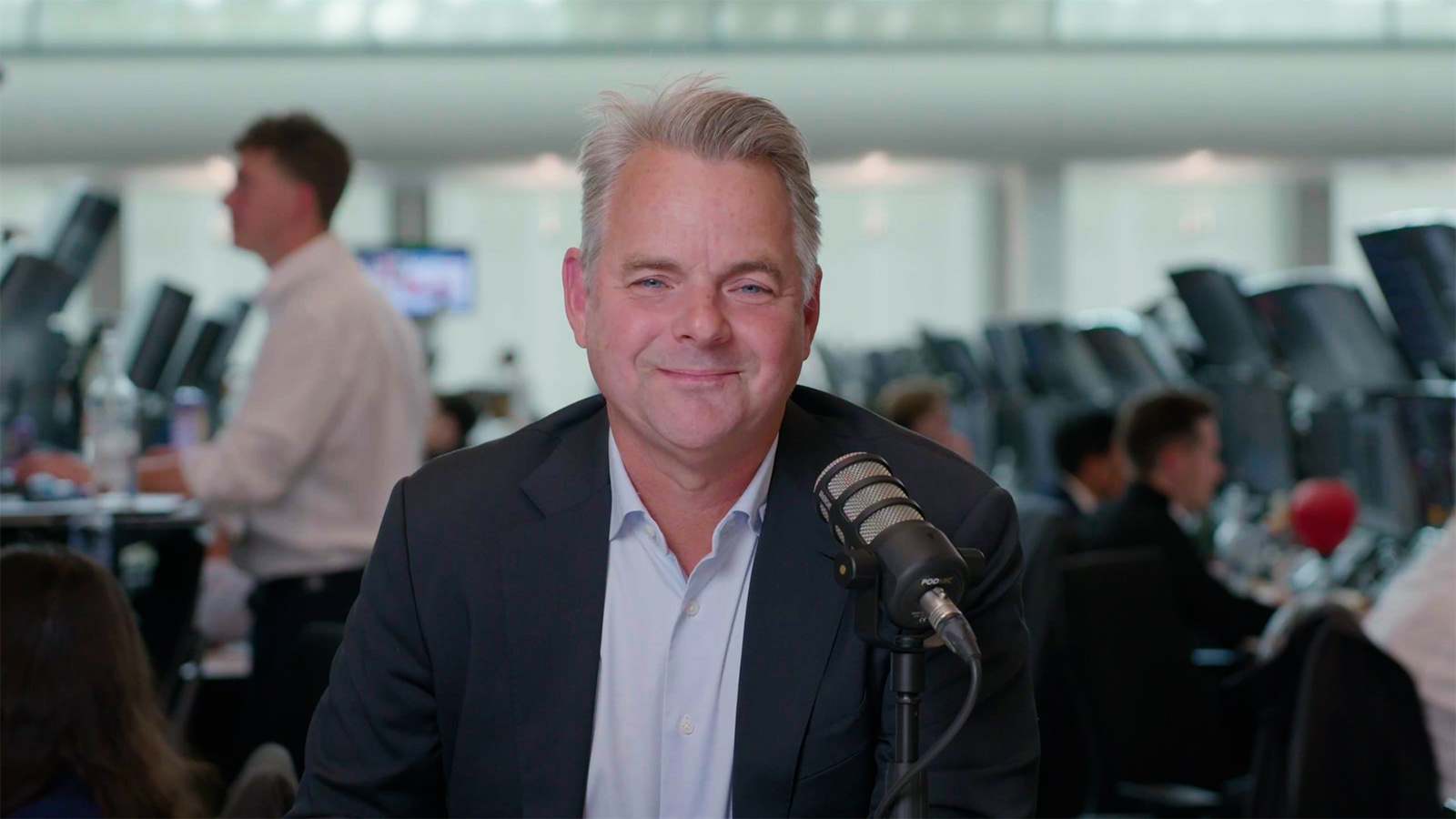
Oil prices have fallen thanks to investor optimism that the Iran conflict could soon be resolved. But the situation may be more complicated than it appears, cautions Jerome Dortmans, co-head of Global Oil and Products Trading in Goldman Sachs Global Banking & Markets. He discusses the drivers of the crude oil and refined product markets, as well as some potential trading opportunities, in this conversation with Chris Hussey.
Transcript:
Chris Hussey: This is The Markets. I'm Chris Hussey, and today is Thursday, May 7th. And I'm joined in London on the Goldman Sachs trading floor by Jerome Dortmans, co-head of global Oil and Products Trading within Global Banking and Markets. Jerome, thanks so much for joining us.
Jerome Dortmans: Pleasure.
Chris Hussey: Let's talk about oil because oil was way up. It's now come down about $20 from its recent peak. What do you make of the price action here? What are the scenarios going forward?
Jerome Dortmans: Yes, you know, we obviously, when the conflict started in March, we very quickly went to sort of around $120 a barrel in the futures markets but then traded on the cash markets well above $170. And obviously product prices also spiked.
Since then, we've had the market reaction function work pretty well. We've seen SPR releases. We've seen some demand destructions, some refinery run curtailment, and we've also seen policy shit for unsanctioning barrels. So that supply came to the market, and in April we saw sort of a compression of the cash prices to the futures.
So once we got beyond the initial stress and we had the market reaction function of the physical supply, then it was about how do we conclude this conflict in an effective way? That has been harder to accomplish as we have obviously seen, and we're still trying to make that happen.
But what has changed in April is that we've had a cease-fire. So we have now also taken away the risk premium that was in the market in March for any more damage to local infrastructure, to production, and refining and gas production as well.
Chris Hussey: And how are markets making sense of all of this discussion that seems so ongoing?
Jerome Dortmans: So the market feels a little bit more comfortable in this phase and in this period of negotiation. And because of that, the market just seems to be trading, I would say broadly between sort of $95 and $105, with a spike here and there when things look a little bit more confrontational.
But we are still at a very binary, I would say, point. If these negotiations don't go well and we do not sign this memorandum that is due to be signed within the next, well, now 24 hours, and we go back to reescalation, then everything is again mispriced. Then the cash markets will need to escalate to the levels, maybe not quite that we saw in March, but certainly we're going to see a broader, hotter market, especially in the East. And also we will see a hotter market in futures and certainly in refined products, more in the West this time because we are approaching summer demand season.
So that's the, I would say, the pessimistic sort of negotiation outcome scenario. I think if we get the memorandum signed, we still have 30 days for the market to decide whether or not there is ultimately going to be a meaningful peace deal. And again, that comes with nuances. But end of those 30 days, I do anticipate that the market sells off, but I don't anticipate that it sells off materially below sort of $80-85 levels.
If we do get a peace deal signed, I think there is still risks that the opening of the straits are not going to be as smooth as people expect. I don't expect there to be an open flooding of barrels just leaving the region and because of it production goes back to normal very quickly, refining in the region goes back very quickly. So ultimately, I think the path will be gradual, and so I think that it will still take three months before the market will start pricing some of the more bearish scenarios that are being discussed out there because the refining sector has been obviously heavily constrained by this loss of crude from the region.
We don't know what the damage is in terms of the actual refineries and the production assets, but there has been constraints. And these constraints are going to affect supply into the summer for certain refined products. As we go beyond that 3-month period, I think we should expect the normalization, you know, sort of six to nine months. And then at that point, we may start having to assess whether or not we get into the more bearish scenarios where we have maximum OPEC output, maximum crude production everywhere, maximum refinery runs to restock the lost barrels. But I think it's way too early to make that call.
Chris Hussey: Yeah, and of course when you're talking about a bearish scenario, you're talking about a bearish oil scenario, which is arguably bullish for everything else. But let's talk about what happens if oil just stays elevated here for longer than we want. How long can oil stay up at these levels before it starts having a bearish scenario outcome on the economy and then you start to see the demand destruction in oil that creates an even bigger lasting problem?
Jerome Dortmans: Yeah, interesting question. I think we are already seeing that impact in emerging markets. I do not see it happening at this price level in sort of the developed economies. We are not seeing meaningful demand destruction in the United States. We are not seeing meaningful demand destruction in Europe. We are definitely seeing demand destruction in Asia. We're seeing curtailment of petrochemical runs because of the high feedstock pricing. We are seeing and have seen sort of rationing. We have seen changes to work-life balances to, I would say, constrain consumption in certain countries in Southeast Asia.
But I think even at this price level refineries are now back to higher runs in Asia because of the strategic reserves that were released and some of the other supplies that came to the market. So the number is disputable and the data is very lag, but the market is anywhere between 3-5 million barrels a day of oil demand destruction so far. If we stay at the price levels we are now, I don't think we see a lot more than that. We need to go back into a more escalatory environment for that to start biting even harder. And that's also why I think you're seeing equity markets and some of the other macro markets trading more positively sort of in the environment we're in now.
Chris Hussey: But what does this say about things like jet fuel? Because one of the things we've heard is that, if you go downstream further into some of the fuels, some of the chemicals like naphtha, you have real shortages starting to develop that are going to create even bigger problems for the developed markets. Is that true? Or are you saying that, nah, we actually have strategic reserves that are going to bail us out?
Jerome Dortmans: Both yes. It is true. The loss of supply from the Middle East is meaningful, especially for the European jet market. But at the same time, the refining industry is very efficient in finding supply at the right price levels, and we've certainly created the right price environment for global refining to try to optimize, to maximize jet fuel production. And we have sufficient and strategic stocks for Europe to cope for quite an extended period of time. And you'll maybe see some curtailments of flight schedules that are not economic anyway, so I think there will be some rationing there.
But I'm not as panicked as I would say that some of the editorials are pushing, because we are seeing shifts in yields. Now, shifting yields to make more jet doesn't come for free. It creates bottlenecks in other products, especially naphtha and also diesel. So by solving the jet problem, we could be creating other problems and other chokepoints within the refinery system. And I think that will set up a summer environment for the broader refined products to trade potentially at higher levels while the crude market environment normalizes if the Straits of Hormuz opens up and opens up in a good way.
Chris Hussey: So one last point around this. You made a point earlier that we went to a cease-fire in April. Has that one month, now almost six weeks, of cease-fire given the region a chance to rebuild such that, if we do get a lasting peace, we will get oil to market even faster than we would have if we were thinking about this back in March? Or is there a long way back until we get all this oil and the refined product back on the market?
Jerome Dortmans: It's a bit difficult because it is still very difficult for the market to assess, I guess, the damage that was created. I mean, certainly to the extent there has been damage the cease-fire has given them the opportunity to start repairing the damage that has been caused. But we have a lot of oil that we have to get through, and it's not just oil. We have all kinds of other shipping that is also stuck in the region that is looking to get out.
But I think the key question is: How does the Straits of Hormuz open? And that is still largely unanswered at this stage.
Chris Hussey: Yeah, and it may not be for a little bit. All right. Let's put a bow on it. What's the trade?
Jerome Dortmans: I think obviously given this week, we're waiting to see the response on this memorandum that's been sent by the US administration. If it is positive and we move into that 30-day period and things go smoothly, we should expect for crude markets and markets in general to soften. But we are by no means solving quickly enough, I would say, the supply constraints we have created by this more extended supply issue.
I think we've done enough damage, I would say, to stock levels that, if we have a normal demand season in the Western Hemisphere, that we are going to continue to need high runs and we're going to need to compete for crude barrels and we're going to need to compete for resupply, both on the light ends -- the gasoline, the naphtha -- and on the diesel.
So I think we move away from, I would say, a directional market and more into a relative value market.
Chris Hussey: And ahead of more certainty on whether we're going to get a lasting peace or not, what are you seeing investors doing? Are they hedging to the downside or hedging to the upside?
Jerome Dortmans: Well, we've seen this oscillate throughout the conflict as sort of policy statements or the winds of the conflict have shifted. But what we have certainly seen since this cease-fire is a readiness for the investor community to look more to the downside.
Now, when I say "look more to the downside," a lot of the macro environment was obviously sitting with long hedges against macro positions. So I think we've seen some unwinding of that, and I think that is the biggest change that we've seen since the cease-fire. But I think in the last week or so we're also starting to see a bit of a shift from the producer side, and that is, they are getting more active.
I mean, it was only last week we were making new highs on the July Brent contract. But I think there's certainly an acceptance that, while we have these negotiations going, while we have a cease-fire, the likelihood of those barrels coming out through the strait is higher than it was, and so we are seeing a little more activity on the producer side that was not with us in April.
On the consumer side, a lot of the clients have been actively hedging throughout the process and even before the conflict. You know, they took their foot off the hedging pedal obviously in March when things got very elevated. We would anticipate they would also start to come back into the market if we start to dip back to the lower levels that we've seen during this conflict. And I'm talking about $85 oil.
But definitely in the last week or so, more activity on the producer side, which I think is in anticipation that we're going to get some resolution sooner than later.
Chris Hussey: Jerome, terrific. Such a dynamic market. Thanks so much for taking time with us today to walk us through it.
Jerome Dortmans: It's a pleasure. Thank you.
Chris Hussey: That does it for this week's episode of The Markets. I'm Chris Hussey. Thanks for listening.
Recorded on May 7, 2026
The opinions and views expressed herein are as of the date of publication, subject to change without notice, and may not necessarily reflect the institutional views of Goldman Sachs or its affiliates. The material provided is intended for informational purposes only, and does not constitute investment advice, a recommendation from any Goldman Sachs entity to take any particular action, or an offer or solicitation to purchase or sell any securities or financial products. This material may contain forward-looking statements. Past performance is not indicative of future results. Neither Goldman Sachs nor any of its affiliates make any representations or warranties, express or implied, as to the accuracy or completeness of the statements or information contained herein and disclaim any liability whatsoever for reliance on such information for any purpose. Each name of a third-party organization mentioned is the property of the company to which it relates, is used here strictly for informational and identification purposes only and is not used to imply any ownership or license rights between any such company and Goldman Sachs.
A transcript is provided for convenience and may differ from the original video or audio content. Goldman Sachs is not responsible for any errors in the transcript. This material should not be copied, distributed, published, or reproduced in whole or in part or disclosed by any recipient to any other person without the express written consent of Goldman Sachs. Disclosures applicable to research with respect to issuers, if any, mentioned herein are available through your Goldman Sachs representative or at http://www.gs.com/research/hedge.html
Goldman Sachs does not endorse any candidate or any political party.
© 2026 Goldman Sachs. All rights reserved.
Subscribe to Briefings
Our weekly newsletter delivers the latest insights on economic forces shaping markets—from Goldman Sachs leaders, economists, and investors around the world.
You can unsubscribe at any time. For information about how your personal data will be used, visit Privacy Information and Resources.