

The Markets
The Outlook for Retail Stocks as Black Friday Approaches
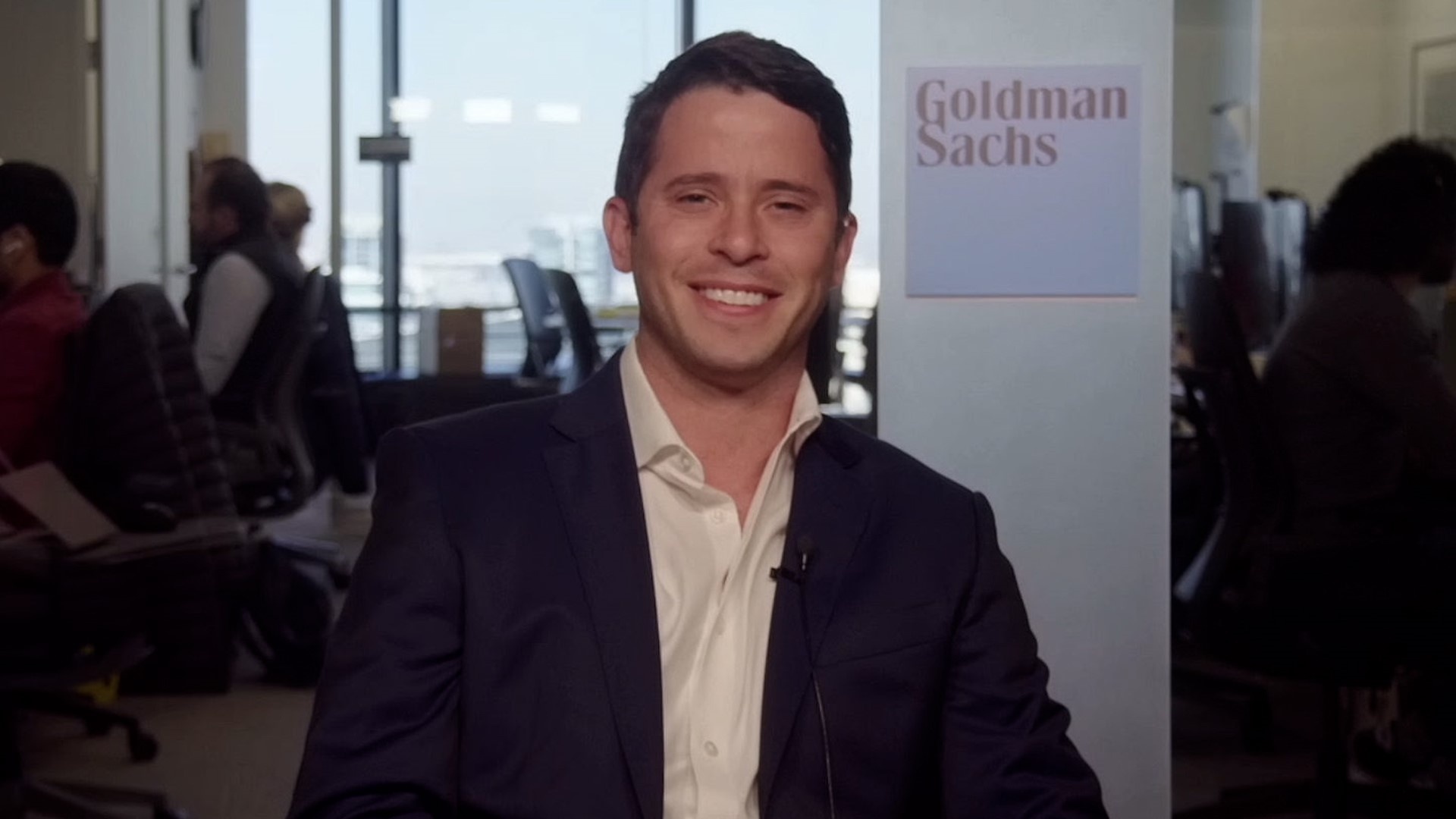
Solid retail sales data and a positive start to retail earnings reporting are demonstrating the strength of the US consumer heading into Black Friday, says Scott Feiler, consumer sector specialist in Goldman Sachs FICC and Equities. Low jobless claims and declining gas prices also suggest resilient consumer spending, which is showing up in sales for experiences and giving a boost to hotel and cruise-line stocks. At the same time, Feiler says on The Markets podcast that it will be important to monitor how higher material costs flow through to corporate margins and retail prices in 2027.
Transcript:
Chris Hussey: This is The Markets. I'm Chris Hussey, and today is Thursday, November 19th. And I'm joined from our Dallas office by Scott Feiler, who is a consumer sector specialist within FICC and Equities. And this week we're going to discuss a retail sales report we got earlier in the week, what it means for the consumer, how earnings are shaping up, and what the setup into next week's Black Friday is for the entire consumer space.
Scott, thanks so much for joining us.
Scott Feiler: Thanks for having me, Chris
Chris Hussey: Okay, Scott, I was looking back at my notes. We had you on exactly a year ago. Why not? Get you right ahead of the Black Friday and also in the middle of earnings season. Back then, you were a little bit cautious on the consumer, though. Where are you falling out on the consumer in the year ahead?
Scott Feiler: Yeah, I mean, you could use a couple different words. The consumer is fine. The consumer is resilient. Most of the companies that we've heard from so far sound good. Things are just steady. It's hard for me to pound the table and tell you that everyone is doing well, nor are we seeing the deceleration in the consumer that everyone expected we were going to see when gas prices were high and inflation was sticky.
The consumer is fine. Obviously, you hinted the retail sales report. The October retail sales report beat again. September, last month, beat and was revised higher. So, from a top-down perspective, consumer spending is good, and from a bottoms-up perspective, the corporates generally sound steady and while that's not amazing, it's certainly a lot better than people feared a couple months ago
Chris Hussey: All right. I want to talk a little bit about our strategist, Ben Sneider. He's made a very big call on consumer staples as a defensive. You're making a little bit of a call, though, talking about the consumer being strong here. Do you want to play the consumer for defense or do you want to play the consumer for offense?
Scott Feiler: I mean, historically it's one or the other, right? But recently consumer discretionary and consumer staples equal weight have had a positive correlation. That's very rare. So you don't necessarily have to pick one or the other. Ben has certainly had an out of consensus call by being constructive on staples.
And it's been a good call. And the group has obviously acted quite defensive as the market has gotten choppier, and if the market remains choppy, that's going to continue to work. I'm a little more constructive on consumer discretionary right now though, simply because corporates are telling us that things are fine.
Jobless claims are at the recent lows, and spending is accelerating a little bit into fourth quarter, and we think Black Friday's going to be good. So, we'd be selectively constructive on consumer discretionary right now
Chris Hussey: Let me explore one of those aspects of that call. You talked about gasoline prices maybe on the decline, and that is part of the inflation call here. Affordability has become a big buzzword in the economy today. How is the consumer sort of hanging in there with all the inflation they're seeing, and how are corporates that are in this space hanging in with all the inflation they're seeing? How are they keeping margins up?
Scott Feiler: We got another weekly jobless claims number that was down around 200 today. So the consumer is employed and wage growth is still strong, and so they just have confidence in their job still. So, that's number one.
Gas prices have come off peaks, and so the consumer has probably responded to that. Savings are still, obviously still just more elevated than most people realized, and we just haven't seen the givebacks from the tax refunds that we had earlier in this year. So, the consumer is sort of spending through those temporary inflation headwinds that we had over the last few months.
And so yeah, I mean the consumer holds in. We're not in the clear yet. I do think companies still could pass on more prices. They're not fully giving the consumer back all of the tariff refunds that they've got. These corporates could continue to pass on prices into next year, though.
Chris Hussey: There's also an energy lag though on that corporate side, especially in the consumer staples side, but it's also flowing through some of the retailers who deal in apparel and things like that. Are you concerned at all that you're going to see input cost inflation rise so fast that they're not going to be able to pass it on to the consumer through price?
Scott Feiler: I don't think we're out of the woods yet in terms of some of the raw material costs. Even though energy prices have begun to come down, corporates are almost certainly going to have margin pressures from raw material costs next year as new contracts come up.
And so there are going to be margin pressures next year. Most of the companies that we have heard from who have talked about 2027 have hinted that margins are likely to be lower next year on a year-over-year basis and below consensus. And so, we do think corporates will try to raise prices to offset some of the raw material costs that they're going to see next year on the freight side and other raw material costs.
It's going to come down to who has pricing power and who doesn't. Some companies have pricing power, some companies don't. But we do think corporates are going to try and pass through prices to offset some of the raw material increases that they are going to see next year.
Chris Hussey: Well, we're getting an update on that pricing power right now, cause I'm catching you right in the middle of earnings season for the retailers, maybe the heart of earnings season. What are you learning so far? Whats coming out of the earnings season that's catching your eye?
Scott Feiler: Consumers are still spending on travel and experiences. The travel group is up 10% the last month. Hotel RevPAR is incredibly strong still. Everyone was expecting trends to fade after the World Cup, and they've accelerated further. Cruise lines sound really good. So, consumers are still spending on experiences and that is showing up in stock prices as well.
So that's number one. And then number two is you're not seeing perfectly linear strength in trends week to week, but you are seeing the consumer remain generally resilient. The corporates we have heard from who have spoken about fourth quarter, quarter to date, the few weeks before Black Friday, have generally told us that fourth quarter has started stronger than 3Q ended.
So, the consumer is still showing up and feels like it's going to be fine into Black Friday.
Chris Hussey: One more question here on Black Friday, because we're going to be going into Black Friday as well here. What is your outlook for Black Friday? How much does it matter?
Scott Feiler: I mean, the consumer always shows up for Black Friday or for any event for that matter. And given the consumer is employed and given sentiment has picked up off the lows in the sentiment readings, we think the consumer is going to show up next week and on Black Friday as well. They always do.
November historically is very strong for the retail group. The retail group has outperformed nine of the last 10 years in a row in November, and most of that outperformance comes the last two weeks of November around Black Friday because the holiday reads we always get are generally good. And given the corporates that we've heard from over the last couple weeks have told us that things are accelerating into fourth quarter, we think that's going to continue into next week and we think retail outperformance is probably going to continue and be strong next week
Chris Hussey: Yeah, it's the Cindy Lou Who economy. No matter what happens, Christmas came, Christmas came just the same. All right, good stuff. Let's put a bow on it. What's the trade?
Scott Feiler: We talked on it briefly already, but I think you're supposed to buy all sorts of dips in anything travel related. Hotels, cruise lines. Hotels are going to do well. In an agentic world where people are going to book more direct through hotels as opposed to potentially through other ways, hotels do well in that world.
It's a higher margin business for them. So we like hotels on any sort of pullbacks. We like cruise lines as well. Net yield growth is going to accelerate into next year. And so we like those two parts of travel. And then there's select single names that we like as well. Some discretionary names that are value, that are discounted valuations, that are quality companies that have seen real pullbacks.
There's a lot of single stocks that we really like specifically that are levered to apparel, that are trading at pretty deep discounts to history.
Chris Hussey: Okay, a lot coming up. What are you watching for next week and beyond?
Scott Feiler: We're going to get a lot of earnings next week, over the next couple weeks. In addition to obviously we're getting Black Friday, we're going to hear from department stores and off-price companies. These are less idiosyncratic stories and more just reads on consumer health. So we're going to get those the next couple weeks.
The last few weeks has been about idiosyncratic stories. The next couple weeks are going to be about consumer bellwethers and how these companies are sounding around the consumer through the first three weeks of November, and we think that's going to be incredibly important to hear from. So, next week's earnings are going to be important.
Department stores and off-pricers, that's who we're watching next week, and we think it'll be generally good
Chris Hussey: All right, I can't let a conversation with Dallas, go without this. Dallas Cowboys off to a tough start though, but are they going to make the playoffs anyway?
Scott Feiler: I don't think so. I mean, I might get tomatoes thrown at me for saying that, but I just don't think it's going to happen unfortunately. We're just finding ways to lose games that we should win. We're just not closing it out in the fourth quarter. We're just not a fourth quarter team unfortunately
Chris Hussey: Well, Scott, I appreciate that. Thank you for taking time with us this week.
Scott Feiler: Thanks very much, Chris
Chris Hussey: That does it for this week's episode of The Markets. I'm Chris Hussey. Thanks for listening.
This episode was recorded on November 19, 2026.
The opinions and views expressed herein are as of the date of publication, subject to change without notice, and may not necessarily reflect the institutional views of Goldman Sachs or its affiliates. The material provided is intended for informational purposes only, and does not constitute investment advice, a recommendation from any Goldman Sachs entity to take any particular action, or an offer or solicitation to purchase or sell any securities or financial products. This material may contain forward-looking statements. Past performance is not indicative of future results. Neither Goldman Sachs nor any of its affiliates make any representations or warranties, express or implied, as to the accuracy or completeness of the statements or information contained herein and disclaim any liability whatsoever for reliance on such information for any purpose. Each name of a third-party organization mentioned is the property of the company to which it relates, is used here strictly for informational and identification purposes only and is not used to imply any ownership or license rights between any such company and Goldman Sachs.
A transcript is provided for convenience and may differ from the original video or audio content. Goldman Sachs is not responsible for any errors in the transcript. This material should not be copied, distributed, published, or reproduced in whole or in part or disclosed by any recipient to any other person without the express written consent of Goldman Sachs.
What themes will drive the global economy in the year ahead? Explore the 2027 Outlooks from across Goldman Sachs, from specialists on the trading floor to economists and analysts from the global research team.

Subscribe to Briefings
Our weekly newsletter delivers the latest insights on economic forces shaping markets—from Goldman Sachs leaders, economists, and investors around the world.
You can unsubscribe at any time. For information about how your personal data will be used, visit Privacy Information and Resources.