

The Markets
Why Investors Are Reducing AI Exposure
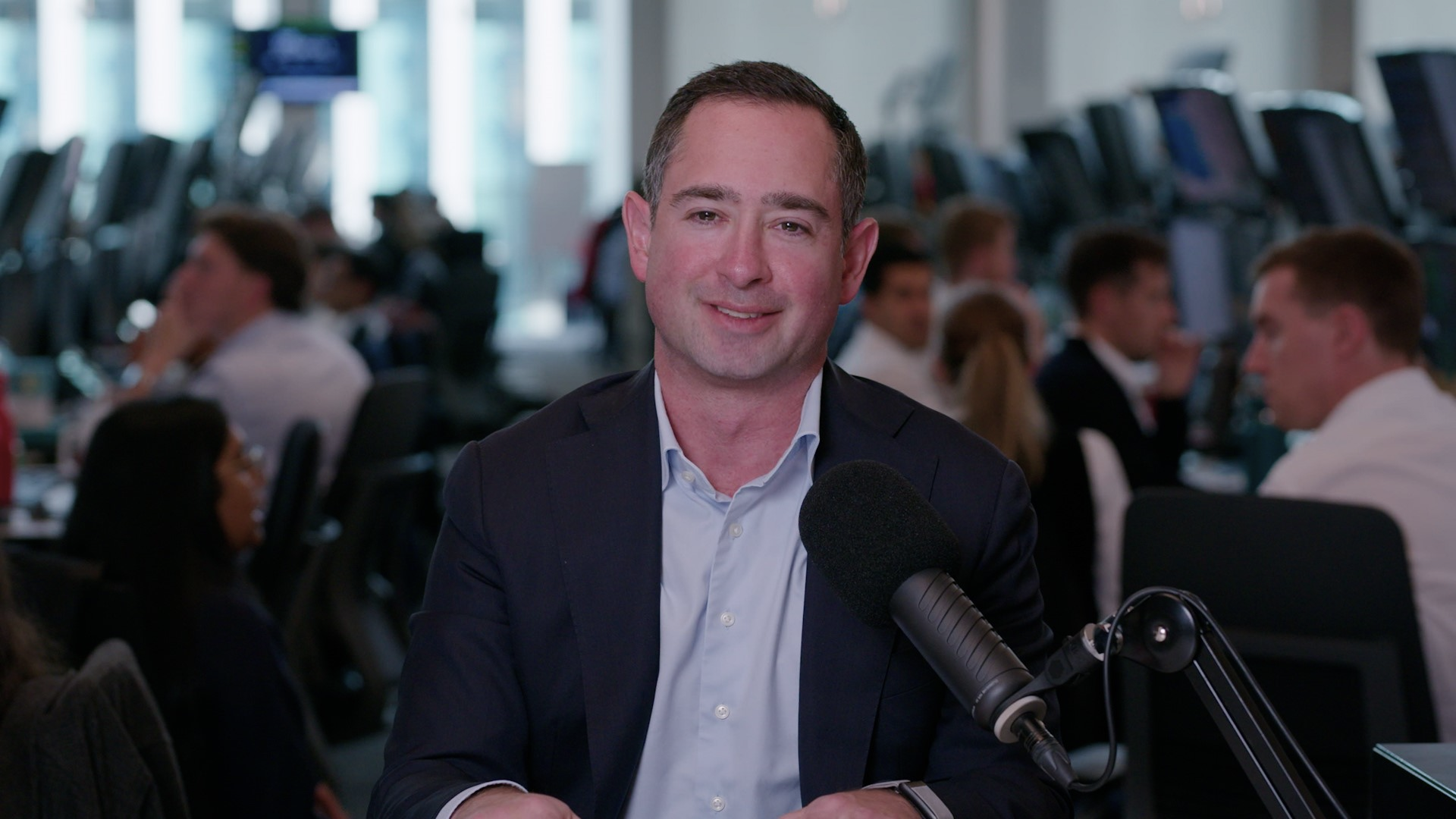
Markets are scrutinizing the crowded AI trade as investors reassess technology infrastructure spending plans and factor in rising capital costs, says Rich Privorotsky, head of European Equities Trading within Goldman Sachs FICC and Equities. Third-quarter earnings from mega-cap tech will be critical, Privorotsky says on The Markets podcast. Investors are not only watching hyperscaler investment plans but looking for evidence that the spending is translating into revenue growth. He also describes a “seismic shift” from a savings glut to a spending glut, which along with high energy prices is lowering investor risk appetite.
Transcript:
Chris Hussey: This is The Markets. I'm Chris Hussey, and today is Thursday, October 22nd. And I'm joined from the Goldman Sachs trading floor in London by Rich Privorotsky, who is head of European Equities Trading within FICC and Equities.
Privo, thanks so much for joining us.
Rich Privorotsky: Thanks for having me, Hussey.
Chris Hussey: All right. Let's jump into it because I've been reading everything you've been writing about, and you made a great point, which was that earlier this summer, the pain trade, the trade that people were having to chase was long AI, short everything else.
It had become a little bit of one big trade. Now that seems to be unwinding as we go into third quarter earnings season. What's going on? How do you see it playing out from here?
Rich Privorotsky: There's just been an immense amount of concentration in the equity market, and I got to say that the past few weeks have been particularly painful for those types of consensual trades.
People were very concentrated within AI, within semis, within hyperscalers. And I would say that there are probably three different issues the market is kind of grappling with right now. One is obviously we've had a spillover in terms of the cost of capital, and I think we're seeing that pretty much everywhere. Whether it's triple C spreads, sovereign spreads in Europe, but also at the very pointy end within some of these more levered parts of the AI trade and the neoclouds really stand out.
And so that's become a question of supply. You know, will those corporates have struggle to find financing to deliver all this AI spend? The second point being on supply, that we've had questions about the ability to actually energize and deliver gigawatts, and the spread is kind of 20 at 40, 50 gigawatts for next year.
So if you can't get the power to actually energize a data center, will you actually be able to consume the chips you've already forward ordered? So those are concerns that are floating around the market. And then on top of that, you have more competition at the model layer and all of that is just compounded to a point where people have been in a de-risking mentality. And the nature of that has been taking growth expectations down via the AI trade and AI CapEx trade. And on the flip side of that, bonds have been rallying as growth expectations come down and that was on no one's bingo card.
Chris Hussey: Okay, a lot to unpack there. Let's focus though on the immediate future and actually the present, which is the third quarter earnings season. We're in the middle of it already. We've had some of the big mega cap tech stocks report, but we got a lot more to go. What are you watching for most carefully out of the third quarter earnings season?
Rich Privorotsky: Yeah, I think we're going to head into the meat of the hyperscaler numbers, and I think it's going to be really important to see not only that the CapEx is sustaining at the high levels and the market is kind of at $1.1 trillion for next year, but most importantly see continued cloud growth and monetization.
So, it's not enough just to say that you're spending a lot of money, but you also need to demonstrate that backlog is converting into revenues in a meaningful capacity. And so, I think that's going to be really critical for the market. I think the nature of how quickly their bridge to free cash flow break even occurs relative to market expectations could have a big implication on the credit markets, which have become acutely sensitive.
And so, really for me, there's a lot to look for I would say from the rest of the economy, but I think that the market's focus is really going to be on hyperscalers and then really the quality of the delivery, not just the spend.
Chris Hussey: It's a heck of a bar to have to scale for these companies. They have to keep pushing CapEx at the same time as they show you returns on that CapEx. It's not an easy setup, is it?
Rich Privorotsky: No, it's not. But, but look, I mean, the backdrop is one such that you see compute prices literally making new highs every day in the spot market. There is insatiable demand for what they have for sale. And so, I would say with a bit of a glass half full view, they should have a pretty good story to tell.
Chris Hussey: Okay, Rich, it's been a minute actually since we've had you on the call. You last joined us way back in January, but throughout the year you've been one of the guys with the mantra, "As goes oil, so goes everything else." Is that still the mantra?
Rich Privorotsky: Yeah. I think we've had a immensely problematic backdrop in energy. And I think the market, the equity market I think has done its best to really ignore and compartmentalize the rise in energy.
But that's not really fair because the S&P has done a great job compartmentalizing, but the median equity has in fact gone down well in excess of 10%. And so that has had an impact on rates. It has an impact on FCI. In fact, we've had a massive FCI tightening, and that has in a sense also pushed the Fed to do more, and we've repriced an entire hiking cycle.
So I think energy has been a big part of that. I think we still have a lot of risk premium because of energy and obviously now the next couple of weeks of how these things are going to play out is going to be really critical for broader risk, and I think my optimistic view is that we'll get some sort of resolution in the next few weeks. But, I have to admit, I've been kind of a little bit wrong thinking that would've happened a month or two ago.
Chris Hussey: I think we all have. And by FCI, of course, you're referring to the Financial Conditions Index, which is kind of a measure of tightening or loosening of the economy, of all the economic impulses. It's not just about rates. Sometimes it could be oil, sometimes it could be stocks as well when you're looking at an FCI. All right, good point on the oil side.
Also tied to that oil trade, though, was a comment you made back at the beginning of the year, which is, "I want to be long nominal assets. In an expanding world where GDP growth is strong, and GDP growth is looking still very strong, and inflation is high, I just want to be long those types of thing," which is a lot of commodities.
Where do you see that nominal asset trade today? Is it still a place to be?
Rich Privorotsky: I think in order to answer that question, I have to kind of answer the trillion-dollar question, which is what's going to happen with AI spending and how sustainable is it relevant to market expectations? Because the reality is that as we reprice that, we've repriced everything, including commodities, including nominal assets.
My gut is that we've kind of thrown the baby out with the bathwater, and we've certainly begun to worry about every dimensionality. And to kind of put that in context, I met investors this week who said, "I'm worried about the inability to deliver compute, and that scares me." And then I met another set of investors that said, "I'm worried we're going to over-deliver compute, and that scares me."
And it's somehow we've had two mutually exclusive outcomes that are both the summation of the market's worries. So, I think nominal assets are big picture where you want to be, unless we go into a disinflationary bust, right? Which is CapEx slows, everyone has to retrench, we have a proper credit cycle. And I would've said three months ago the risk of that was low, and now certainly it's a lot higher.
But my gut is that's still where you want to be over the medium and long term. But I think now perhaps a bit more of a barbell in the portfolio would be a bit more sensible.
Chris Hussey: So, it sounds like what you are saying is, whereas before it may have been as goes oil, so goes everything else, it's now as goes AI, so goes everything else. Is that right?
Rich Privorotsky: I think at the risk of being overly reductionist, that's probably about right.
Chris Hussey: Rich, thanks for being overly reductionist. I am Mr. Overly Reductionist, so I love that you were able to go there.
All right. You also mentioned that part of this, of course, would be a big credit cycle.
And that three months ago you weren't worried about a credit cycle, now you are a little bit more. Talk to us about that. Are you seeing credit cracks? Are you referring to the issues that are going on with sovereign bonds in Europe, or are you referring more to the credit issues that we see at the corporate side?
Rich Privorotsky: I've spent my entire career in what you could probably describe as a savings glut. We had more money in the system than we knew what to do with and really in the last year we're projecting to spend in excess of a trillion dollars on AI CapEx. Most governments around the world are running fiscal deficits.
We are in a spending glut, and this is a really big seismic change in terms of the way things work and what the cost of capital becomes. And so I think that is naturally pushing out borrowers who are at the fringe, who are not the highest of quality. I think you've seen it in CCC spreads, which is, in fairness, a bit idiosyncratic given the composition of what's occurred there, but they have moved a lot and that's spilled over a little bit into broader parts of credit.
And then obviously you have French sovereign concerns, which as a sovereign with a large fiscal deficit in this environment, they all get pushed out. So I think all these things are kind of having an impact and we go back to the oil trade simultaneously, as long as energy prices are high, it just kind of lowers the risk appetite and I think it is kind of a buyer's market for those types of assets.
Chris Hussey: Yeah, what a great way to crystallize it. From a savings glut to a spending glut. It's so true, and that savings glut was only five years ago. It's amazing how we've shifted. All right. A lot going on. You just told us. Let's put a bow on it. What's the trade?
Rich Privorotsky: It's a bit messy, and I would say conviction is not super high. But I think that there are pockets of electrification that we think look really interesting. They've derated a ton, and I still think there's plenty of visibility into 2027 that gives you a big margin of safety. I think there's lots of aerospace assets that have come off that, particularly on the civil side, again, equally incredibly attractive to us.
And then even parts of transports, quite frankly. If you do get any kind of energy resolution, there's a lot of, I would say, convexity in that trade given how low nets have become, how much selling we have seen in the past few week. I mean, for context, it was the biggest selling of tech we've ever seen in our prime book last week.
So, I think there are plenty of reasons to worry and I don't want to be too dismissive, but I kind of like try to be cautiously optimistic at this point.
Chris Hussey: Okay, Rich, let's fast-forward to next week. What are you watching for that's going to impact the markets in the week ahead?
Rich Privorotsky: I think it's going to be at numbers, hyperscaler numbers as we discussed. I think let's see the monetization. Let's see the CapEx figures. I think this is going to be really critical for the tape.
I think how that progresses will shape how people feel about the credit, how people feel about the underlying demand and whatever else we get, you know, in terms of data points coming from all the labs and all the providers.
Chris Hussey: Rich, always a wealth of information. Thanks so much for joining us today.
Rich Privorotsky: All right. Thanks, Chris. Thanks for having me.
Chris Hussey: That does it for this week's episode of The Markets. I'm Chris Hussey. Thanks for listening.This is The Markets. I'm Chris Hussey, and today is Thursday, October 22nd. And I'm joined from the Goldman Sachs trading floor in London by Rich Privorotsky, who is head of European Equities Trading within FICC and Equities.
Privo, thanks so much for joining us.
Rich Privorotsky: Thanks for having me, Hussey.
Chris Hussey: This is The Markets. I'm Chris Hussey, and today is Thursday, October 22nd. And I'm joined from the Goldman Sachs trading floor in London by Rich Privorotsky, who is head of European Equities Trading within FICC and Equities.
The opinions and views expressed herein are as of the date of publication, subject to change without notice, and may not necessarily reflect the institutional views of Goldman Sachs or its affiliates. The material provided is intended for informational purposes only, and does not constitute investment advice, a recommendation from any Goldman Sachs entity to take any particular action, or an offer or solicitation to purchase or sell any securities or financial products. This material may contain forward-looking statements. Past performance is not indicative of future results. Neither Goldman Sachs nor any of its affiliates make any representations or warranties, express or implied, as to the accuracy or completeness of the statements or information contained herein and disclaim any liability whatsoever for reliance on such information for any purpose. Each name of a third-party organization mentioned is the property of the company to which it relates, is used here strictly for informational and identification purposes only and is not used to imply any ownership or license rights between any such company and Goldman Sachs.
A transcript is provided for convenience and may differ from the original video or audio content. Goldman Sachs is not responsible for any errors in the transcript. This material should not be copied, distributed, published, or reproduced in whole or in part or disclosed by any recipient to any other person without the express written consent of Goldman Sachs.
Date of recording: October 22, 2026
Subscribe to Briefings
Our weekly newsletter delivers the latest insights on economic forces shaping markets—from Goldman Sachs leaders, economists, and investors around the world.
You can unsubscribe at any time. For information about how your personal data will be used, visit Privacy Information and Resources.