

Goldman Sachs Chief Economist Jan Hatzius Joins CNBC to Discuss His Outlook for the US Economy
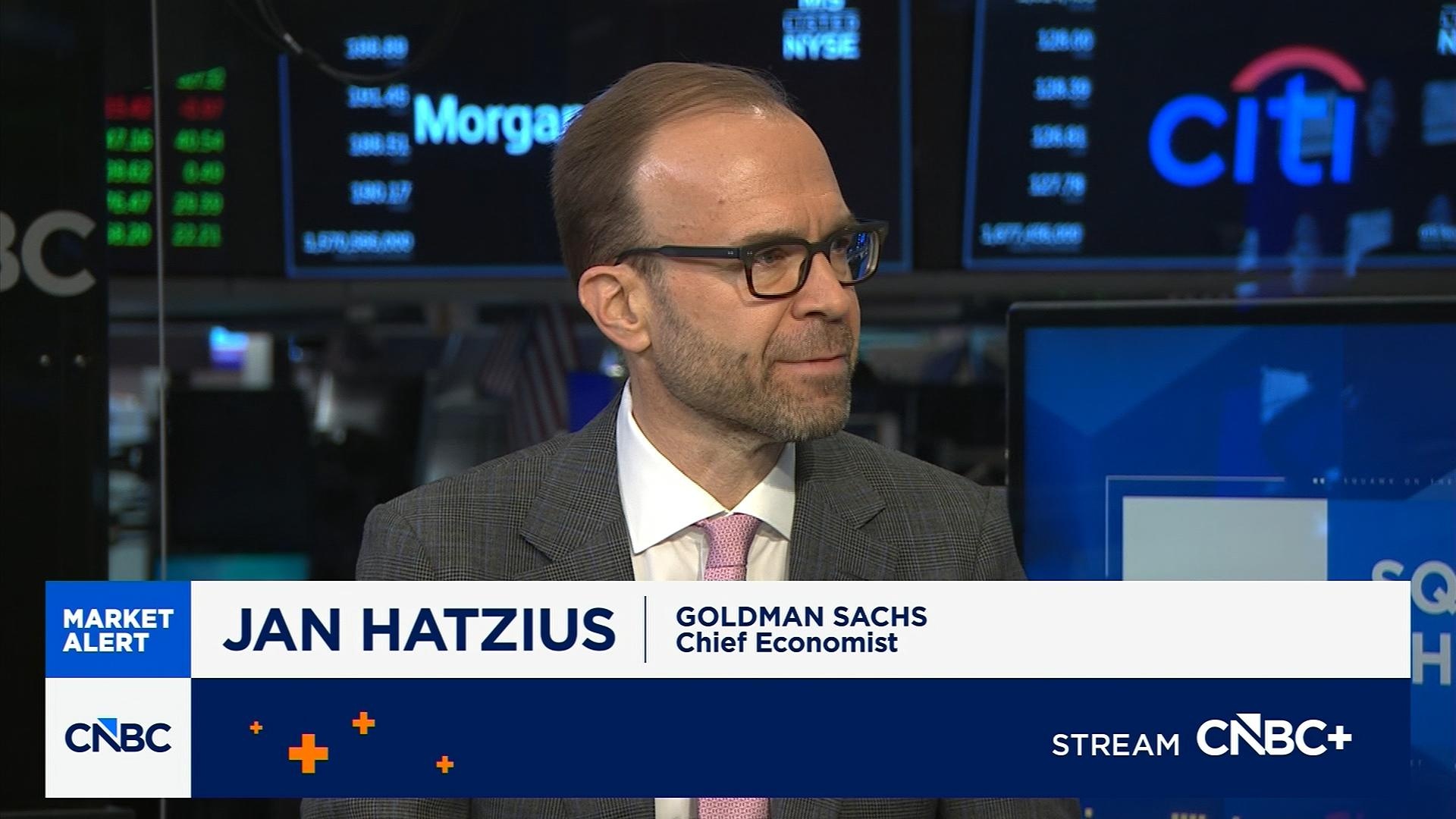
Jan Hatzius joined CNBC to discuss his projections for near-term Fed policy following recent inflation and employment data. He anticipates a December rate hike, though he notes ongoing soft inflation readings could change that view.
Transcript:
Carl Quintanilla
Let's bring in Jan Hatzius this morning at Post Nine. Goldman's chief economist get his first take on this report and sort of the week that we've had. Jan, good to have you back. It's good to be here. So we had we had Core PC and we had Williams Jefferson Bowman, and now this some of this stuff's kind of going your way in terms of your house view. Yes,
Jan Hatzius
in the sense that we don't need a lot of hikes from here. Yes, and we did push back the next move and final move in our forecast from the Fed from October to December on the heels of the PCE numbers. But all the events that you spoke about-the Williams speech, the Jefferson speech, and today's employment numbers-I think push in that same direction, that it's not we don't need a lot of monetary tightening here, and I think markets are discounting still three hikes, and I would say that's not necessary.
Carl Quintanilla
Why would we we need one in December then?
Jan Hatzius
I think December they've signaled one clearly. It was a reasonably clear baseline, so I think that is what they expect to do. And if we get no major news, it still would be my best guess. But it's certainly very possible that if we continue to see friendlier news, that they decide you can forego that, and then it would be a one-and-done hike. I don't think that's what they intended to deliver, but it all depends on the data, of course. Right.
Carl Quintanilla
I mean, one and dones are not common, but they're not unprecedented.
Jan Hatzius
That's right. It's possible, but it's usually not what a central bank sets out to do because 25 basis points is just a very small number. Why would you go through the basically trouble of signaling it and and and working up to it, and then delivering it, but it's always going to be data dependent.
Morgan Brennan
What would be considered friendlier news?
Jan Hatzius
Ongoing soft inflation numbers, in particular. So there's one CPI between now and the October meeting. That's going to be a really key data release, probably more important than the employment numbers. And you know, we think it's going to look reasonably friendly, sort of 0.2 percent, maybe a little bit above. That would certainly be consistent with not going in October. But if you continue to see 0.2 type of numbers, maybe December does not result in a hike. It
Michael Santoli
seems part, Jan, of the market's over anticipation of further rate hikes beyond what you're looking for was somewhat related to this sort of momentum in the storyline about neutral rate. Maybe is higher. Maybe war signaled that 4% to four and a quarter, which would be one more hike. Maybe that's closer to what they think of as neutral. But also that financial conditions somehow need to tighten further. I was taken by the financial conditions indexes that you guys maintain, and when you eliminate equities from it, it actually was back toward like early 2025 tight levels.
Jan Hatzius
That's right. If you eliminate the the major driver of easing, which has been equities, because we've seen such a strong performance, then you do see significant tightening because, in particular, long-term interest rates have have risen quite significantly at this point. If you look at the whole thing, and I think you should probably include equities, although the weight is always going to be a subject of debate, I would say financial conditions are maybe a very small headwind to growth at these levels, but at this point, it's still not not really major. To me, if I look at the growth pace of the economy, we seem to be growing at basically a trend rate. The labor market looks stable. You can find some indicators like the U6 rate, for example, that have shown, you know, tightening labor market and improving labor market or continuing claims. You can look at some indicators like the Conference Board's measure of job availability that would say the labor market is loosening. If I take an average, it's approximately stable.
Carl Quintanilla
So if inflation's not that pressing, you guys have written a lot about say hyperscaler issuance and just the competition, right, for capital, does that keep the long end elevated or something else?
Jan Hatzius
I do think the long end is more complicated. At the short end, I would say the market's pricing in too many hikes, so more likely than not, rates can come down. At the long end, that has some influence as well. What happens to inflation? What happens to the expected level of the funds rate, but then you have the supply issues, and those do point towards higher rates. So for that reason, we have less conviction. We also have long rates come down somewhat, but we have less conviction there than at the shorter end.
Carl Quintanilla
So you're still looking at back to target on inflation by December 27?
Jan Hatzius
Not quite. We have it at 2.2 percent, pretty close. Essentially,
Carl Quintanilla
there. Yeah. And at this point, you don't think any holds or any moves where they do not hike that doesn't add pressure to the long end. Where are we on that?
Jan Hatzius
Well, I think if they don't hike and the data supports the idea that it's not necessary to hike, then I don't. Think that would add pressure. We can see pressure if we had some unfriendly inflation release releases, and then they decided to basically defy market expectations for for a hike. Then you could see that kind of upward pressure. But that's not really our forecast.
Carl Quintanilla
Is eurozone CPI today like a cautionary tale of what we might be in for next couple months.
Jan Hatzius
I mean, headline certainly is picking up there. The core numbers have generally been okay. I mean, we're at two and a half percent for core HICP. It's only risen, you know, relatively modestly, despite the fact that Europe is much more vulnerable to the energy situation because it's the gas issue in addition to the oil issue, but I would still say they can deliver, you know, maybe maybe one, you know, one more. But I wouldn't really expect a lot of tightening.
Carl Quintanilla
Also, the ECB, you mean?
Jan Hatzius
Yeah, the ECB, the ECB. Sorry. The also because you know there are some signs of tightening in financial conditions, we did have quite a lot of turmoil in the sovereign bond market in Europe over the over the past week. So the ECB needs to tread carefully and look at all of the different drivers of policy before making any any significant moves.
Morgan Brennan
Yeah, I mean you saw a hotter than expected Tokyo CPI number two. To your point, so whether it's here in the U.S. or whether it's looking at the picture globally, does a resolution to the war in Iran actually change this entire conversation more quickly than anticipated?
Jan Hatzius
I mean, from a monetary policy perspective, I would have said if you'd asked me a year ago, when you know there's news about energy supply that cuts in both directions because it you know you resolve the situation in Iran that's a that's a boost to growth but it also helps inflation. I think that's become more clearly a sort of dovish development because markets have focused and policymakers have focused so much on the first round inflation effects, so that if you were to resolve it, it would probably help our forecast for fewer hikes than what markets are pricing.
Carl Quintanilla
Finally, have you made any adjustments to AI impact on labor markets or productivity gains next year? Things like that,
Jan Hatzius
we have not really. I mean, our expectation continues to be that we'll see a substantial impact, but that it's you know going to be more spread over a longer period of time, perhaps than what what what others are saying. So we had this one and a half percentage point boost to long term growth from from AI before offsets from things like demographics and redirection of capital spending. We still have that in our numbers. I would say the news in terms of AI capabilities has been, you know, if anything, even stronger than what we've built into our numbers. But we haven't made any any formal changes at this point?
Carl Quintanilla
We'll watch for that. Interesting. The saga continues. Jan, thank you. Good to see you. Thank you, Jan Hatzius.
Recorded on October 2, 2026.
The opinions and views expressed herein are as of the date of publication, subject to change without notice, and may not necessarily reflect the institutional views of Goldman Sachs or its affiliates. The material provided is intended for informational purposes only, and does not constitute investment advice, a recommendation from any Goldman Sachs entity to take any particular action, or an offer or solicitation to purchase or sell any securities or financial products. This material may contain forward-looking statements. Past performance is not indicative of future results. Neither Goldman Sachs nor any of its affiliates make any representations or warranties, express or implied, as to the accuracy or completeness of the statements or information contained herein and disclaim any liability whatsoever for reliance on such information for any purpose. Each name of a third-party organization mentioned is the property of the company to which it relates, is used here strictly for informational and identification purposes only and is not used to imply any ownership or license rights between any such company and Goldman Sachs.
A transcript is provided for convenience and may differ from the original video or audio content. Goldman Sachs is not responsible for any errors in the transcript. This material should not be copied, distributed, published, or reproduced in whole or in part or disclosed by any recipient to any other person without the express written consent of Goldman Sachs.
Subscribe to Briefings
Our weekly newsletter delivers the latest insights on economic forces shaping markets—from Goldman Sachs leaders, economists, and investors around the world.
You can unsubscribe at any time. For information about how your personal data will be used, visit Privacy Information and Resources.