

Navigating Tomorrow: Insights from the 2026 Goldman Sachs Global Institute Summit
2026 has been a year in which competition reshaped global capital flows, accelerated investments in new technologies and industries, and changed how nations wield geopolitical power to advance objectives.
War in the Middle East moved energy markets and, through them, inflation, rates, and the economics of global industries. Russia’s war in Ukraine surpassed the duration of World War I, with no clear end in sight. And in the United States, midterm election results, debates over AI, and a positive if uncertain economic landscape have shifted the macro outlook.
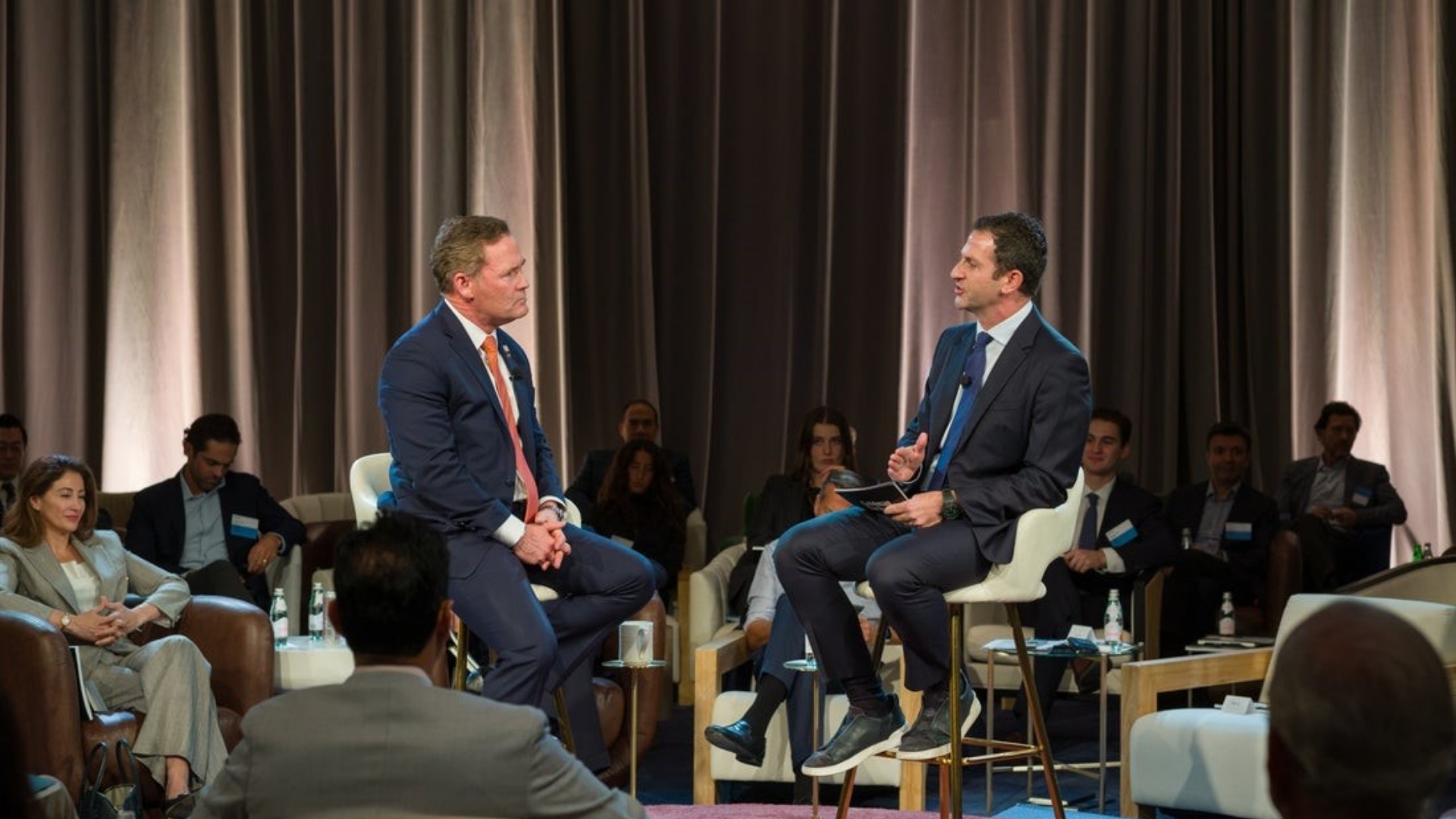
The Goldman Sachs Global Institute convened its fourth annual Global Affairs Summit, bringing together 150 attendees, including current and former government officials, experts in the fields of science and technology, and leading figures from the business world. Together, the group took stock of a year in which geopolitics and technological innovation were major themes for executives, investors, and public-sector leaders alike, and outlined the major debates shaping markets heading into 2027.
The View from the United Nations
President of Global Affairs and Global Institute Co-Head Jared Cohen hosted Ambassador Mike Waltz, US Representative to the United Nations, for a geopolitical assessment spanning Iran, Ukraine, and China. Economic pressure emerged as a common theme, with clear effects and limits. On Ukraine, negotiations have made limited progress, though the ongoing human toll of the war remains staggering and the hardest questions remain unresolved. Across all three theaters, geographic and market chokepoints are redefining how states confront, compete, and cooperate with one another, from Hormuz, to the Taiwan Strait and South China Sea, to the Arctic.
The New Middle East Map
Anshul Sehgal, Global Co-Head of Fixed Income, Currency and Commodities, Goldman Sachs, and Jared Cohen examined how a regional war in the Middle East has become a global market variable. Participants explored and debated potential future scenarios and outcomes, and consequently, the markets’ pricing of potential escalation scenarios. The discussion outlined how investors trace new kinds of risk and separate the signal from the noise. The group also discussed how risks in a theater like the Middle East connect to challenges elsewhere, including in the Indo-Pacific, the world’s most dynamic and populous region and home to some of its most important trade routes and technologies.
Energy and Economic Statecraft
John Hess, Former Chairman and CEO, Hess Corporation, and Tyler Miller, Global Co-Head of Power, Utilities, and Infrastructure, Goldman Sachs, described how the energy market is facing a security, affordability, and transition trilemma amid a historic oil and gas market disruption and pressure to meet unprecedented demand for power generation and transmission. In oil markets, thin inventory buffers are magnifying the price impact of further disruptions, with more than 500 million barrels already drawn from global inventories since the Iran War began. In power, the constraint has shifted from fuel to the physical and regulatory machinery of building, with an estimated 100 GW of additional US peak supply needed by 2030 and rapidly accelerating demands for capital. Energy has long driven economic growth and human progress.
The Politics of Artificial Intelligence
George Lee, Co-Head, Goldman Sachs Global Institute, and Chase Lochmiller, Co-Founder and CEO, Crusoe, discussed the domestic politics and global competition of the AI buildout, with nearly 80 gigawatts of US data center projects under construction. Participants agreed on the need for a greater understanding of the technology’s benefits, as well as its tradeoffs, and on the growing importance of earning the public’s trust that the benefits of AI will be widely shared. This issue is top of mind for voters, with 44 of 47 ballot initiatives challenging data center successful in this round of midterm elections alone. The group emphasized that this global debate often plays out in local contexts, where policymakers, people, and local institutions must agree on shared solutions and visions for the future.
The opinions and views expressed in this document do not necessarily reflect the views of Goldman Sachs or its affiliates. This document has been prepared by Goldman Sachs Global Institute and is not a product of Goldman Sachs Global Investment Research. This document is for your information only and does not constitute a recommendation from any Goldman Sachs entity to the recipient. This document should not be copied, distributed, published, or reproduced, in whole or in part. This document does not purport to contain a comprehensive overview of Goldman Sachs’ products and offerings. This document should not be used as a basis for trading in the securities or loans of any companies named herein or for any other investment decision and does not constitute an offer to sell the securities or loans of the companies named herein or a solicitation of proxies or votes. Goldman Sachs is not providing any financial, economic, legal, investment, accounting, or tax advice through this document or to its recipient. Goldman Sachs has no obligation to provide any updates or changes to the information herein. Neither Goldman Sachs nor any of its affiliates makes any representation or warranty, express or implied, as to the accuracy or completeness of the statements or any information contained in this article and any liability therefore (including in respect of direct, indirect, or consequential loss or damage) is expressly disclaimed.
© 2026 Goldman Sachs. All rights reserved.
Subscribe to Briefings
Our weekly newsletter delivers the latest insights on economic forces shaping markets—from Goldman Sachs leaders, economists, and investors around the world.
You can unsubscribe at any time. For information about how your personal data will be used, visit Privacy Information and Resources.