

Energy
Will European Gas Prices Keep Rising This Winter?
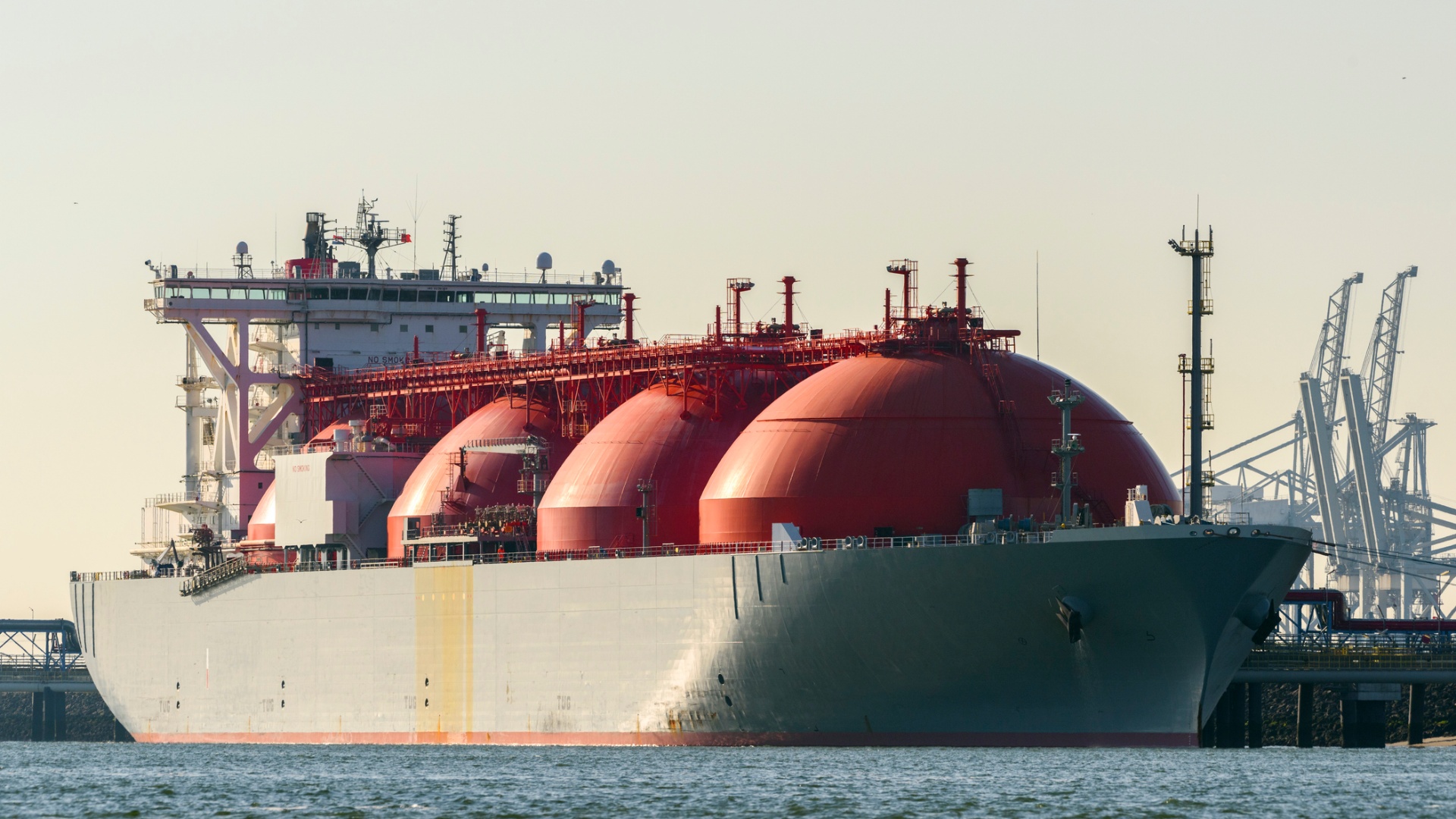
- The price of LNG in Europe has increased around 70% since July. Our commodities analysts expect prices to average €70/MWh in the fourth quarter of 2026—well above their levels from before this summer—assuming a gradual improvement in Persian Gulf LNG exports this winter.
- LNG flows through the Strait of Hormuz remain only a fraction of their pre-war levels. A faster ramp up in LNG flows could bring down prices rapidly, resulting in peak winter prices of about €50/MWh.
- In the longer term, new LNG supply from the US and Qatar could significantly reduce European natural gas prices.
As the winter heating season approaches, ongoing disruptions to the flow of liquefied natural gas (LNG) from the Middle East and low storage levels in Northwest Europe are expected to keep European gas prices high, according to Goldman Sachs Research.
The price of LNG in Europe has risen around 70% since July to €73 per megawatt hour (MWh) as of September 21. Prices have been volatile amid shifting news flow around the Middle East conflict, including a recent selloff of more than 10%. Our commodities analysts expect prices to average €70/MWh in the fourth quarter of 2026—well above the range of around €30–€60/MWh from before this summer.
Exports of LNG from the Persian Gulf are still only at an estimated 15%–25% of their levels from before the outbreak of war between Iran and the US and Israel in February 2026. In the absence of an improvement in exports through the Strait of Hormuz, European gas prices need to increase in order to outcompete importers of LNG elsewhere in the world, says Samantha Dart, co-head of Global Commodities Research. “If others stop buying, there is more left to come to Europe,” Dart explains.
The steep increase in European gas prices this summer has already started to reduce demand for gas elsewhere in the world, Dart says: Purchases of LNG declined in August in Asia and even in South America. “The process is working, but it does make natural gas very expensive,” Dart says.
We spoke with Dart about her forecast for European gas prices this winter, how clients are responding to increased volatility, and the longer-term outlook for LNG.
Have European gas prices risen high enough that the market is in balance now, or do you expect more increases ahead?
To answer that question, we need to make an assumption on what happens with Middle East volumes. If Persian Gulf LNG exports can gradually improve over the course of the winter and normalize by early next year, then yes—the rally we have seen is enough if it’s sustained through the end of the year.
That's why we raised our forecast for European LNG prices in Q4 to €70/MWh instead of the previous forecast of €53/MWh—because the demand destruction created by the recent rally needs to continue for the next few months.
However, if we end up with very low winter exports out of the Persian Gulf, then this rally is not enough, and we estimate that prices would need to go above €100 a megawatt hour in peak winter to destroy even more demand outside of Europe.
If a new deal between the US and Iran resulted in higher flows through the Strait, we think that prices could come back down fairly quickly. Peak winter prices could be about €50/MWh—so significantly lower than where we are today—and could move even lower in early 2027. The downside is significant and could happen fast.
Heating season in Europe begins in November. How do you expect that to play out in gas prices?
The main use of natural gas in the winter is for heating purposes, so the temperature can swing demand for natural gas in the winter to the tune of about 12% of storage capacity. The impact that can have on your inventories is quite meaningful.
Gas storage in Northwest Europe has been filling up more slowly than expected ahead of the winter, and we expect inventories to be 19% full by the end of March 2027 assuming ten-year average winter temperatures.
The risk to prices can go both ways. We estimate that weather can be powerful enough to raise our average winter price forecast about 75% if we end up with a winter that is one standard deviation colder than average. And in turn, if we end up with a winter that is one standard deviation warmer than average, our winter price assumption could drop about 30%.
Why do oil exports from the Persian Gulf seem to be returning to their pre-war levels faster than gas exports?
We have seen a faster normalization of flows in crude oil than in LNG. A lot of tankers are shuttling oil back and forth across the Strait—some of them with their signals off. When they reach the other side, they do a ship-to-ship transfer, and the other ship carries the oil away. This adaptation has been enough to take Persian Gulf exports of oil to about two-thirds of pre-war levels.
But the same is not the case for LNG. One possible explanation is that LNG burns at higher temperatures than oil, making it more dangerous for the crew in case of an attack. Also, ship-to-ship transfers are technically more complicated for LNG, because you have to keep the LNG under very cold temperatures—around -160° celsius—so that it stays liquid. You need calm waters and a very precisely measured process for ship-to-ship transfers, so it's not as easy.
And because LNG tankers are so specialized, your fleet usually does not have spare capacity. You can't afford to have LNG tankers damaged and hit by attacks. I think all of these things together end up creating a more cautious and a much slower adaptation process for LNG than for crude oil.
That doesn't mean that volumes can't increase. In fact, we saw a pretty big increase in the flow of LNG out of the Strait in a matter of just four weeks after the June memorandum of understanding between the US and Iran, from around 10% of normal to 39% of normal.
Are clients hedging for higher European gas prices this winter?
I've been talking to European industrial clients and investors throughout this conflict. If you're an industrial user of natural gas, prices were more moderate at the beginning of the conflict, which made hedging easier. The problem is that now, when they look at how high winter prices already are, those prices are not an attractive hedge: No board is excited to approve a hedging operation at these levels. I would say hedging has somewhat paused.
And from an investor point of view, you've had a somewhat similar shift. Even though they agree that the risk is skewed to the upside for European natural gas, they don't necessarily want to add long positions, because they’re worried that a headline could turn things around. Until recently, there wasn’t a lot of appetite, and the funds that did want to enter positions did so using options to reduce their risk: Call spreads are a common instrument for getting exposure.
What is your longer-term outlook for natural gas prices?
The current crisis aside, longer-term global LNG balances are looking increasingly oversupplied. A lot of new LNG supply is currently being built in the US and in Qatar. That means prices in the back end of the curve can move a lot lower, in our view: We forecast the price of European natural gas to decline to €19/MWh on average in 2030–2035.
But we need the Strait to be open for that view to play out. So investors seeking exposure to this bearish longer-term view are using options such as puts to express the bearish view while protecting against the near-term risk of price increases.
This article is being provided for educational purposes only. The information contained in this article does not constitute a recommendation from any Goldman Sachs entity to the recipient, and Goldman Sachs is not providing any financial, economic, legal, investment, accounting, or tax advice through this article or to its recipient. Neither Goldman Sachs nor any of its affiliates makes any representation or warranty, express or implied, as to the accuracy or completeness of the statements or any information contained in this article and any liability therefore (including in respect of direct, indirect, or consequential loss or damage) is expressly disclaimed.

Subscribe to Briefings
Our weekly newsletter delivers the latest insights on economic forces shaping markets—from Goldman Sachs leaders, economists, and investors around the world.
You can unsubscribe at any time. For information about how your personal data will be used, visit Privacy Information and Resources.