

Markets
Will 30-Year US Treasury Yields Climb Higher?
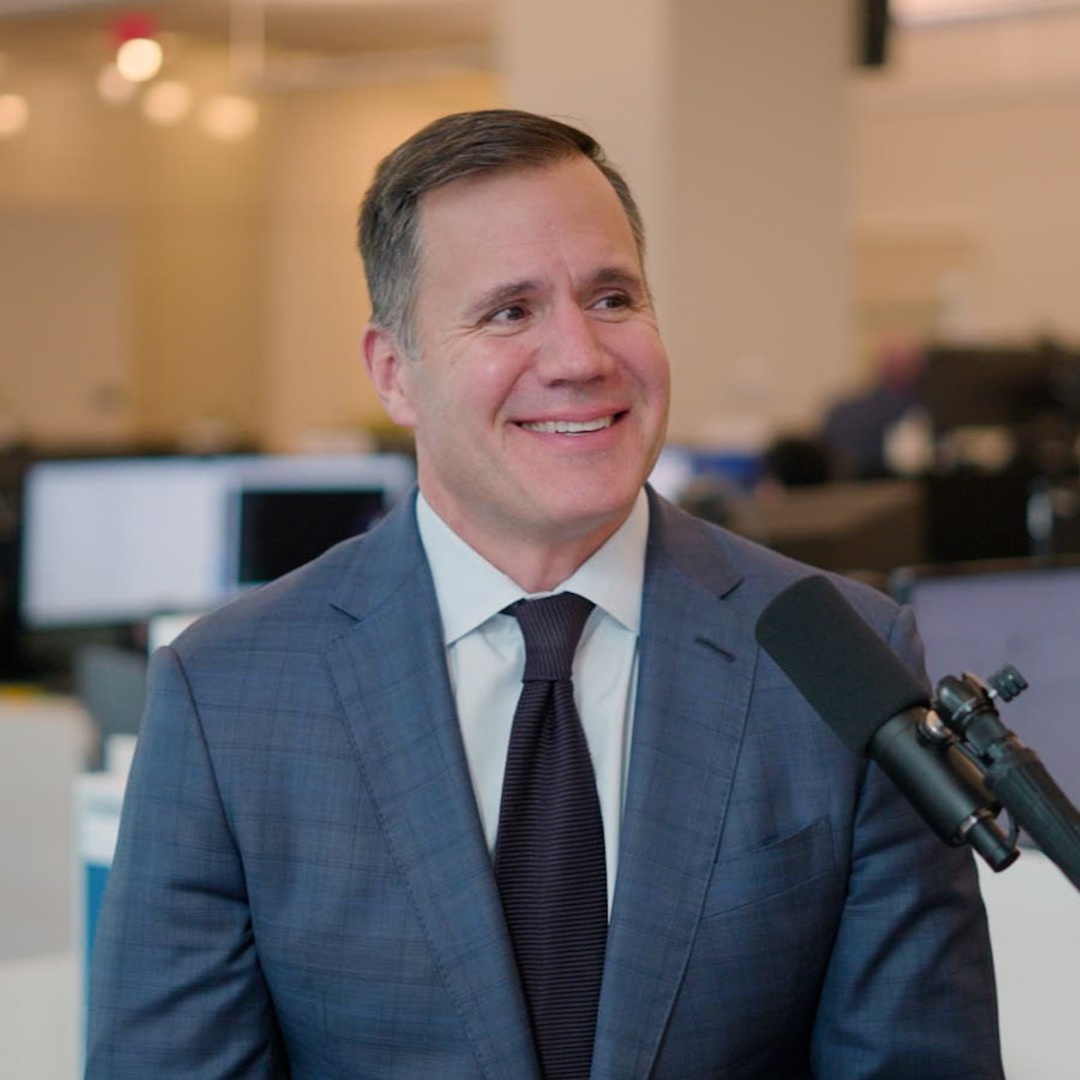
Long-term US Treasury yields will likely be under ongoing pressure amid elevated energy prices and subdued demand from institutional investors, says Muhammad Qubbaj, co-head of North America Interest Rate Product Sales and Trading at Goldman Sachs FICC and Equities. Thirty-year Treasury yields are trading around 5.7%, the highest since 2002.
In the weeks ahead, energy prices are likely to be the key factor in longer-term interest rates, Qubbaj said in a webinar. Oil prices have risen this year due to the conflict in Iran, and the increase in energy prices will continue to pass through to other products even if crude stabilizes. Investors are cautious about locking in duration when rates could move even higher amid heavy bond issuance from the US government and other borrowers around the world.
As tensions in the Middle East ripple through energy prices and inflation, they are also influencing the timing of the Federal Reserve’s next rate hike, how high its policy rate will ultimately climb, and the pressure investors exert on long-term Treasury yields, Qubbaj says.
The factors driving up bond yields in the US are global in nature. Qubbaj says German and Japanese yields have risen together under the same three pressures: a higher policy path for rates, investors requiring more compensation to hold long-term bonds, and uncertainty over how much new debt can be absorbed at these levels.
Will the Fed hike rates in October?
The Federal Open Market Committee (FOMC) meeting on September 15-16 provided several clear pieces of information for investors, Qubbaj says.
The Fed coalesced around hiking rates twice this year. The first hike took place in September, and the second increase in rates will likely be in October or December, Qubbaj says. “That’s a timing debate, not an existence debate,” he adds. Bond investors, meanwhile, were positioned for a split decision from the FOMC. “We got consensus instead,” he says. “That alone was a repricing event.”
At the same time, the committee said the rate increase was meant to remove a dose of accommodation. “In plain English, they don’t really think this is restrictive territory” for the economy, Qubbaj says. “If you still see the policy rate as accommodative after hiking, September can’t have been one and done.”
In addition, the committee communicated that the rate hike was in reaction to inflation running above the Fed’s target for years—not just according to recent economic data, Qubbaj says. The employment side of the Fed’s mandate, meanwhile, has largely been met. “They’re playing catch up, and that’s a durable motivation,” he says.
The Fed also made clear that it is more focused on short-term yields than those on longer-maturity bonds. “The September meeting did something very, very important: It formally separated the front end from the long end,” Qubbaj says. “The Fed was very clear—it’s not going to police the long bond.”
There is a “very clear implication” to this message, he says. “Hiking the front end doesn’t conjure up a bid for 30-year paper. The long end is going to have to find a yield that is attractive enough to bring in pensions and insurers. They are going to set the level, not the committee.”
Is US Treasury borrowing sustainable?
Even as the US government debt load grows, Qubbaj says the country’s debt-to-GDP ratio is not necessarily rising uncontrollably. Deficits of roughly 6% to 7% of GDP at a time when nominal growth is coming in at roughly 6% mean the deterioration is closer to around 1% per year. “That’s a drift, not a spiral,” Qubbaj says, adding that the US can plausibly grow into its debt without severe austerity.
“I don’t think that’s priced” into the Treasury market, he says. “Sustainability and bond market clearing are different questions, and people conflate them.”
While strong nominal growth can help stabilize the ratio of debt-to-GDP, how well the market can absorb the issuance of new Treasuries is a separate issue, Qubbaj says.
Are 30-year US Treasuries an investment opportunity?
Qubbaj says 30-year Treasury yields of 5.5% or higher are historically cheap, particularly in real, inflation-adjusted terms. A key question is whether there is a catalyst to push prices higher amid heavy supply, an uncertain inflationary backdrop, and cautious institutional buyers. “There is no clear catalyst” for 30-year Treasuries to rally, he says.
Longer-term Treasuries typically yield some 50 to 100 basis points less than nominal GDP growth. With nominal growth of around 5%, there’s scope for the 30-year to rally to the point that its yield drops back down to 4.25%, Qubbaj says. But yields are not likely to fall back to 3% anytime soon.
“To get something that low, you need a recession or a genuine growth shock, and that’s not on my bingo card right now,” he says.
This article is being provided for educational purposes only. The information contained in this article does not constitute a recommendation from any Goldman Sachs entity to the recipient, and Goldman Sachs is not providing any financial, economic, legal, investment, accounting, or tax advice through this article or to its recipient. Neither Goldman Sachs nor any of its affiliates makes any representation or warranty, express or implied, as to the accuracy or completeness of the statements or any information contained in this article and any liability therefore (including in respect of direct, indirect, or consequential loss or damage) is expressly disclaimed.


Subscribe to Briefings
Our weekly newsletter delivers the latest insights on economic forces shaping markets—from Goldman Sachs leaders, economists, and investors around the world.
You can unsubscribe at any time. For information about how your personal data will be used, visit Privacy Information and Resources.